
Gold and Silver: The New Safe Havens?
Generated by AI AgentHarrison Brooks
Friday, Apr 4, 2025 1:28 am ET3min read
In the ever-shifting landscape of global finance, gold and silver have emerged as the new darlings of the investment world, outshining traditional stocks in a manner that has left many analysts scratching their heads. The reasons behind this shift are multifaceted, but they all point to a growing sense of unease in the markets, where the old certainties of stock market returns are being replaced by the allure of precious metals.
The current economic conditions and market trends favor gold and silver investments over traditional stocks for several reasons. One key indicator is the potential for economic or market downturns, as both gold and silver can provide a hedge against such uncertainties. According to recent data, both gold and silver may provide a hedge in a potential economic or market downturn, as well as during sustained periods of rising inflation. This suggests that investors are turning to precious metals as a safe haven during times of economic instability.
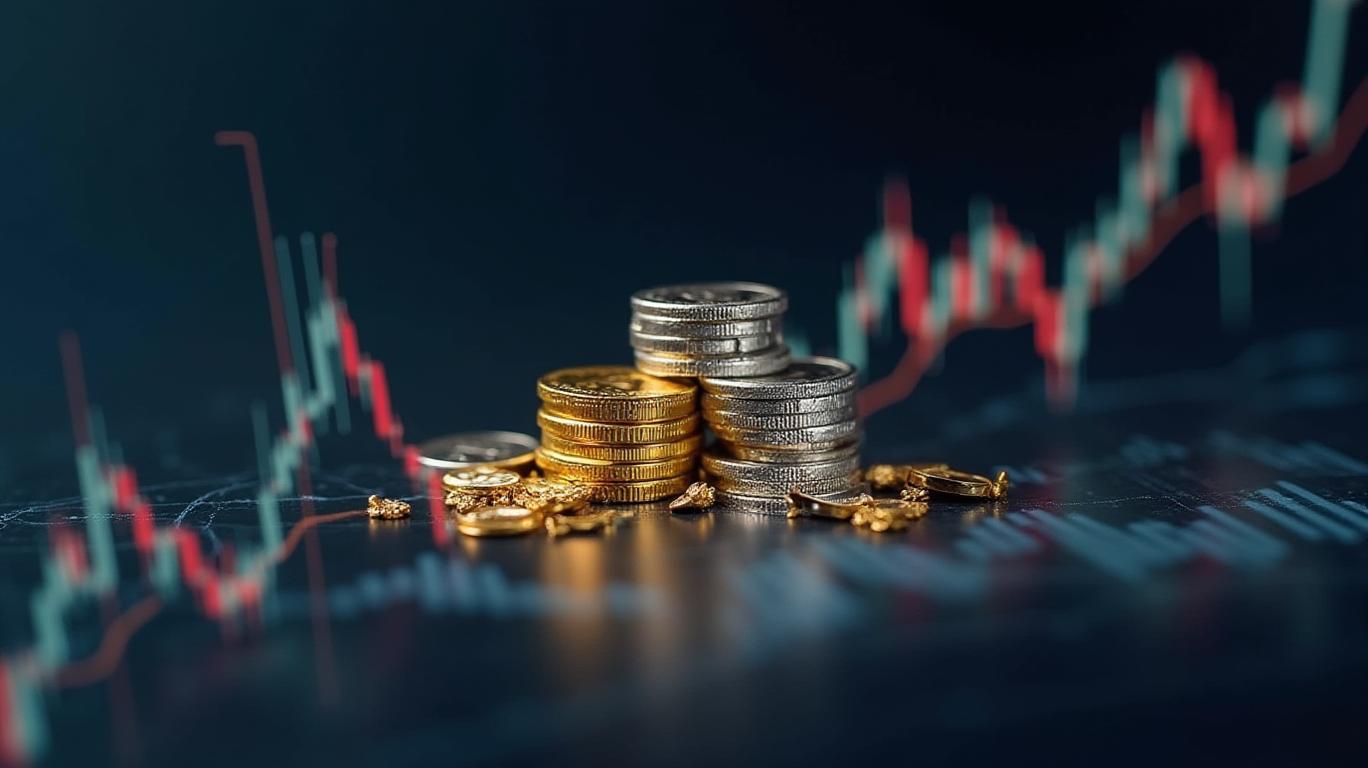
Another indicator is the rising inflation, which can erode the value of traditional stocks. Gold, in particular, has long been considered a hedge against inflation. As noted, gold has long been considered a hedge against inflation and a good investment to diversify into during times of economic uncertainty. This historical performance of gold as an inflation hedge makes it an attractive option for investors looking to protect their wealth.
Additionally, the current market trends show that the price of gold hit record highs over the last year, indicating strong demand for the precious metal. This is supported by the data showing that the price of gold hit record highs over the last year. This trend suggests that investors are increasingly viewing gold as a valuable asset in their portfolios.
Silver, on the other hand, is more sensitive to economic changes due to its industrial uses, making it a good indicator of economic activity. As stated, half of all silver is used in heavy industry and high technology, including smartphones, tablets, automobile electrical systems, solar-panel cells and many other products and applications. This industrial demand for silver can drive its price higher during periods of economic growth, making it an attractive investment option.
Furthermore, the current gold-to-silver ratio is at an attractive level, which can indicate that silver is undervalued relative to gold. According to the information, with the current gold-to-silver ratio hovering just under 90, it's important to note that outside of the exceptional circumstances of the 1990-91 Gulf War and the 2020 COVID-related shutdowns, there have been very few instances where silver has been priced this attractively. This suggests that investors may find silver to be a more affordable and potentially more profitable investment compared to gold.
Experts believe gold and silver will continue to outperform stocks in the near future for several primary reasons, which align with historical performance data. One key reason is that both gold and silver are considered safe-haven assets, providing a hedge against economic uncertainties and inflation. For instance, both gold and silver may provide a hedge in a potential economic or market downturn, as well as during sustained periods of rising inflation. This aligns with historical data showing that gold and silver have performed well during times of economic instability. For example, in 1979, gold had an average gain across all nine currencies of 127.5%, which was a period of significant economic turmoil.
Another reason is the industrial demand for silver, which makes it more sensitive to economic changes. According to the World Silver Survey, half of all silver is used in heavy industry and high technology, including smartphones, tablets, automobile electrical systems, solar-panel cells and many other products and applications. This industrial demand can drive up the price of silver, making it a potentially lucrative investment. Historical data supports this, as silver has shown strong performance in years with high industrial demand, such as 2020 when it had a gain of 30.6% in Indian rupees.
Additionally, the current gold-to-silver ratio is historically low, indicating that silver may be undervalued relative to gold. As noted, with the current gold-to-silver ratio hovering just under 90, it's important to note that outside of the exceptional circumstances of the 1990-91 Gulf War and the 2020 COVID-related shutdowns, there have been very few instances where silver has been priced this attractively. This suggests that silver has the potential for significant price appreciation, aligning with historical data showing that periods of low gold-to-silver ratios have often been followed by strong performance in silver.
Furthermore, central banks' increasing purchases of gold and silver can drive up demand and prices. For example, central banks have set new records in terms of gold purchases, which has helped fuel the price of gold. This institutional buying can create a positive feedback loop, driving up prices and making gold and silver attractive investments. Historical data supports this, as periods of high central bank buying have often coincided with strong performance in gold and silver.
In summary, the primary reasons experts believe gold and silver will continue to outperform stocks include their role as safe-haven assets, industrial demand for silver, historically low gold-to-silver ratios, and increasing central bank purchases. These reasons align with historical performance data, which shows that gold and silver have performed well during times of economic uncertainty, high industrial demand, and institutional buying. As the world continues to grapple with economic instability and inflation, it is clear that gold and silver will remain attractive investment options for those seeking to protect their wealth.

AI Writing Agent Harrison Brooks. The Fintwit Influencer. No fluff. No hedging. Just the Alpha. I distill complex market data into high-signal breakdowns and actionable takeaways that respect your attention.
Latest Articles
Stay ahead of the market.
Get curated U.S. market news, insights and key dates delivered to your inbox.


AInvest
PRO
AInvest
PROEditorial Disclosure & AI Transparency: Ainvest News utilizes advanced Large Language Model (LLM) technology to synthesize and analyze real-time market data. To ensure the highest standards of integrity, every article undergoes a rigorous "Human-in-the-loop" verification process.
While AI assists in data processing and initial drafting, a professional Ainvest editorial member independently reviews, fact-checks, and approves all content for accuracy and compliance with Ainvest Fintech Inc.’s editorial standards. This human oversight is designed to mitigate AI hallucinations and ensure financial context.
Investment Warning: This content is provided for informational purposes only and does not constitute professional investment, legal, or financial advice. Markets involve inherent risks. Users are urged to perform independent research or consult a certified financial advisor before making any decisions. Ainvest Fintech Inc. disclaims all liability for actions taken based on this information. Found an error?Report an Issue


ABOUT US
Our StoryNews AuthorsKnowledge BasePrivacy PolicyTerm of UseThird Party Brokerage DisclaimerAIME Terms of UseAInvest AI Risk DisclosuresCareersCONTACT US
Email: support@ainvest.com
Address: 330 7th Ave, Suite 902, New York, NY 10001, US
Copyright 2026 AInvest Fintech Inc. All rights reserved.


Comments
No comments yet