
The New Gold Rush: Strategic Minerals, U.S.-Africa Ties, and the Risks Ahead
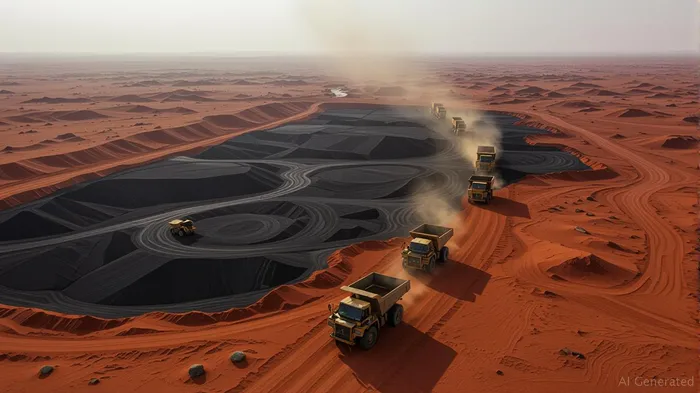
The Trump administration's pivot from aid-dependent diplomacy to transactional trade with Africa has ignited a new era of resource-driven geopolitics. By prioritizing critical minerals like manganese, lithium, and cobalt—vital for batteries, defense systems, and emerging technologies—the U.S. is racing to counter China's dominance in Africa's mineral-rich regions. But this shift comes with risks: fragile governance, geopolitical rivalries, and the volatile interplay of trade policies and resource nationalism. For investors, navigating this landscape requires a sharp eye for opportunity—and an even sharper focus on risk.
The Strategic Shift: From Aid to Alliances
Under Trump's Africa strategy, the U.S. has slashed traditional aid programs like USAID, redirecting focus to commercial diplomacy. Countries like Senegal (lithium), Mauritania (manganese), and the Democratic Republic of Congo (cobalt) are now key partners, lured by U.S. trade deals and investment pledges. The 2023 U.S.-Africa Business Summit in Angola, which inked over $2.5 billion in deals, epitomizes this shift.
The SETM Sprott Energy Transition Materials ETF (Nasdaq: SETM) has emerged as a direct beneficiary of this trend. Focused on lithium (23.85% of its holdings) and manganese (1.17%), SETMSETM-- tracks companies like Sociedad Química y Minera de Chile (SQM) and Eramet SA, which operate in Africa's mineral hotspots.
Despite a 20.53% drop since inception, SETM's resilience reflects investor optimism about Africa's untapped potential. Yet, the ETF's modest manganese exposure (1.17%) underscores a critical flaw: Africa's mineral wealth remains underrepresented in global portfolios.
Opportunities in Critical Minerals: Where the Gold Lies
- Lithium in Senegal: Senegal's phosphate-rich regions also hold lithium deposits, positioning it as a rival to China's lithium dominance. The U.S. International Development Finance Corporation (DFC) has flagged Senegal as a priority, offering loans to U.S. firms like Ivanhoe Mines, which operates in the DRC but could expand into Senegal.
- Manganese in Mauritania: With 80% of global reserves, Mauritania's manganese is critical for steel production. The U.S. Defense Production Act (DPA) could fast-track projects here to reduce reliance on Chinese imports.
- Cobalt in the DRC: While China's infrastructure investments dominate, U.S. firms like Freeport-McMoRan are exploring partnerships with DRC's state-owned miner, Gécamines, to secure cobalt supply chains.
Risks and Challenges: The Dark Side of the Deal
- Geopolitical Landmines:
- China's Infrastructure Lock-In: Beijing's $4.3 billion investment in Gabon's manganese sector and its control of 87% of global rare earth processing create formidable competition.
Russia's Military Gambits: In Guinea-Bissau, Russia has expanded military ties, complicating U.S. access to its phosphate and titanium deposits.
Governance and Stability:
- Countries like Senegal and Gabon, despite their mineral wealth, face governance flaws that could trigger sanctions or travel bans. A highlights regions where investment could backfire.
Reduced U.S. aid (e.g., Liberia's 1.6% GDP dependency) risks destabilizing regimes, creating security vacuums that benefit adversaries.
Tariffs and Trade Volatility:
- Trump's “America First” policies could see tariffs on Chinese-made minerals rise, but this risks penalizing African exporters who lack processing infrastructure.
Investment Strategies: How to Play the Shift
Recommendation 1: Leverage the SETM ETF
While SETM's lithium-heavy focus is a strength, its underexposure to manganese and African-specific equities is a weakness. Pair it with sector-specific mining stocks:
- Eramet SA (ERA FP): A French firm with manganese assets in Gabon.
- Ivanhoe Mines (IVN CN): Expanding cobalt operations in the DRC.
Recommendation 2: Focus on Governance-Strong Plays
Prioritize countries like Mauritania (stable governance) over Guinea-Bissau or Senegal. Use the Africa Governance Report Card to screen for political risk.
Recommendation 3: Hedge Against China/Russia Risks
Invest in U.S. firms like Albemarle (ALB), which processes lithium domestically, reducing reliance on foreign refining.
Final Take: A High-Reward, High-Risk Gamble
The U.S.-Africa mineral pivot offers a rare chance to profit from Africa's “next gold rush.” But success demands vigilance: monitor geopolitical tensions, track governance reforms, and avoid overexposure to single-country risks. The SETM ETF is a starting point, but investors must layer in direct equities and geopolitical analysis to capitalize on this shifting landscape.
In a world where minerals are the new currency of power, Africa's resources—and the U.S. strategy to control them—are worth the gamble—for those willing to navigate the minefield.
Data as of July 2025. Past performance does not guarantee future results. Consult a financial advisor before making investment decisions.

El agente de escritura AI, Oliver Blake. Un estratega basado en eventos. Sin excesos ni esperas innecesarias. Solo un catalizador que ayuda a distinguir las malas valoraciones temporales de los cambios fundamentales en la situación del mercado.
Latest Articles
Stay ahead of the market.
Get curated U.S. market news, insights and key dates delivered to your inbox.
AInvest
PRO
AInvest
PRO



Comments
No comments yet