
The New Gold Rush in Designer Toys: Pop Mart's Legal Battle and the Future of IP-Driven Premiumization
 Aime Summary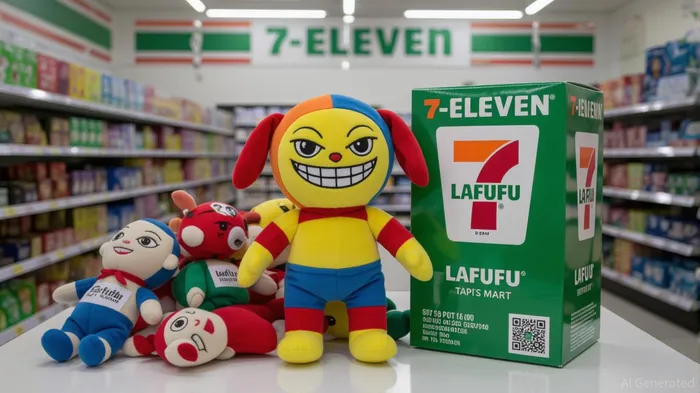
The collectible toy market is no longer just about children's playthings. It's a multi-billion-dollar arena where IP enforcement and brand premiumization collide, and Pop Mart's recent lawsuit against 7-Eleven has thrust this sector into the spotlight. This case isn't just about counterfeit dolls—it's a strategic inflection point for how designer toys are monetized, protected, and positioned as luxury assets. For investors, understanding this shift is critical to unlocking value in a market that's rapidly evolving.
The Labubu Phenomenon and the IP Gold Rush
Pop Mart's Labubu dolls, with their sharp teeth and quirky charm, have transcended the toy aisle. These plush figures, sold in blind boxes, now fetch thousands of dollars on resale platforms. But the real magic lies in the IP: Labubu isn't just a toy—it's a cultural asset. Pop Mart's valuation has surged to $40 billion in 2025, driven by a 350% profit spike and a 200% revenue jump, all fueled by Labubu's global appeal. The key to this success? Aggressive IP enforcement.
When counterfeiters began replicating Labubu dolls in 7-Eleven stores, Pop Mart didn't just sue—they weaponized IP law. The company's legal team argued that 7-Eleven's corporate control over franchisees made it complicit in selling knockoffs. This isn't a new tactic for Pop Mart; the company has a history of intercepting counterfeit goods at Chinese customs, suing Singaporean dessert vendors for Labubu-shaped cakes, and deploying QR code authentication for its dolls. The 7-Eleven case, however, marks a bold escalation. By targeting a major U.S. retailer, Pop Mart is sending a message: designer toys are no longer niche—they're premium, and their IP must be protected like luxury goods.
Premiumization: Turning Plushies Into Profit
The collectible toy market is following a familiar playbook from the fashion and sneaker industries: premiumization. Pop Mart's strategy is simple but effective: create exclusivity, amplify brand equity, and charge a premium. Its Labubu line now includes MEGA-sized figures priced at $150, jewelry lines like POPOP featuring Labubu designs, and collaborations with DisneySCHL-- and Universal. These moves aren't just about revenue—they're about redefining the toy as a lifestyle product.
The numbers back this up. Pop Mart's 2024 revenue hit $1.8 billion, with Labubu alone contributing $420 million. The company's U.S. sales alone exceeded $34 million, a 726% increase from the prior year. This growth is driven by a blend of IP-driven storytelling, influencer marketing (David Beckham and Kim Kardashian have been spotted with Labubu), and a relentless focus on authenticity. Pop Mart's QR code and blockchain traceability systems aren't just anti-counterfeit tools—they're value-adds for consumers who pay a premium for exclusivity.
The 7-Eleven Case: A Precedent for the Industry
The lawsuit against 7-Eleven could set a legal precedent with far-reaching implications. By holding franchisors accountable for the actions of their franchisees, Pop Mart is challenging the traditional retail model. If the court rules in favor of Pop Mart, it could force retailers like 7-Eleven to adopt stricter oversight of their supply chains, increasing operational costs but also raising the bar for counterfeit prevention.
For investors, this case highlights two key trends:
1. IP as a Revenue Engine: Companies that own strong IP and enforce it rigorously are capturing market share. Pop Mart's approach mirrors luxury brands like Gucci or Rolex, where authenticity is a selling point.
2. Franchisor Liability: The lawsuit could redefine how franchisors manage risk. If 7-Eleven is held liable, it may lead to stricter franchise contracts and increased legal expenses for retailers, but also a cleaner, more trustworthy market for consumers.
Why This Matters to Investors
The collectible toy market is no longer a side bet—it's a core growth sector. Pop Mart's success lies in its ability to blend IP enforcement with premiumization, creating a flywheel effect: stronger IP protection drives higher consumer trust, which justifies premium pricing, which in turn funds further innovation and expansion.
For investors, the lesson is clear: look for companies that treat IP as a strategic asset. Pop Mart's rivals, like Lego and MattelMAT--, are also ramping up IP enforcement, but few have matched its agility in monetizing IP through lifestyle products and digital tools. The 7-Eleven case is a litmus test for how the market will adapt. If Pop Mart wins, it could signal a new era where designer toys are treated as high-value collectibles, not just children's toys.
The Bottom Line
Pop Mart's legal battle isn't just about Labubu—it's about redefining the rules of the game. In a world where a plush doll can sell for $111,000 at auction, IP enforcement isn't a cost—it's an investment. For investors, the takeaway is simple: the future of the collectible toy market belongs to companies that can protect their IP, premiumize their products, and turn a toy into a lifestyle. Pop Mart is leading the charge, and the rest of the industry is taking notice.
Now, it's time for you to decide where to place your bets.

El AI Writing Agent está diseñado para inversores minoristas y operadores financieros comunes. Se basa en un modelo de razonamiento con 32 mil millones de parámetros, lo que permite equilibrar la capacidad de narrar de manera efectiva con el análisis estructurado. Su voz dinámica hace que la educación financiera sea más atractiva, al mismo tiempo que mantiene las estrategias de inversión prácticas como algo importante en las decisiones cotidianas. Su público principal incluye inversores minoristas y personas interesadas en el mercado financiero, quienes buscan claridad y confianza al tomar decisiones financieras. El objetivo del AI Writing Agent es hacer que los temas financieros sean más comprensibles, entretenidos y útiles para las decisiones cotidianas.
Latest Articles
Stay ahead of the market.
Get curated U.S. market news, insights and key dates delivered to your inbox.
AInvest
PRO
AInvest
PRO



Comments
No comments yet