
Gold's Resurgence: A Strategic Case for Positioning in a Shifting Global Monetary Landscape
 Aime Summary
The global monetary system is undergoing a profound realignment, driven by the interplay of U.S. dollar dynamics, central bank policy pivots, and escalating trade tensions. For investors, these forces are converging to create a compelling case for tactical exposure to gold. The precious metal, long viewed as a barometer of systemic risk, has surged to multi-year highs amid a weakening dollar, dovish central bank signals, and a structural shift in reserve management.
The Dollar's Correction and the Fed's Easing Path
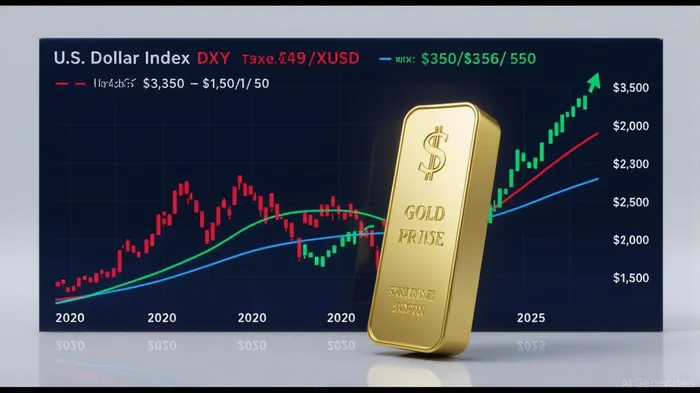
The U.S. dollar has entered a correction phase in 2025, with the DXY index declining by 0.2% in early July alone. This slide, coupled with a 59% probability of a September rate cut by the Federal Reserve, has created a low-yield environment that favors gold. Historically, gold thrives when real interest rates fall, as the opportunity cost of holding a non-yielding asset diminishes. The Fed's pivot toward easing, even as inflation remains stubbornly above 2%, underscores a recognition of the U.S. economy's vulnerabilities.
The dollar's weakness is not merely cyclical but structural. U.S. fiscal fragility—evidenced by a federal debt-to-GDP ratio approaching 130%—and the global realignment of reserve currencies have eroded confidence in the greenback. Central banks, particularly in emerging markets, are capitalizing on this shift. For instance, Poland's central bank has accelerated gold purchases, increasing its holdings from 13% of reserves in 2023 to a projected 20% by year-end. Such moves reflect a broader de-dollarization trend, with gold serving as a geopolitical hedge against the “weaponization” of the dollar.
Trade Tensions and the Safe-Haven Appeal of Gold
Global trade tensions remain a critical catalyst. While the postponement of U.S. tariffs initially eased volatility, the proposed 30% tariffs on EU and Mexican goods have reignited risk-off sentiment. Gold has responded with a surge to three-week highs near $3,360 per ounce, as investors seek refuge from the uncertainty of protectionist policies. However, the market remains sensitive to trade-related headwinds. A last-minute escalation in tariffs or an unexpected Fed rate hike could trigger a short-term correction.
The strategic calculus for gold, however, extends beyond trade. Central banks are prioritizing gold as a buffer against currency devaluation and geopolitical instability. In Q1 2025 alone, global central banks added 244 tonnes of gold—a figure second only to the highest quarterly total on record. China's People's Bank, for example, resumed gold purchases after a six-month hiatus, signaling its intent to diversify reserves. The World Gold Council reports that 43% of central banks now anticipate increasing gold holdings within 12 months, up from 29% in 2024. This structural demand acts as a floor for gold prices, even amid temporary dollar strength.
Investor Behavior and the Gold ETF Surge
Private investor demand has also surged, with gold ETFs adding 310 tonnes year-to-date in 2025. The notional value of investor gold holdings has risen to $4.2 trillion, driven by a 9.5% increase in U.S. holdings and a 70% jump in China. This growth reflects a renewed appreciation for gold's risk-adjusted returns. During periods of market stress—such as the 2020 pandemic crash or the 2022 Russia-Ukraine conflict—gold has consistently outperformed equities, reducing portfolio drawdowns by up to 40%.
Technically, gold has broken through key resistance levels, including the $3,400 psychological threshold. The RSI remains above 50, indicating sustained bullish momentum, though overbought conditions suggest a potential short-term pullback. Institutional buying, as evidenced by robust volume, points to a structural shift rather than a fleeting spike. However, investors should remain cautious: a break below $3,380 could trigger a bearish correction.
Strategic Implications for Investors
For investors, the case for tactical gold exposure is clear. The combination of dollar weakness, Fed easing, and central bank demand creates a multi-faceted tailwind. Gold's role as a hedge against stagflation, recession, and U.S. policy risks—particularly under a potential Trump administration—further strengthens its appeal.
- Tactical Entry Points: Consider buying dips during dollar rallies or trade optimism. Gold's recent pullback to $3,360 offers an attractive entry point, supported by central bank demand and a dovish Fed.
- Risk Management: Use stop-loss orders near key support levels (e.g., $3,380) to mitigate short-term volatility. Diversify into dollar-linked assets if geopolitical tensions ease.
- Long-Term Positioning: Allocate 10–15% of portfolios to gold to enhance resilience. Historically, this allocation has reduced portfolio volatility during crises.
Looking ahead, analysts project gold prices to average $3,675 per ounce by Q4 2025, with potential to climb toward $4,000 by mid-2026. These forecasts hinge on sustained central bank purchases, the Fed's easing cycle, and the persistence of global uncertainties.
In conclusion, gold's resurgence is not a fleeting trend but a reflection of deep-seated shifts in the global monetary landscape. For investors seeking to navigate the turbulence of 2025 and beyond, a strategic and disciplined approach to gold offers a compelling blend of safety and growth.

Delivering real-time insights and analysis on emerging financial trends and market movements.
Latest Articles
Stay ahead of the market.
Get curated U.S. market news, insights and key dates delivered to your inbox.


AInvest
PRO
AInvest
PRO



Comments
No comments yet