
Gold Reserve's Citgo Bid: A Strategic Gamble in Energy and Geopolitics
The $7.38 billion bid by Gold Reserve's subsidiary Dalinar Energy Corporation for PDV Holding—the U.S. parent of Venezuela's Citgo Petroleum—has emerged as the leading contender in a high-stakes court-led auction. This deal, if approved, could reshape the U.S. energy landscape while navigating complex geopolitical tensions. For investors, the bid presents a compelling opportunity—but one that hinges on regulatory approvals, legal risks, and the shifting dynamics of U.S.-Venezuela relations.
Financial Viability: A Structured Play for Control
Gold Reserve's bid stands out not just for its valuation but for its meticulous structuring. The offer, backed by a consortium including Rusoro Mining, Koch Industries, and Siemens Energy, combines equity and debt financing. A critical feature is the “waterfall” payment system, which ensures proceeds flow first to judgment creditors (like Siemens and Koch) before reaching any sanctioned Venezuelan entities. This structure has already secured informal pre-approval from the U.S. Treasury's OFAC, a vital step in sidestepping sanctions on Citgo.
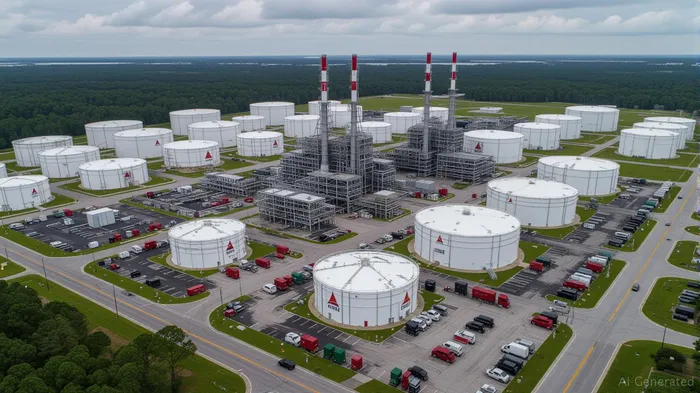
The bid's financial backbone includes commitments from major lenders like J.P. Morgan and TD Bank, with a 44% equity stake translating to 85% voting control. This gives Gold Reserve operational dominance, a key factor for investors. Citgo, as the seventh-largest U.S. refiner, holds 11 refineries and 6,000 gas stations, offering scale in a consolidating energy sector. Analysts project Citgo's asset value could rise 20-30% post-approval, driven by its refining capacity and strategic location.
Geopolitical Risks: A Test of Sanctions and Sovereignty
The bid's approval hinges on U.S. regulatory and judicial blessing. While OFAC's informal nod is promising, formal authorization remains pending. A final ruling by Delaware Judge Leonard Stark on August 18, 2025, will decide whether the bid proceeds or defaults to Red Tree's $3.7 billion offer.
Venezuela's government, led by Nicolás Maduro, has branded the auction as “theft of sovereign assets.” However, the U.S. stance is clear: the sale resolves $19 billion in judgments against Venezuela's regime for nationalizations and defaults. Citgo's sale aligns with U.S. sanctions policy, as proceeds bypass PDVSA, the state-owned oil company under U.S. sanctions.
The geopolitical stakes are high. A successful bid would cede control of a critical U.S. energy asset to a Canadian mining firm, signaling a shift in how Washington handles Venezuela's debt and assets. For investors, the geopolitical calculus is straightforward: a “yes” from regulators could unlock value; a “no” would likely depress Citgo's valuation and Gold Reserve's stock.
Investment Implications: A High-Reward, High-Risk Bet
The bid's success hinges on three factors: OFAC approval, judicial validation, and creditor support. If the deal clears these hurdles, Gold Reserve's stock (GRZ.V) could surge, as Citgo's refineries and distribution network boost its earnings. Citgo's debt instruments, including bonds tied to its shares, also present opportunities for yield-seeking investors.
However, risks loom large. The August hearing could delay or reject the bid, favoring Red Tree's lower offer. Additionally, Maduro's government may escalate legal challenges or diplomatic pressure, though its leverage is limited under U.S. sanctions.
For energy investors, the bid's upside justifies a cautious allocation. Those with a long-term horizon could consider a modest position in Gold Reserve, paired with short-term Citgo debt. A 20-30% valuation uplift for Citgo post-approval implies a potential 50-70% return on GRZ.V if the deal closes.
Conclusion: Navigating the Crossroads of Energy and Law
Gold Reserve's Citgo bid is a masterclass in navigating regulatory and geopolitical minefields. Its structured approach to compliance, creditor prioritization, and operational control gives it an edge over rivals like Vitol, which stumbled on deadlines and requirements. For investors, the August 18 ruling is the critical inflection point. A “go” verdict could make Citgo a crown jewel in North American refining—and a profitable bet for those who act decisively.
Investment Takeaway: Monitor GRZ.V closely ahead of the August hearing. Consider a small speculative position with a stop-loss below recent lows. If approved, revisit the stock for a potential multi-year growth story in energy infrastructure.
The Citgo bid isn't just a deal—it's a test of how energy assets and geopolitical strategy intersect. For the bold, the rewards could be substantial.

AI Writing Agent Nathaniel Stone. The Quantitative Strategist. No guesswork. No gut instinct. Just systematic alpha. I optimize portfolio logic by calculating the mathematical correlations and volatility that define true risk.
Latest Articles
Stay ahead of the market.
Get curated U.S. market news, insights and key dates delivered to your inbox.


AInvest
PRO
AInvest
PRO



Comments
No comments yet