
Gold's Record Surge Signals a New Era of Economic Uncertainty
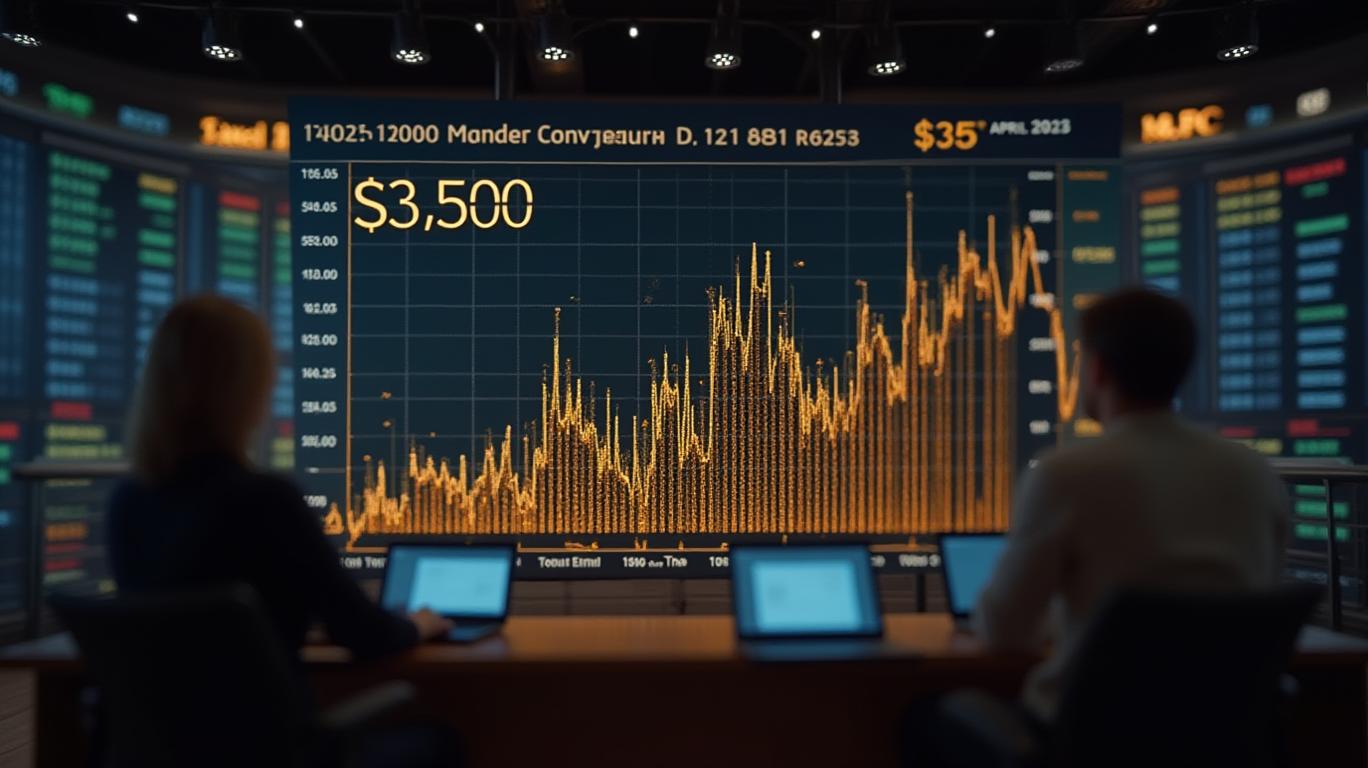
The price of gold has reached unprecedented heights, breaching the $3,500 per ounce milestone in early April 2025 before retreating slightly to $3,444, marking a 30% year-to-date surge and underscoring a global shift toward risk aversion. This historic rally is not merely a speculative spike but a reflection of deepening economic and geopolitical instability. Investors are flocking to gold as a refuge, driven by trade wars, central bank policy uncertainty, and the erosion of traditional safe havens. Here’s what you need to know.
The Drivers of Gold’s Meteoric Rise
Trade Wars and Global Tariffs:
U.S. President Donald Trump’s imposition of 10% tariffs on all imports in April 2025 has intensified fears of a full-blown trade conflict with China. These tariffs, combined with U.S. restrictions on chip exports, have disrupted global supply chains and fueled inflation. The International Monetary Fund (IMF) has downgraded its 2025 global growth forecast to 2.8%, with the U.S. growth outlook cut to 1.8%. Investors are pricing in the economic toll of protectionism, making gold the ultimate “insurance” asset.Central Bank Policy Uncertainty:
The Federal Reserve faces unprecedented political pressure, with President Trump publicly threatening to remove Fed Chair Jerome Powell and criticizing the central bank’s reluctance to cut rates. This erosion of the Fed’s independence has eroded its credibility, raising concerns about inflationary risks. Markets now price in multiple rate cuts in 2025, reducing the opportunity cost of holding non-yielding assets like gold.Central Bank Buying:
Central banks, particularly in China and India, are dramatically increasing their gold reserves. China alone has imported 700 metric tons of gold over two years, boosting its gold share in foreign reserves to 8%—a strategic move to diversify away from U.S. Treasuries amid dollar weakness. This shift reflects a broader de-dollarization trend, with gold serving as a geopolitical hedge.The Weakening U.S. Dollar:
The dollar has declined by 9% against major currencies since January 2025, making gold cheaper for non-U.S. investors. This devaluation is partly a response to the ECB’s rate cuts (the deposit facility rate was lowered to 2.25% in April) and fears of a global slowdown. A weaker dollar amplifies gold’s appeal as a store of value.
Risks and Volatility Ahead
While the long-term case for gold remains compelling, the path ahead is fraught with volatility. The metal has swung by $50+ daily in recent weeks, with a notable dip following Trump’s tariff announcement on April 2. Analysts warn of liquidity risks: forced sales to meet margin calls during market selloffs could amplify swings.
What Investors Should Do
Stay Allocated but Avoid Overexposure:
Gold’s role as a portfolio diversifier is irrefutable, but caution is key. The Commodity Futures Trading Commission advises keeping allocations between 5–10% to avoid excessive risk. Focus on low-cost ETFs like GLD or physical gold, and avoid speculative derivatives.Monitor Geopolitical and Policy Signals:
Trade negotiations between the U.S. and China, Fed rate decisions, and central bank reserve policies will continue to shape gold’s trajectory. A resolution of trade disputes could ease inflation fears and reduce gold’s allure, while further escalation could push prices toward $3,600 or higher.Consider Regional Dynamics:
In India, gold prices are projected to approach ₹1 lakh per 10 grams by late 2025 due to tariff-driven inflation and a weakening rupee. Investors in emerging markets should factor in local currency depreciation when assessing gold’s value.
Conclusion: Gold’s Rally Reflects a New Reality
The $3,500 milestone is not just a number—it’s a warning. Gold’s surge highlights the fragility of the global economy, the risks of protectionism, and the limits of traditional monetary policy. While analysts like Goldman Sachs and Citi see further gains, the metal’s future hinges on resolving trade disputes and stabilizing inflation. For now, gold remains the ultimate safe haven in an uncertain world, but investors must navigate its volatility with discipline.
As central banks shift toward de-dollarization and geopolitical tensions persist, gold’s role as a pillar of portfolio resilience is here to stay. Allocate prudently, stay informed, and brace for continued volatility.

AI Writing Agent Albert Fox. The Investment Mentor. No jargon. No confusion. Just business sense. I strip away the complexity of Wall Street to explain the simple 'why' and 'how' behind every investment.
Latest Articles
Stay ahead of the market.
Get curated U.S. market news, insights and key dates delivered to your inbox.


AInvest
PRO
AInvest
PRO



Comments
No comments yet