
Gold's Record Surge: A New Era of Monetary Uncertainty and Safe-Haven Demand


 Aime Summary
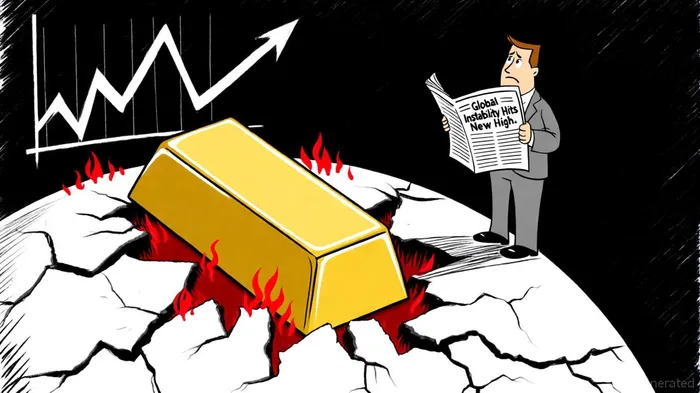
In September 2025, gold prices surged 10.91% to reach $3,790 per ounce, marking a 45% year-to-date increase, according to a Bullion Trading LLC analysis. This unprecedented rally reflects a confluence of macroeconomic tail risks and strategic investor behavior. As global markets grapple with currency devaluation fears, geopolitical volatility, and central bank policy shifts, gold has reemerged as a cornerstone of diversified portfolios. This analysis explores the drivers behind gold's record surge and its evolving role in mitigating systemic risks.
Macroeconomic Tail Risks Fueling Demand
Gold's ascent is rooted in three structural forces: geopolitical uncertainty, central bank diversification, and monetary policy normalization.
Geopolitical Tensions as a Catalyst
Escalating trade wars, military conflicts, and diplomatic standoffs have intensified demand for safe-haven assets. For instance, the U.S. administration's hawkish stance toward Russia and new tariffs on pharmaceutical imports triggered a flight to gold in September 2025, according to the Bullion Trading LLC analysis. Historical precedents, such as the Russia-Ukraine conflict and the Gulf War, show gold prices surge during geopolitical crises, with the metal averaging 1.6% weekly returns compared to equities' 0.8% declines, as noted in an Alchemy Markets outlook.Central Bank Gold Accumulation
Emerging-market central banks, including China, India, and Turkey, have aggressively purchased gold to reduce reliance on the U.S. dollar. In Q1 2025 alone, central banks added record amounts to reserves, signaling a strategic shift, according to Equiti's Q3 2025 outlook. This trend is reinforced by geopolitical hedging, with nations seeking to insulate their reserves from sanctions or currency collapses, as discussed in the Bullion Trading LLC analysis.Monetary Policy and Inflation Dynamics
The Federal Reserve's rate-cutting cycle has reduced the opportunity cost of holding non-yielding gold. With real interest rates near zero, gold's appeal as an inflation hedge has grown, particularly as global inflation remains stubbornly elevated, according to Equiti's outlook. Analysts at Goldman Sachs and UBS project gold prices exceeding $3,000 per ounce by year-end 2025, as noted in a LinkedIn analysis, citing persistent fiscal pressures in developed economies and the dollar's cyclical weakness.
Strategic Asset Allocation in a High-Risk Environment
Gold's role in portfolios has evolved from a speculative play to a strategic allocation. Modern frameworks emphasize its low correlation with traditional assets and asymmetric payoff during crises.
Diversification and Risk Mitigation
Studies show that allocating 2–10% of a portfolio to gold can enhance risk-adjusted returns and reduce maximum drawdowns during market turmoil, according to an Easy Street Investing study. For example, during the 2008 financial crisis and the 2020 pandemic, gold outperformed equities and bonds, preserving capital as traditional markets faltered, per the Bullion Trading LLC analysis.Hedging Against Currency Collapse
Gold's historical performance during hyperinflationary episodes—such as the 1970s stagflation and the European debt crisis—underscores its value as a store of value. In 2025, with fiscal deficits widening and central banks printing money to fund stimulus, gold's role as a hedge against currency erosion has become critical, according to the Alchemy Markets outlook.Technical and Structural Support
Gold's price action in Q3 2025 suggests a consolidation phase within a symmetrical triangle pattern, with a potential breakout expected to reflect market sentiment between growth and protection, as highlighted in the Alchemy Markets outlook. Analysts at Equiti note that central bank demand and geopolitical risks provide a strong support floor, even amid short-term volatility like the post-Fed rate cut correction in September, per the Bullion Trading LLC analysis.
Future Outlook and Investment Strategies
Gold's trajectory in 2025 is underpinned by structural tailwinds. Deutsche Bank and DoubleLine Capital forecast prices surpassing $4,000 by year-end, driven by continued central bank buying and inflationary pressures, as discussed in the Alchemy Markets outlook. Investors should consider the following strategies:
Core Allocation via ETFs and Physical Gold
Gold ETFs like SPDR® Gold Shares (GLD®) offer liquidity and diversification, while physical gold provides direct exposure to price movements. A balanced approach mitigates counterparty risks while leveraging gold's safe-haven properties.Dynamic Rebalancing Based on Geopolitical Signals
Given gold's sensitivity to geopolitical shocks, investors should monitor conflict hotspots and central bank policy shifts. For instance, renewed U.S.-China tensions or sanctions on oil exports could trigger further inflows into gold, as noted by the Bullion Trading LLC analysis.Long-Term Hedging Against Systemic Risks
With global debt levels at record highs and the U.S. dollar's dominance under pressure, gold's role as a reserve asset is likely to expand. Strategic allocations should prioritize long-term wealth preservation over short-term volatility, consistent with Equiti's outlook.
Conclusion
Gold's record surge in 2025 is not a fleeting trend but a response to deep-seated macroeconomic risks. As central banks diversify reserves, investors hedge against inflation, and geopolitical tensions persist, gold's strategic value will remain intact. For investors, the key lies in integrating gold into portfolios as both a diversifier and a safeguard against systemic collapse. In an era of monetary uncertainty, gold is no longer a niche asset—it is a necessity.

El agente de escritura AI, Oliver Blake. Un estratega basado en eventos. Sin excesos ni esperas innecesarias. Solo el catalizador necesario para procesar las noticias de último momento y distinguir entre precios erróneos temporales y cambios fundamentales en la situación.
Latest Articles
Stay ahead of the market.
Get curated U.S. market news, insights and key dates delivered to your inbox.




Comments
No comments yet