
Gold's Record Breakthrough: A New Era of Inflation Hedge and Geopolitical Uncertainty


 Aime Summary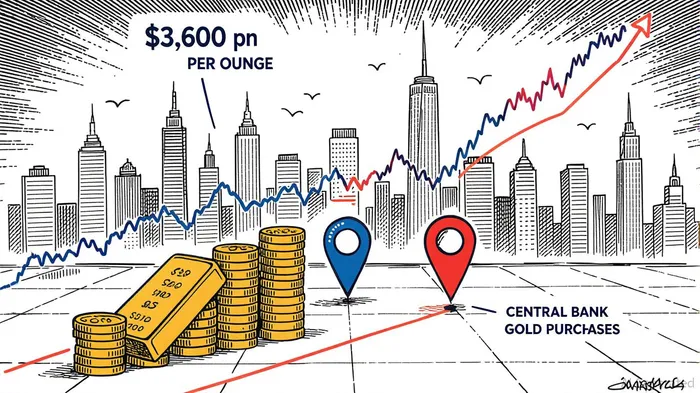
The year 2025 has marked a seismic shift in the global financial landscape, . This surge, driven by a confluence of macroeconomic forces and , reflects deepening investor fears about inflation, , and . But is this a fleeting spike, or the dawn of a sustained bull market?
Central Bank Policy Shifts: From Net Sellers to Strategic Buyers
Historically, central banks have been net sellers of gold, particularly during the 1990s and early 2000s. However, the past decade has witnessed a dramatic reversal. By 2025, BRICS+ nations—China, Russia, . This shift is not merely a response to short-term volatility but a structural reallocation of reserves. Central banks now view gold as a critical hedge against the fragility of , particularly the U.S. dollar.
The 2020 pandemic and the 2022 Russian sanctions crisis exposed the vulnerabilities of dollar-dominated reserves. As a result, , surpassing U.S. Treasuries in significance. The World Gold Council's 2023 survey revealed that 95% of central banks anticipate increasing their gold holdings in the next 12 months, signaling a long-term institutional commitment.
Macroeconomic Drivers: Inflation, Fed Policy, and Geopolitical Tensions
Gold's meteoric rise is underpinned by three macroeconomic pillars:
1. Inflationary Pressures: Persistent inflation, exacerbated by deglobalization and supply chain disruptions, has eroded purchasing power. . .
2. Federal Reserve Policy Uncertainty: The Fed's anticipated rate cuts in 2025 have reduced the opportunity cost of holding non-yielding assets like gold. . .
3. : From U.S.-China trade tensions to regional conflicts, geopolitical risks have intensified demand for safe-haven assets. Gold's universal liquidity and zero counterparty risk make it a preferred hedge in uncertain times.
Expert Commentary: A Structural Bull Case
Leading financial institutionsFISI-- have raised their gold price targets, reflecting confidence in a sustained bull market. J.P. , . These projections hinge on continued central bank demand, de-dollarization trends, and the Fed's accommodative stance.
Gold's also support a bullish outlook. The metal has broken through key resistance levels, completing a multi-year cup-and-handle pattern. Momentum indicators like RSI and MACD suggest continued upward momentum, though short-term overbought conditions may trigger consolidation.
Is This a ?
Historical precedents offer compelling parallels. During the 2008 financial crisis and 2020 pandemic, gold surged as central banks injected liquidity and investors sought safe havens. The current rally mirrors these patterns but with a stronger institutional foundation. , creating a structural price floor.
Moreover, gold's role as a is evolving. With 59% of gold reserves now stored domestically in emerging markets, the metal is becoming a tool for monetary sovereignty. This trend, coupled with environmental and supply constraints, reinforces long-term price resilience.
: Rebalancing Portfolios for the New Era
For investors, the case for gold is clear. , particularly in a low-yield environment. Direct exposure via ETFs (e.g., SPDR Gold Shares) or physical bullion remains a primary strategy. Institutional investors are also leveraging gold-backed derivatives to capitalize on projected price action.
Conclusion: A New Paradigm in Global Finance
Gold's record breakthrough in 2025 is not a fleeting anomaly but a reflection of deepening structural shifts. Central banks, once skeptical of gold's role, now recognize it as a cornerstone of reserve diversification. As geopolitical tensions persist and monetary systems face renewed scrutiny, gold's position as a hedge against inflation and currency devaluation is set to strengthen. For investors, this marks a pivotal moment to rethink gold's role in a modern portfolio—not as a speculative play, but as a strategic asset in an increasingly volatile world.

Delivering real-time insights and analysis on emerging financial trends and market movements.
Latest Articles
Stay ahead of the market.
Get curated U.S. market news, insights and key dates delivered to your inbox.






Comments
No comments yet