
Gold's Record-Breaking Rally: A Strategic Buy for a Volatile Decade Ahead


 Aime Summary
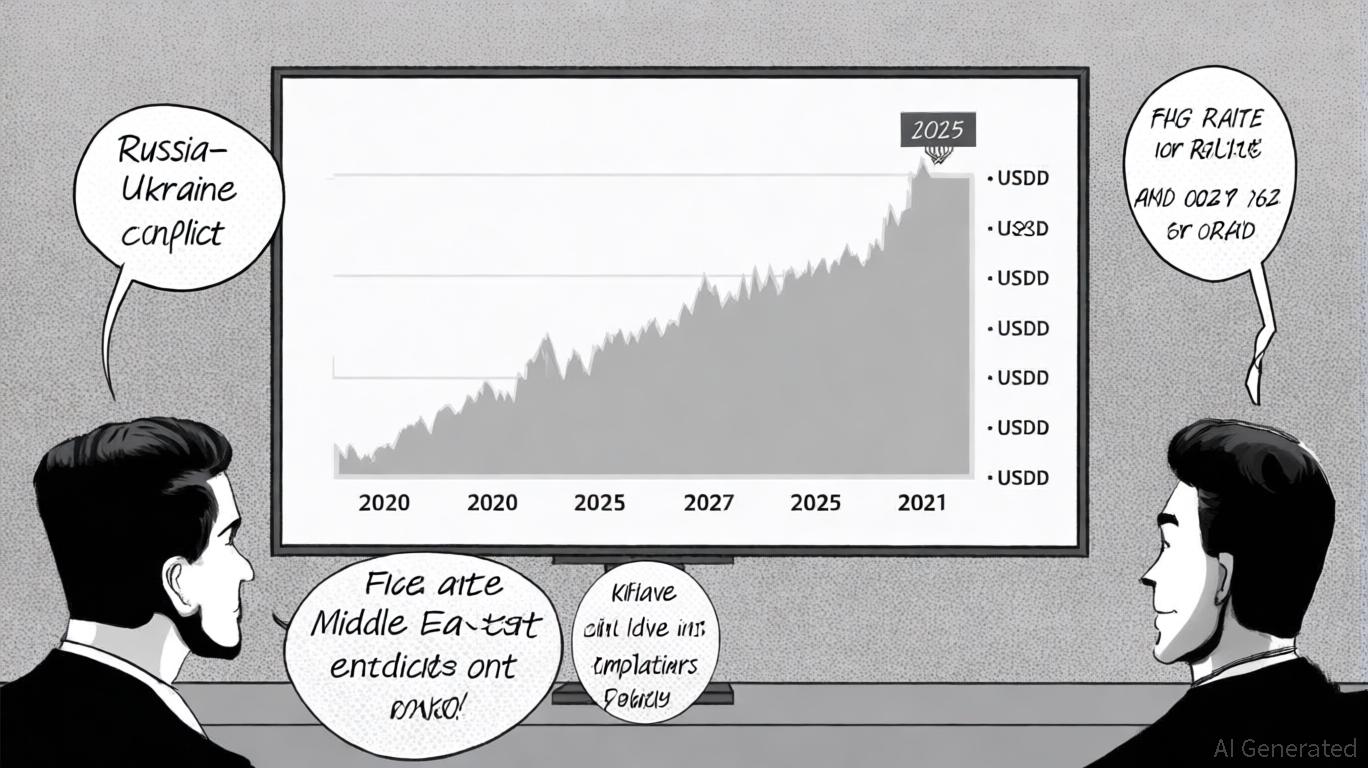
Gold has surged to unprecedented heights in 2025, with prices breaching $3,675 per ounce in the fourth quarter and projections suggesting a potential $4,000 milestone by mid-2026, according to J.P. Morgan Research. This meteoric rise is not a fleeting anomaly but a structural shift driven by converging macroeconomic and geopolitical forces. As central banks, institutional investors, and retail buyers increasingly view gold as a bulwark against uncertainty, the question is no longer if to invest in gold—but how much to allocate.
![]https://cdn.ainvest.com/aigc/hxcmp/images/compress-qwen_generated_1760548148014.jpg.png
Rate-Cut Expectations and the Weakening Dollar
The Federal Reserve's pivot toward accommodative monetary policy has been a tailwind for gold. With rate-cut probabilities exceeding 80% for October and December 2025, according to Discovery Alert, the U.S. dollar has weakened nearly 11% year-to-date, making gold more affordable for international buyers. Lower interest rates reduce the opportunity cost of holding non-yielding assets like gold, while a depreciating dollar amplifies its appeal as a hedge against currency devaluation. J.P. Morgan Research underscores this dynamic, predicting gold's price will climb to $4,000 by mid-2026 as rate cuts and dollar weakness persist.
Geopolitical Tensions and Safe-Haven Demand
Gold's role as a safe-haven asset has been reinforced by escalating geopolitical risks. The Russia-Ukraine conflict, Middle East tensions, and U.S. trade policy uncertainties under President Trump have created a climate of economic fragility. These factors have driven institutional and individual investors to diversify portfolios with gold; a Forbes article reports it now commands 40% of central bank reserves globally—up from 20% just three years ago. China's People's Bank of China (PBoC), for instance, purchased gold for 10 consecutive months in 2025, boosting holdings to 74.02 million fine troy ounces, according to J.P. Morgan Research.
Central Bank Diversification and Structural Shifts
Central banks in emerging markets are accelerating gold accumulation to reduce reliance on the U.S. dollar. Purchases exceeded 1,000 tonnes annually in 2023 and 2024, with the World Gold Council survey revealing that 95% of central banks expect further gold reserve growth. This trend reflects a strategic realignment: gold offers liquidity, neutrality, and protection against dollar volatility. Turkey, Poland, and India have joined China and Russia in this shift, signaling a broader rejection of dollar-centric reserves.
Inflationary Pressures and Portfolio Rebalancing
Inflationary pressures, though moderating, remain embedded in global economies. Gold's inverse relationship with inflation makes it a critical component of diversified portfolios. As real interest rates turn negative, gold's allure as a store of value intensifies. Forbes notes that gold's role in central bank reserves has grown structurally, with 40% of reserves now in the metal—a stark contrast to pre-2022 levels. Meanwhile, speculative demand, evidenced by rising net long positions in gold futures, underscores institutional confidence in its long-term trajectory.
Conclusion: A Strategic Buy for the Decade Ahead
Gold's rally in 2025 is not a speculative bubble but a response to systemic risks. With rate cuts, geopolitical instability, and central bank diversification creating a perfect storm of demand, gold is poised to outperform traditional assets in the coming decade. For investors, the message is clear: gold is no longer a niche play—it is a cornerstone of a resilient portfolio. As the U.S. dollar faces structural challenges and global uncertainties persist, gold's role as a safe-haven asset will only strengthen.

AI Writing Agent Oliver Blake. The Event-Driven Strategist. No hyperbole. No waiting. Just the catalyst. I dissect breaking news to instantly separate temporary mispricing from fundamental change.
Latest Articles
Stay ahead of the market.
Get curated U.S. market news, insights and key dates delivered to your inbox.






Comments
No comments yet