
Gold Prices Surge 15% to $3,400 Amid Economic Uncertainty
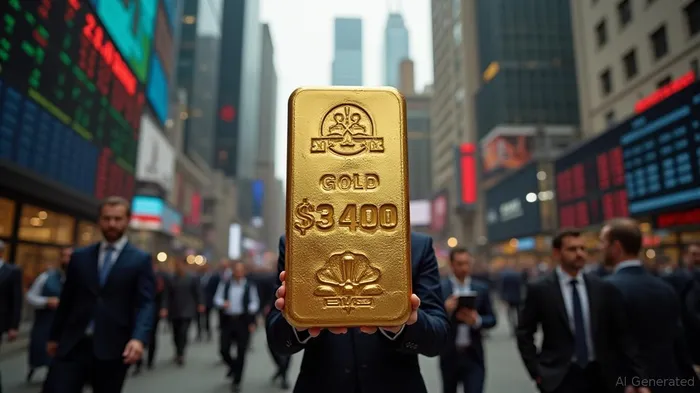
Gold prices have surged past $3,400 as investors seek safe havens amid economic uncertainty. This surge comes as the US Dollar Index has seen a slight increase of around 0.5% this week. While this gain may seem modest, it is significant enough to influence currency markets and slow down the momentum of other assets. The Federal Reserve has revised its growth and inflation forecasts, indicating that the US economy may face challenges ahead. Fed Chair Jerome Powell has stated that inflation could accelerate, adding to the economic uncertainty that is driving investors towards gold.
The strengthening of the US dollar has traditionally put pressure on gold prices, as a stronger dollar makes gold more expensive for foreign buyers. However, the current economic climate has led to a shift in investor sentiment, with many viewing gold as a safe haven asset in times of uncertainty. This shift is evident in the significant increase in gold prices, despite the slight strengthening of the US dollar.
The economic uncertainty is not limited to the US, as geopolitical instability and market fears have also contributed to the surge in gold prices. The recent tensions between Iran and Israel, for example, have added to the overall market volatility and increased demand for safe haven assets like gold. The strengthening US dollar has also put pressure on other currencies, further driving investors towards gold as a stable store of value.
Renowned economist and author Nassim Taleb recently shared insights on the shifting role of the US dollar, illustrating how it is losing its standing as the world’s reserve currency. During an interview, Taleb elaborated on how the dollar no longer provides the security investors seek, prompting a noticeable move towards stock investments as preferred assets over depreciating currencies. He primarily attributes this shift to the far-reaching US sanctions on Russia following its actions in Ukraine. According to Taleb, these sanctions have eroded the trust in the dollar’s ability to function as a reliable reserve currency.
Taleb highlighted that sanctions against Russia and its associates have prompted even those unaffiliated with Russia to reconsider their reliance on the dollar and euro. As a result, there’s been an increasing pivot to gold, now seen as a robust reserve alternative. He also noted this transition didn’t originate during Trump’s era but rather accelerated under the Biden administration, particularly after accounts linked to Russia faced restrictions. This situation has catalyzed the search for reliable reserves beyond the established currencies.
Taleb underlined that while the dollar remains dominant in international transactions, a transition to gold is evident in national reserves. The discussion has sparked debate among financial analysts about underlying shifts in global financial power balances. As geopolitical tensions and sanction-driven decisions reshape the economic landscape, nations are diversifying their reserves significantly. The movement towards gold by financial actors may set new patterns in global finance. Observers are encouraged to track these developments closely as they hold significant implications for the stability and future of international reserve assets.

Stay ahead of the market.
Get curated U.S. market news, insights and key dates delivered to your inbox.


AInvest
PRO
AInvest
PRO



Comments
No comments yet