
Gold Price Surges Past $5,200 as Central Bank Demand and Geopolitical Uncertainty Drive Buying
 Aime Summary
Gold prices surged past $5,200 per ounce in early March 2026, driven by growing demand from central banks and high-net-worth investors. J.P. Morgan and Goldman SachsGS-- both raised their 2026 gold price forecasts, citing structural shifts in global currency dynamics and macroeconomic uncertainty. Gold's price rise reflects a broader trend of diversification and a shift away from the U.S. dollar as the primary reserve currency.
Gold prices are surging well above $5,200 per ounce in March 2026, with central bank demand and global economic uncertainty playing a key role in the rally. This shift is part of a broader macroeconomic rethinking as investors seek alternatives to traditional reserve currencies and equities in an increasingly unstable world. The rise in gold is not just a speculative bet — it reflects a growing consensus among major financial institutions about the changing dynamics of global capital flows.
The recent jump in gold prices has been fueled by a combination of factors. Central banks, especially those in emerging markets, are buying gold at a rate of about 60 tonnes per month, with China maintaining a 15-month streak of purchases. Goldman Sachs noted that this demand is driven by long-term fiscal concerns and structural macroeconomic risks rather than short-term market swings. J.P. Morgan, for its part, 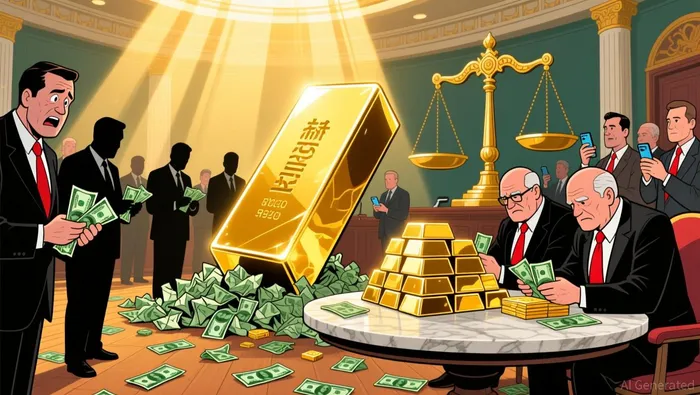 increased its long-term forecast by 15% projecting gold at $4,500 by 2026 and $6,300 by the end of the year.
Why Is Gold Price Today Rising Sharply in 2026?
Gold prices have surged over 20% in 2026, reaching multi-month highs, as investors react to a shifting economic landscape. Persistent inflation, U.S. Treasury divestment, and a global shift away from the U.S. dollar have all contributed to gold's rising appeal. This trend is not just a temporary spike — it reflects a broader reallocation of assets as investors seek stability in an unpredictable world.
In India, for example, gold prices rebounded sharply after a brief dip, with 24K gold reaching Rs 16,157 per gram. This reflects the safe-haven nature of gold, especially amid rising U.S. trade tensions and geopolitical risks in South Asia. The Indian market also shows how domestic currency weakness can influence gold prices even when global prices dip slightly.
Who Is Buying Gold and Why Is It a Concern for Investors Now?
Gold is no longer just a speculative play — it's a mainstream investment tool. High-net-worth individuals, institutional investors, and central banks are all increasing their gold holdings, with call options and ETFs providing more accessible ways to participate in the rally.
Goldman Sachs noted that the buying pressure is coming from three key sources: high-net-worth individuals, institutional investors using call options, and central banks, especially in emerging markets. These purchases are not cyclical or short-term — they reflect a long-term shift in how investors view gold as a financial asset rather than just a commodity.
For the average investor, this means gold is becoming more liquid and more integrated into mainstream portfolios. Gold ETFs and futures contracts now allow retail investors to easily allocate a portion of their portfolio to gold without the logistical burden of physical storage. This is a structural shift that's likely to continue, especially as gold's role as a hedge against inflation and currency devaluation becomes more relevant.
What Do Analysts Predict for Gold Price Today and the Long Term?
Gold's price rise in 2026 is expected to continue into the next few years, with analysts at Bernstein and J.P. Morgan forecasting prices near $5,000 in 2026 and $6,000 by 2030. These projections are based on structural market dynamics rather than short-term volatility.
One of the key drivers is the ongoing shift away from the U.S. dollar in global reserves. As countries like China and India increase their gold holdings, they are effectively reducing their reliance on the U.S. dollar and diversifying their foreign exchange exposure. This trend has major implications for global monetary policy and could reshape international financial markets in the long run.
From an investor standpoint, gold's performance in 2026 highlights its unique role as a cross-asset hedge. Unlike stocks or bonds, gold operates independently of traditional economic cycles and is more resilient during periods of high volatility. This makes it an attractive option for those looking to balance their portfolios against market swings and currency depreciation.
At the end of the day, gold's price surge is more than just a commodity rally — it's a sign of a broader reallocation of assets in response to global uncertainty. For investors, understanding these dynamics is key to navigating the evolving financial landscape and making informed decisions about how to allocate capital in a world of rising inflation and shifting currency dynamics.

Manténgase al tanto de las noticias de Wall Street en tiempo real.
Latest Articles
Stay ahead of the market.
Get curated U.S. market news, insights and key dates delivered to your inbox.
AInvest
PRO
AInvest
PRO



Comments
No comments yet