
Gold Price Skyrockets to Record Highs — What Retail Investors Need to Know in 2025


 Aime Summary
Gold is Making Waves This Year
Gold is making waves this year, breaking through $4,400 per ounce and defying typical market logic. This isn't just a one-off price pop — it's a full-blown rally driven by a combination of central bank demand, geopolitical risk, and expectations of lower U.S. interest rates. For retail investors, this is a moment to understand why gold is surging and what it could mean for your portfolio.
Gold Price Soars to Record Highs
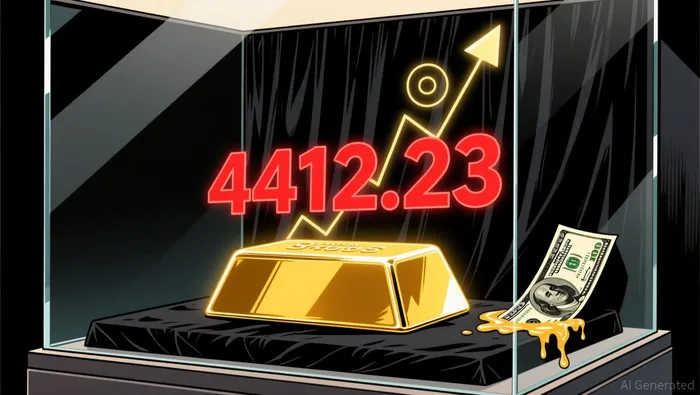
As of December 22, 2025, spot gold hit $4,412.23 per ounce, with some reports even showing levels above $4,420. This represents a more than 68% increase from where the year began, when prices were around $2,600 according to data. The rally has been dramatic but not entirely out of the blue — gold has been on an upward trajectory for months, and now, it's officially broken through key psychological and technical resistance levels.
What's Driving This Surge?
The gold rally isn't just about investor sentiment. Central banks are playing a major role. In 2025 alone, global central banks added hundreds of tons of gold to their reserves, with forecasts suggesting they'll keep buying at a steady clip into 2026 according to analysis. This demand is coming from both emerging and developed economies, as nations look to diversify their reserves and hedge against dollar volatility.
Meanwhile, the U.S. Federal Reserve's rate-cutting cycle continues to fuel demand for gold. With interest rates on the decline, the opportunity cost of holding non-yielding assets like gold drops, making it more attractive. Analysts at J.P. Morgan and Bank of America have both raised their price targets for gold, forecasting it could reach $5,000 per ounce in late 2026.
Geopolitical tensions are also amplifying demand. From U.S. oil blockades to regional conflicts, the global political landscape has become increasingly volatile — and gold thrives in uncertain environments.
For retail investors, the gold surge is a reminder of how interconnected markets can be. If you're considering adding gold to your portfolio, it's important to understand the risks. Unlike stocks or bonds, gold doesn't generate income, and its price can be extremely volatile in the short term. That said, for those looking to hedge against inflation or diversify in a low-interest-rate environment, gold can serve a strategic purpose.
One option for retail investors is the newly launched open-ended gold ETF by The Wealth Company Mutual Fund, which offers a low-cost, transparent way to gain exposure to gold without the hassle of storing physical bullion according to the announcement.
Still, it's crucial to be cautious. While analysts like Ed Yardeni project gold could hit $10,000 per ounce by 2029, the road there might not be smooth. Volatility is expected, especially in the short term as investors digest new data on inflation and job markets.
A Glimpse Into the Future
Looking ahead, most major institutions agree that gold will remain a key asset in the coming years. J.P. Morgan, BofA, and Morgan Stanley all have price targets above $4,500 by mid-2026, with some even higher in the fourth quarter according to forecasts. This optimism is largely based on sustained central bank demand, a weaker U.S. dollar, and the structural inelasticity of gold supply.
However, it's not all about gold — silver is also seeing strong momentum. Over 50% of retail traders expect silver to outperform in 2026, and BMO Capital Markets has significantly raised its 2026 price forecast. That said, gold remains the standout, with analysts forecasting it will outshine other precious metals.
In practice, the next few months could bring volatility as key data releases — like U.S. inflation reports and jobs data — could test the current momentum. But for those with a longer-term view, the case for gold remains strong, and 2026 could be another record year.

Delivering real-time insights and analysis on emerging financial trends and market movements.
Latest Articles
Stay ahead of the market.
Get curated U.S. market news, insights and key dates delivered to your inbox.


AInvest
PRO
AInvest
PRO



Comments
No comments yet