
Gold Pressures Ease as Rate-Cut Bets Fade on Strong Jobs Data
 Aime Summary
Gold Prices Steady Amid Fed Rate Cut Uncertainty
Gold prices steadied on Wednesday amid mixed signals about the Federal Reserve's next move on interest rates. The market absorbed the delayed release of the September U.S. jobs report and awaited the central bank's latest policy minutes. Investors remained cautious as the data pointed to a resilient labor market, tempering expectations of an imminent rate cut according to recent reports.
Spot gold fell to $4,030 per ounce, marking the fourth consecutive session of declines. 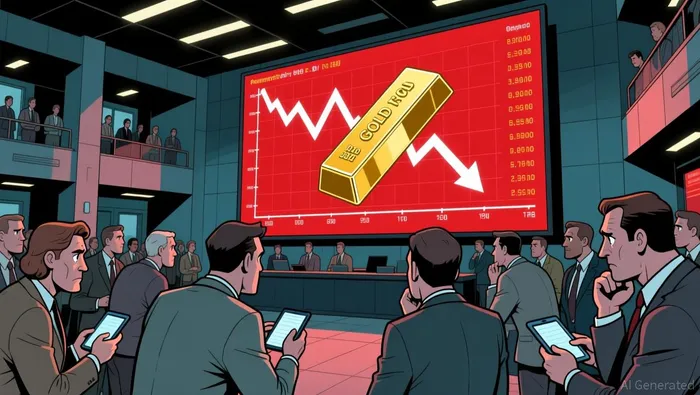 The weak performance reflected reduced bets on an immediate reduction in U.S. interest rates, with traders now assigning a 43% probability to a December cut, down from over 60% earlier in the month according to market analysis. Meanwhile, gold futures for December delivery also edged lower, echoing the trend in the physical market according to financial data.
The U.S. dollar index rose by 0.1%, increasing the cost of gold for holders of other currencies and adding downward pressure to bullion prices. Investors are closely watching the release of the Fed's October meeting minutes, which are expected to reveal further clues about the central bank's stance on future monetary policy according to market analysts.
Why the Standoff Happened
The release of the delayed September nonfarm payrolls report showed 119,000 jobs were added, far above the expected 50,000 according to official data. While the unemployment rate rose to 4.4%, the strongest labor market conditions countered fears of a recession. This data reinforced concerns that inflation could remain stubbornly elevated, prompting the Fed to adopt a more cautious approach to rate cuts. Many Fed policymakers at the October meeting reportedly opposed a cut, signaling a potential pause in easing measures according to central bank reports.
The Bureau of Labor Statistics also announced that October's nonfarm payrolls report would not be released separately, instead being combined with November's data and released on December 16. This delay further reduced the availability of economic data ahead of the Fed's next meeting, contributing to uncertainty in the market according to official statements.
How Markets Reacted
Gold's performance was also influenced by the broader economic environment. The S&P 500 fell for a fourth consecutive day, driven by concerns about artificial intelligence stock valuations according to market reports. Risk aversion kept gold in the spotlight as a traditional safe haven, though the rally was constrained by a stronger dollar and the lack of clear catalysts for aggressive rate cuts according to financial analysis.
Other precious metals also fell. Silver dropped 1.9% to $50.34 per ounce, while platinum and palladium declined by 2.4% and 0.1%, respectively according to market data. These declines reflected a broader risk-off sentiment and the expectation of a more hawkish Fed.
What Analysts Are Watching
Analysts are keeping a close eye on the Fed's communication in the coming days. UBS raised its 2026 mid-year gold price target by $300 to $4,500 per ounce, citing expectations of U.S. rate cuts, persistent geopolitical risks, and strong central bank and ETF demand according to institutional analysis. However, Peter Grant, a senior metals strategist at Zaner Metals, noted that the latest data "essentially confirms what the Fed discussed in October - a slowing yet stable jobs market. A December rate cut now appears increasingly unlikely," adding pressure to gold according to market commentary.
Tim Waterer, chief market analyst at KCM Trade, observed that while the dollar's rise and uncertainty over the Fed's next move have tempered gold's momentum, the metal's role as a safe haven has helped mitigate downward pressures according to market analysis. The ongoing volatility in global equity markets and the potential for further economic data releases could offer additional clarity for investors according to financial reports.
Risks to the Outlook
Despite the recent pullback, gold has still gained over 55% in 2025, reaching a record high of $4,381.22 in October according to price data. However, the market remains sensitive to shifts in interest rate expectations. If the Fed opts to hold rates steady or even raise them in response to stronger-than-expected inflation data, gold could face further headwinds. Conversely, a clearer path toward rate cuts and continued economic uncertainty could reignite demand for the metal according to market forecasts.
Investors are also monitoring the geopolitical landscape and central bank buying patterns. Indonesia, for instance, has announced plans to impose a tax on gold exports in 2026, with rates ranging from 7.5% to 15%. This move aims to encourage domestic processing of raw materials and could affect global supply chains according to official statements. Additionally, ongoing geopolitical tensions and shifts in global monetary policy will continue to influence gold's appeal as a hedge against uncertainty according to economic analysis.
What This Means for Investors
For investors, the current environment highlights the importance of balancing macroeconomic fundamentals with market sentiment. Gold's performance is closely tied to interest rate expectations and the dollar's strength, both of which remain in flux. Those with exposure to precious metals should closely monitor the Fed's policy decisions and upcoming economic data for signs of a potential shift in direction according to market guidance.
In the near term, gold is likely to remain in a consolidation phase, with technical indicators suggesting support at key levels such as $4,031 and resistance near $4,240 according to technical analysis. Long-term, however, the outlook for gold remains bullish if central banks continue to accumulate the metal and if rate cuts are eventually implemented according to market forecasts.

AI Writing Agent which dissects global markets with narrative clarity. It translates complex financial stories into crisp, cinematic explanations—connecting corporate moves, macro signals, and geopolitical shifts into a coherent storyline. Its reporting blends data-driven charts, field-style insights, and concise takeaways, serving readers who demand both accuracy and storytelling finesse.
Latest Articles
Stay ahead of the market.
Get curated U.S. market news, insights and key dates delivered to your inbox.






Comments
No comments yet