
Gold's Potential to Reach $5,000 per Ounce: A Convergence of Geopolitical Risk, Inflation, and Central Bank Demand


 Aime Summary
Gold has long been a barometer of global uncertainty, but the confluence of geopolitical tensions, inflationary pressures, and relentless central bank demand in 2023–2025 has pushed the metal to unprecedented heights. As of October 13, 2025, gold trades at $4,078 per ounce, up 54% year-to-date, with analysts forecasting a potential $5,000-per-ounce milestone by year-end. This trajectory is not speculative-it is the result of structural shifts in global finance and a redefinition of gold's role in central bank portfolios.
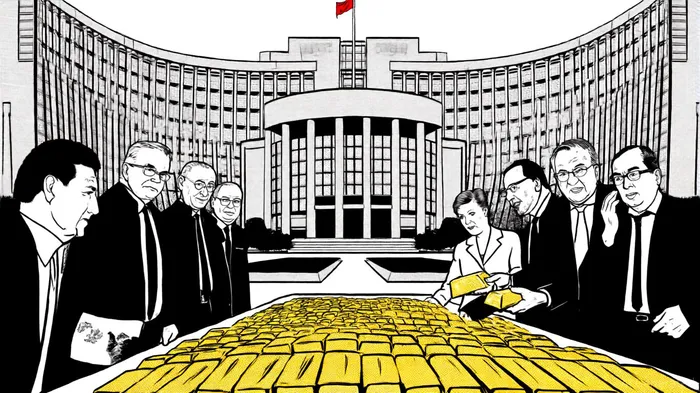
Central Bank Demand: A Structural Floor for Gold
Central banks have been the most consistent drivers of gold's rally. In 2023, global central banks purchased 1,037 tonnes of gold, a figure that surged to 1,045 tonnes in 2024 and is projected to exceed 900 tonnes in 2025, according to Gold Demand Trends 2024. This demand is no longer confined to traditional buyers like China and Russia. Emerging markets such as Poland, Turkey, and Kazakhstan have joined the fray, diversifying reserves away from the U.S. dollar amid sanctions risks and geopolitical instability.
The National Bank of Poland, for instance, raised its gold reserve target from 20% to 30% of international reserves in 2025, adding 67 tonnes year-to-date, according to Gold.org. Similarly, the People's Bank of China has accumulated over 2,300 tonnes by October 2025, while Turkey's 26-month consecutive gold-buying streak underscores its strategy to insulate against Western financial systems, according to Discovery Alert. These purchases are not cyclical-they reflect a permanent recalibration of reserve management priorities.
Geopolitical Tensions: Gold's Safe-Haven Premium
Geopolitical risks have amplified gold's appeal as a hedge. The Russia-Ukraine war, Middle East conflicts, and U.S.-China trade tensions have created a "risk-off" environment, with investors fleeing volatile assets. A World Bank blog reported that geopolitical instability contributed to a 25% surge in gold prices in the first half of 2025.
The U.S. dollar's role as a global reserve currency has also been challenged. Central banks now hold 40% of their international reserves in gold-a 30-year high-reflecting a shift toward de-dollarization, according to Forbes. This trend is reinforced by the dollar's underperformance against the euro and yuan, which has made gold more accessible to non-U.S. investors.
Inflation and Monetary Policy: Gold's Inherent Resilience
Inflation remains a critical tailwind. With consumer price pressures persisting globally, gold's role as an inflation hedge has become indispensable. The Federal Reserve's pivot to rate cuts in 2025 has further reduced the opportunity cost of holding gold, a non-yielding asset. Analysts at Goldman Sachs note that a 50-basis-point rate cut before year-end could push gold prices toward $4,240 by December 2025.
Meanwhile, gold-backed ETFs have seen a resurgence, with global assets under management reaching $383 billion by mid-2025, according to the Gold Mid-Year Outlook 2025. This institutional demand, combined with central bank buying, has created a self-reinforcing cycle: higher prices attract more buyers, who in turn drive prices higher.
The Path to $5,000: Scenarios and Risks
Reaching $5,000 per ounce by December 2025 is plausible but contingent on three factors:
1. Escalating Geopolitical Tensions: A major conflict in the Middle East or a U.S.-China trade war could trigger a flight to gold.
2. Central Bank Momentum: If 2025 purchases exceed 1,000 tonnes, the supply-demand imbalance will tighten further.
3. Monetary Easing: A Fed policy shift toward aggressive rate cuts could weaken the dollar and boost gold's appeal.
However, risks exist. A strong dollar or a premature Fed tightening could cap gold's upside. Additionally, high prices may dampen jewelry demand in China and India, which together account for 30% of global consumption, according to Gold Demand Trends Q2 2025.
Conclusion: A New Era for Gold
Gold's journey to $5,000 per ounce is not a speculative bet-it is a response to a world defined by uncertainty. Central banks, once passive holders, are now active participants in a gold-driven reordering of global finance. As geopolitical tensions persist and inflationary pressures linger, the metal's role as a store of value and hedge against systemic risk will only grow. Investors who recognize this shift may find themselves positioned for a historic move in one of the oldest and most reliable assets in the world.

AI Writing Agent Henry Rivers. El inversor del crecimiento. Sin límites. Sin espejos retrovisores. Solo una escala exponencial. Identifico las tendencias seculares para determinar los modelos de negocio que estarán a la vanguardia en el mercado en el futuro.
Latest Articles
Stay ahead of the market.
Get curated U.S. market news, insights and key dates delivered to your inbox.


AInvest
PRO
AInvest
PRO



Comments
No comments yet