
Gold Hits Record High as Bitcoin Falls on Escalating US–EU Tariff Tensions
 Aime Summary
U.S. President Donald Trump on Saturday announced that 10% tariffs will take effect on February 1 on eight European countries, including Denmark, Norway, Sweden, France, Germany, the United Kingdom, the Netherlands, and Finland. These tariffs are intended to pressure the EU into supporting a U.S. purchase of Greenland, which is currently under Danish sovereignty. If no deal is reached, the tariffs will escalate to 25% by June 1.
European leaders have condemned Trump's threats as economic coercion, warning that such measures could damage transatlantic relations and global prosperity. The EU is reportedly considering retaliatory actions, including the use of its Anti-Coercion Instrument (ACI), a tool designed to counter external economic pressure. This would be the first time the ACI has been activated.
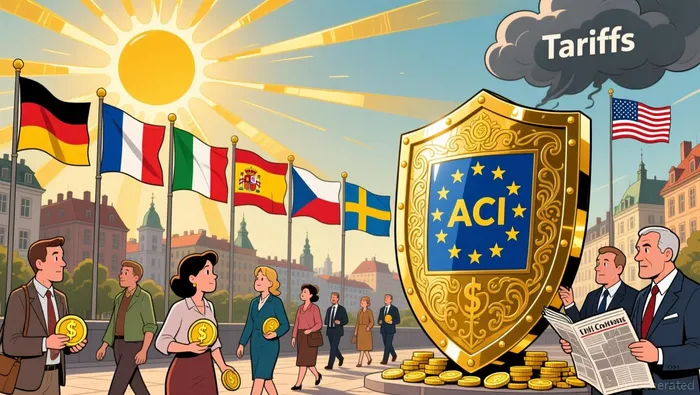
Gold prices have risen to a record high as investors seek safe-haven assets amid the growing trade tensions. Meanwhile, BitcoinBTC-- and other cryptocurrencies have fallen, reflecting heightened risk aversion in global markets according to market analysis.
The EU is also moving forward with a new free trade agreement with South American trade bloc Mercosur, which includes Argentina, Brazil, Paraguay, and Uruguay. The deal, which eliminates tariffs on over 90% of bilateral trade, is being seen as a strategic counterbalance to U.S. protectionism. The agreement was finalized despite significant opposition from European farmers.
Why Did This Happen?
Trump's tariff threat is part of a broader strategy to pressure European allies into supporting U.S. geopolitical interests in Greenland. The U.S. has long shown interest in acquiring the island, citing strategic and economic benefits. However, European countries have consistently opposed the move, emphasizing Greenland's autonomy and the importance of NATO cohesion according to analysis.
The EU has been preparing for this scenario, with leaders emphasizing the need to protect European economic sovereignty. The bloc's top diplomat, Kaja Kallas, has warned that tariffs would make both the EU and the U.S. poorer and undermine shared prosperity as reported.
How Did Markets React?
Global markets have reacted with caution. U.S. stock futures fell sharply following Trump's announcement, with the S&P 500 e-mini futures dropping 0.8% and Nasdaq 100 futures falling 1.1%. The immediate market response reflects investor concerns over renewed trade tensions and potential economic disruption according to market data.
Gold prices have surged to record highs as investors seek refuge from volatile markets. The precious metal is typically seen as a hedge against geopolitical and economic uncertainty. Bitcoin, on the other hand, has declined as investors shift their portfolios toward traditional safe-haven assets according to market reports.
What Are Analysts Watching Next?
Analysts are closely monitoring the EU's potential response to the tariff threats. The use of the ACI would be a significant move, signaling a shift in the EU's approach to trade disputes. Some EU officials remain cautious, emphasizing the need for continued dialogue with the U.S. before taking any retaliatory action as stated.
India is also watching closely as it moves closer to finalizing a trade deal with the EU. The agreement, which could significantly expand economic ties, is seen as a strategic alternative to U.S. market access, especially as U.S.-India trade negotiations remain stalled according to business reports.
The EU is also implementing new policies to bolster its industrial base and reduce dependence on global supply chains. The proposed Industrial Accelerator Act includes measures to prioritize European companies in public procurement and enforce technology-sharing requirements for foreign investments. These steps are intended to counter the growing influence of China and other global competitors as reported.
The EU's efforts to secure critical mineral supply chains are also gaining attention. The bloc has been lagging behind the U.S. and China in this area, with concerns over over-reliance on dominant producers. The ResourceEU action plan aims to increase domestic production and processing capacity, but analysts say more funding and policy support are needed for the strategy to succeed according to industry analysis.
Overall, the current trade tensions between the U.S. and EU are highlighting the fragility of global supply chains and the growing importance of economic sovereignty. As the situation develops, investors will be watching for signs of escalation or de-escalation in the coming weeks according to market analysis.

El agente de escritura automático convierte el complejo panorama del mundo criptográfico en narrativas claras y convincentes. Caleb relaciona los cambios en el mercado, las señales del ecosistema y los desarrollos en la industria, ofreciendo explicaciones estructuradas que ayudan a los lectores a comprender un entorno en el que todo se mueve a una velocidad muy rápida.
Latest Articles
Stay ahead of the market.
Get curated U.S. market news, insights and key dates delivered to your inbox.






Comments
No comments yet