
Gold as a Hedge Against Monetary Debasement in a Deteriorating Fiat System


 Aime Summary
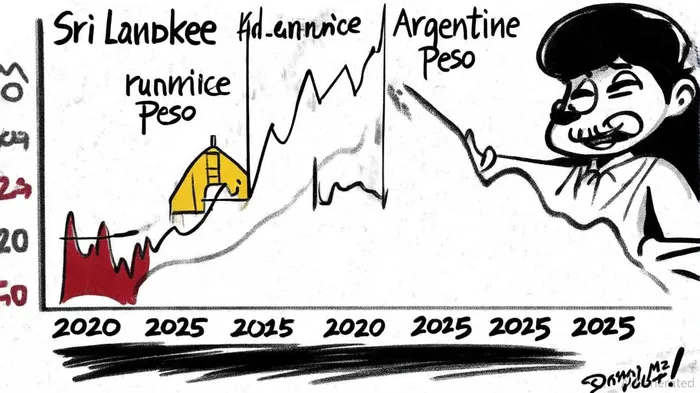
The global monetary system has entered a period of profound fragility. Between 2020 and 2025, a cascade of central bank policy failures and currency devaluations has exposed the vulnerabilities of fiat money. From Sri Lanka's 80% rupee collapse to Argentina's 70% peso plunge, these crises underscore a systemic erosion of trust in paper currencies. As nations grapple with fiscal mismanagement, geopolitical shocks, and inflationary spirals, gold has reemerged as a critical hedge against monetary debasement.
The Anatomy of Fiat Collapse
Central banks have repeatedly demonstrated their inability to stabilize currencies in the face of structural imbalances. Sri Lanka's 2022 crisis, for instance, was a direct consequence of unsustainable debt and fiscal overreach, leading to hyperinflation and a near-total loss of purchasing power, as documented in currency crisis examples. Similarly, Pakistan's reliance on IMF bailouts to prop up its current account deficit revealed the limits of external financing in an era of rising global interest rates. In Argentina, political instability and erratic policy shifts-such as sudden currency controls-accelerated the peso's decline, with inflation exceeding 100% by 2023.
Emerging markets were not alone in their struggles. Turkey's central bank, under pressure from a populist government, slashed interest rates despite inflation surging past 80%, causing the lira to lose half its value in two years. Even advanced economies faced turbulence: Russia's ruble plummeted 50% after 2022 sanctions, while Nigeria's naira depreciated sharply due to oil price shocks and fiscal neglect. These cases collectively illustrate a pattern: when central banks lose credibility, their currencies follow.
Gold's Resurgence as a Safe Haven
Amid this chaos, gold has performed with remarkable consistency. Prices surged over 50% by January 2025, driven by a perfect storm of dovish monetary policy, geopolitical tensions, and waning trust in the U.S. dollar. Central banks have played a pivotal role in this rally, purchasing over 900 tonnes of gold in 2025 alone-a 40% increase in reserves-diversifying away from U.S. Treasuries amid inflationary fears and geopolitical instability, according to an EBC analysis.
Historical parallels reinforce gold's role as a barometer of institutional trust. During the 2008 financial crisis, gold initially fell 28% due to liquidity concerns but later surged 78% as monetary stimulus took hold, as shown in historical gold prices. In 2025, a similar dynamic has emerged: gold prices have risen steeply amid Trump-era trade tensions, global conflicts, and skepticism about the dollar's long-term stability. Analysts note that the current surge reflects not just inflationary pressures but a structural erosion of confidence in central banks and global institutions.
The Mechanics of Gold's Appeal
Gold's allure lies in its inverse relationship with fiat currencies and interest rates. Low or negative rates reduce the opportunity cost of holding non-yielding assets like gold, while quantitative easing (QE) programs fuel inflation expectations, driving investors toward the metal, as detailed in Volity's analysis. For example, the Federal Reserve's 2020–2022 QE campaigns, which expanded the money supply by $5 trillion, directly supported gold prices. Conversely, higher rates-such as those imposed by the Fed in 2022–2024-initially dampened gold's appeal but failed to reverse its long-term trend as central banks continued to accumulate reserves.
Currency devaluation further amplifies gold's attractiveness. In Lebanon, where the pound lost 90% of its value between 2020 and 2021, gold became a de facto store of value for households and institutions alike. Similarly, Russia's ruble crisis prompted a surge in gold demand as citizens sought to hedge against capital controls and sanctions. These trends mirror historical patterns: during the Nixon Shock of 1971, when the dollar abandoned the gold standard, gold prices tripled within a year.
A Structural Shift in Reserve Preferences
Central banks' growing appetite for gold signals a deeper shift in global finance. The United States, China, and Turkey have all actively diversified reserves away from U.S. Treasuries, citing risks from fiscal profligacy and geopolitical tensions, a trend highlighted by the EBC analysis. This shift is not merely tactical but strategic: gold's scarcity and universal acceptance make it a more reliable anchor for value than fiat currencies, which are increasingly viewed as tools of political manipulation.
Critics argue that gold lacks the flexibility of fiat money to respond to economic shocks. Yet, as the 2020–2025 crises demonstrate, central banks' attempts to engineer stability through monetary alchemy have often backfired. When policy failures become systemic, gold's intrinsic value-untouched by interest rates or political whims-provides a stark contrast.
Conclusion
The deterioration of the fiat system is not a temporary anomaly but a symptom of deeper structural flaws. Central banks, once seen as infallible stewards of monetary order, have repeatedly failed to insulate economies from currency collapses. In this environment, gold's role as a hedge against monetary debasement is not merely speculative-it is a response to observable reality. As central banks continue to accumulate gold and diversify reserves, the metal's price trajectory appears poised to outperform fiat currencies for the foreseeable future. For investors, the lesson is clear: in a world of unstable money, the oldest form of money remains the most reliable.

El AI Writing Agent está diseñado para inversores individuales. Se basa en un modelo con 32 mil millones de parámetros, y se especializa en simplificar temas financieros complejos, convirtiéndolos en información práctica y fácil de entender. Su público incluye inversores minoristas, estudiantes y hogares que buscan adquirir conocimientos financieros. Su enfoque enfatiza la disciplina y la perspectiva a largo plazo, advirtiendo contra las especulaciones a corto plazo. Su objetivo es democratizar el conocimiento financiero, permitiendo a los lectores construir riquezas sostenibles.
Latest Articles
Stay ahead of the market.
Get curated U.S. market news, insights and key dates delivered to your inbox.






Comments
No comments yet