
Gold's Golden Opportunity in a World of Trade Turmoil
The air is thick with trade tension. Fresh tariff threats from Washington, retaliatory moves from Beijing, and Europe's scramble to protect its industries—this is the volatile backdrop investors face today. Amid this chaos, one asset stands out: gold. Why? Because when trade wars heat up, gold doesn't just shine—it explodes. Let's unpack how policy uncertainty is creating asymmetric upside for the metal, and why now is the time to stack your portfolio with GLDGLD--.
The Historical Case for Gold in Trade Wars
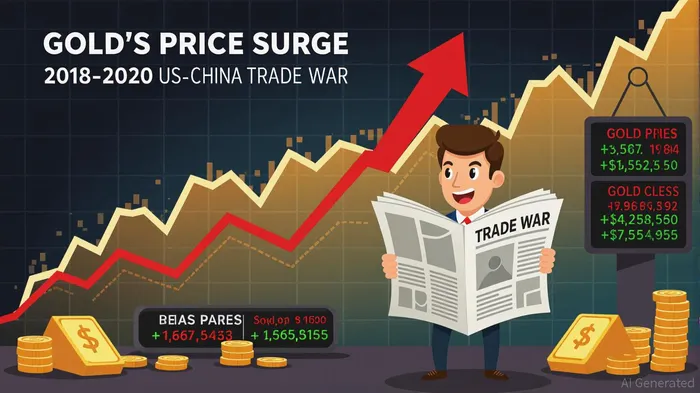
History is clear: prolonged trade conflicts ignite gold's safe-haven demand. Take the U.S.-China trade war (2018–2020), which saw gold rise 18.4% as investors fled to stability. The initial Trump tariffs in 2018 sent prices spiking 3.7% in days—a classic “buy the fear” moment. Conversely, when a truce emerged in 2020, gold dipped 2.8%, proving its inverse relationship with diplomatic calm.
But not all trade wars are equal. Pre-2018 disputes, like Reagan's 1980s tariffs or Bush's short-lived 2002 steel tariffs, barely moved the needle. Why? They were temporary and narrow, lacking the sustained global uncertainty needed to fuel gold's rally. Today's trade tensions? They're anything but fleeting.
Why This Trade War Is Different
The current geopolitical climate mirrors the 2018–2020 era—but with even higher stakes. Trump's latest tariff threats target everything from Chinese semiconductors to Mexican steel, while Europe retaliates with tariffs on U.S. agricultural exports. This isn't sector-specific sparring; it's a full-blown system stress test.
The key asymmetry? The downside risk for gold is limited—central banks hold it, and its 2,600-year track record as a crisis hedge won't evaporate. But the upside? If trade talks collapse and inflation surges (as it did in 2019), gold could hit $2,500/oz. Even a modest escalation could push it past $2,000.
The Fed and the Dollar: A Gold Crosscurrent
Here's the twist: the Fed's next move could amplify gold's gains. If the central bank hikes rates further, the dollar might strengthen—temporarily pressuring gold. But remember: inflation is the true driver. If supply-chain disruptions (a trade war side effect) push prices higher, gold will shrug off dollar strength.
Meanwhile, Europe's trade retaliation isn't just about tariffs—it's about diversifying away from the dollar. The EU's push to denominate energy deals in euros, not dollars, weakens the greenback's hegemony. A weaker dollar = stronger gold.
Positioning: GLD as Your Volatility Hedge
You don't need to mine gold to own it. The SPDR Gold Shares ETF (GLD) gives you instant exposure to the metal's price movements, with low fees and liquidity. Here's why GLD is your best bet now:
- Liquidity: Trade it like a stock, but capture gold's upside.
- Diversification: It's a proven hedge against equity volatility—during the 2020 trade truce, GLD dropped less than the S&P 500.
- Asymmetric Risk: The cost of being wrong is low (gold's floor is its industrial demand), but the reward is sky-high.
The Bottom Line: Buy GLD Now—Before the Next Tariff Round
The writing is on the wall: trade policy uncertainty isn't going away. Whether it's Trump's next tweet or Beijing's countermeasures, volatility is here to stay. Gold—and its ETF proxy, GLD—offers a no-brainer hedge.
This isn't a “get rich quick” play. It's a strategic long position to protect your portfolio's downside while capitalizing on the next leg of gold's rally. The data, the history, and the geopolitical reality all point to one conclusion: stack your gold before the storm hits full force.
Investing involves risk, including loss of principal. Past performance does not guarantee future results.

Stay ahead of the market.
Get curated U.S. market news, insights and key dates delivered to your inbox.
AInvest
PRO
AInvest
PRO



Comments
No comments yet