
Gold ETF (GLD) Hits New 52-Week High Amid Macro Volatility


 Aime Summary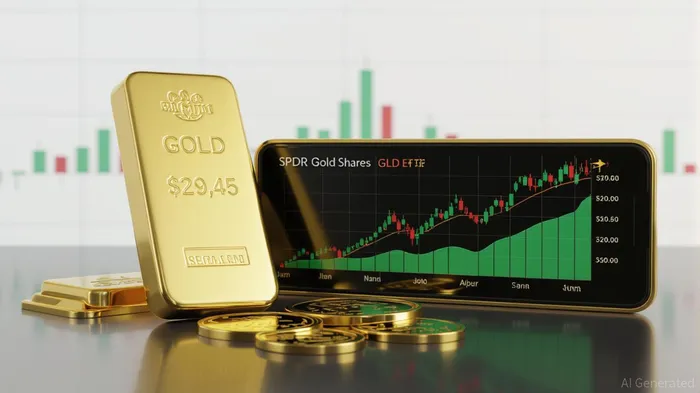
The SPDR Gold Shares (GLD), the largest gold ETF in the U.S., has reached a 52-week high of $329.45 as of September 3, 2025, signaling a seismic shift in investor sentiment amid macroeconomic turbulence. With assets under management (AUM) now exceeding $111 billion, GLD's surge reflects a broader reallocation of capital toward gold as a hedge against inflation, stagflation, and geopolitical uncertainty. This article examines the institutional forces driving demand for GLDGLD--, the macroeconomic underpinnings of gold's resurgence, and what this portends for its role in modern portfolios during volatile times.
Institutional Demand and the Macroeconomic Catalysts
The recent $383 billion inflow into GLD by mid-2025 underscores a strategic pivot by institutional investors. Central banks in India, China, Turkey, and Poland added 900 tonnes of gold to reserves in 2025 alone, a trend accelerated by de-dollarization efforts and concerns over fiat currency devaluation. Meanwhile, AI-driven productivity gains in sectors like semiconductors and data centers have created short-term inflationary bottlenecks, compounding macroeconomic uncertainty.
GLD's appeal lies in its ability to provide liquidity and transparency, making it a preferred vehicle over physical gold. Regulatory mandates in emerging markets, such as China's requirement for insurers to hold physical gold, have further amplified demand. As the Federal Reserve's rate-cut trajectory reduces the opportunity cost of non-yielding assets, gold's price action has become a barometer for risk-asset reallocation.
Gold as a Stagflation Hedge: Historical and Contemporary Context
Gold's role as a hedge during stagflation—high inflation coupled with economic stagnation—has been reaffirmed in 2024–2025. The U.S. core PCE index hit 2.9% in July 2025, while wage dynamics disrupted by AI-driven job reallocations have intensified macroeconomic volatility. Goldman SachsGS--, which now forecasts gold prices to reach $3,700–$4,000 per ounce by 2026, highlights gold's asymmetric risk-reward profile. Unlike traditional assets, gold retains value during institutional crises, as seen in the 1970s stagflation era when prices surged from $35 to $800 per ounce.
Central bank independence has also come under scrutiny, with political pressures on the Federal Reserve threatening its credibility. A 1% reallocation of U.S. Treasury holdings to gold, GoldmanGS-- notes, could push prices to $5,000 per ounce. This scenario underscores gold's potential as a systemic hedge in an environment of eroding trust in traditional financial systems.
Portfolio Reallocation Strategies: The Total Portfolio Approach (TPA)
Institutional investors are increasingly adopting the Total Portfolio Approach (TPA), which integrates traditional assets, risk factors, and alternative investments into a unified framework. CPP Investments, Australia's Future Fund, and Singapore's GIC have all shifted from siloed Strategic Asset Allocation (SAA) models to TPA, prioritizing dynamic rebalancing and risk-aware decision-making.
For example, CPP Investments' C$632 billion portfolio now emphasizes macroeconomic factors like interest rates and credit spreads, viewing asset classes as contributors to broader risk-return outcomes. Similarly, the Future Fund's focus on risk factors and volatility targeting has enabled it to reduce exposure to equities during high-volatility periods, enhancing portfolio resilience. These strategies align with gold's role as a diversifier, particularly in stagflationary environments where traditional 60/40 portfolios falter.
Investment Implications and Strategic Positioning
For investors, GLD's performance signals a critical inflection pointIPCX--. Gold's 42.49% price increase over the past year, coupled with its 35.52% year-to-date gain, highlights its effectiveness as an inflation hedge. However, the ETF's liquidity and transparency make it particularly attractive for those seeking exposure without the logistical challenges of physical bullion.
In a stagflationary scenario, portfolios should consider allocating 10–20% to real assets, including gold, to mitigate downside risks. The Total Portfolio Approach further supports this, as it allows for flexible capital allocation based on macroeconomic signals. For instance, a 20% real asset allocation has historically improved risk-adjusted returns for U.S. pension funds, reducing volatility and drawdowns.
Conclusion: Gold's Enduring Relevance in a Fragmented World
The surge in GLD's AUM and price reflects a confluence of macroeconomic anxieties, institutional reallocation, and gold's intrinsic value as a store of wealth. As geopolitical tensions, AI-driven economic shifts, and central bank policies continue to shape markets, gold's role as a hedge against uncertainty is likely to expand. For investors, GLD offers a liquid, accessible, and strategic vehicle to capitalize on this trend. In an era of stagflation and systemic risk, gold is not just a commodity—it is a cornerstone of resilient portfolio construction.

Delivering real-time insights and analysis on emerging financial trends and market movements.
Latest Articles
Stay ahead of the market.
Get curated U.S. market news, insights and key dates delivered to your inbox.




Comments
No comments yet