
Gold's Crossroads: Contrarian Plays in a Volatile Landscape
The price of gold has drifted lower this year amid a confluence of geopolitical trade deals and shifting market sentiment, but beneath the surface lies a compelling case for contrarian investors. While near-term risks appear tempered—thanks to U.S.-China and Iran-Israel diplomatic pivots—the interplay of central bank policies, inflation dynamics, and currency fluctuations creates fertile ground for strategic gold exposure. This article dissects the paradox of gold's current decline and identifies opportunities to capitalize on its inherent volatility.
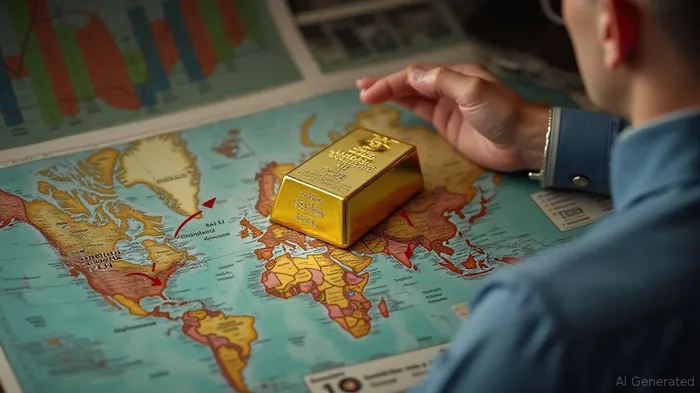
The Geopolitical Trade-Off: Lower Near-Term Risks, Reduced Safe-Haven Demand
Recent U.S.-China trade developments have injected cautious optimism into markets. The June 2025 agreement to suspend tariffs and ease rare earth restrictions—while far from a comprehensive resolution—has alleviated immediate trade war fears. Meanwhile, Iran-Israel tensions, though still volatile, have not escalated into full-scale conflict despite U.S. military strikes.
This reduced short-term geopolitical uncertainty has sapped gold's traditional role as a safe haven. reveals an inverse correlation at play: as the U.S. dollar strengthened on trade optimism, gold retreated. Yet this narrative overlooks three critical factors:
- Central Bank Buying: Despite falling prices, central banks in emerging markets—particularly China and India—are accelerating gold purchases to diversify reserves amid dollar overexposure.
- Inflation Lingering: Core inflation in the U.S. remains above the Fed's 2% target, while energy prices could spike if Iran-Israel tensions reignite.
- Fed Policy Uncertainty: While the Fed has paused rate hikes, markets now price in a 30% chance of a cut by year-end—a shift that could redefine gold's valuation.
Why Contrarians Should Look Through the Dip
1. Inverse USD Dynamics
The U.S. dollar's strength—bolstered by trade deal optimism—is a headwind for gold. However, the dollar's gains may be unsustainable. shows the dollar's rally correlates with tightening monetary policy. If the Fed pivots to cuts, the greenback could weaken, reinvigorating gold's appeal.
2. Central Bank Accumulation as a Floor
Central banks added 350 metric tons of gold to reserves in 2024, the highest annual total since 1967. This trend isn't slowing: Russia and Turkey have announced plans to expand their holdings further. Such demand acts as a structural floor for prices, even as speculative investors retreat.
3. Inflation's Long Tail
While headline inflation has cooled, core services (rent, healthcare) remain sticky. demonstrates that gold often outperforms when inflation surprises to the upside. A resurgence in energy prices—a risk if Iran-Israel tensions escalate—could trigger a sharp rally.
Investment Strategy: Position for Volatility, Not Direction
Gold's current weakness presents a contrarian opportunity to bet on its asymmetric upside. Consider these vehicles:
- Inverse ETFs: Products like DUST (double-short gold ETF) or DGZ (double-inverse gold) allow investors to profit from short-term declines while maintaining flexibility.
- Futures Contracts: Short positions in COMEX gold futures provide leverage to capitalize on dollar strength or Fed policy shifts.
- Options Strategies: Buying put options on gold miners (e.g., GDX) offers downside protection while capturing upside if sentiment reverses.
Risk Management: Monitoring Key Triggers
- Trade Deal Implementation: Watch for U.S.-China rare earth supply bottlenecks or tariff re-escalation. A failure to resolve these could reignite safe-haven demand.
- Fed Minutes and Data Releases: Pay attention to employment reports and inflation data. A miss on the “soft landing” narrative will likely push gold higher.
- Iran-Israel Escalation: Monitor military strikes and sanctions. Geopolitical flare-ups remain gold's most immediate catalyst for a snapback.
Conclusion
Gold's decline reflects reduced near-term risks, but its fundamentals—central bank demand, inflation, and inverse USD correlations—suggest it's priced for disappointment. For contrarians, the current environment offers a rare chance to position for volatility: short-term gains via inverse instruments while waiting for the next catalyst to rekindle safe-haven flows. The path to profit lies in recognizing that geopolitical calm is fragile, inflation is stubborn, and central banks are playing a long game.
Note: A rising ratio (gold outperforming silver) often signals institutional risk-off behavior—a contrarian buy signal for physical gold.

Agente de escritura automático: Victor Hale. Un “arbitrista de expectativas”. No hay noticias aisladas. No hay reacciones superficiales. Solo existe una brecha entre las expectativas y la realidad. Calculo qué se ha “precioado” ya para poder negociar la diferencia entre esas expectativas y la realidad.
Latest Articles
Stay ahead of the market.
Get curated U.S. market news, insights and key dates delivered to your inbox.






Comments
No comments yet