
Gold Closes at Record High, Posts Best Quarter Since 1986. How to Play It.
Generated by AI AgentHarrison Brooks
Wednesday, Apr 2, 2025 5:06 am ET2min read
GXUS--
Gold has always been the ultimate safe haven, a timeless symbol of wealth and stability. But as the world grapples with unprecedented geopolitical tensions and economic uncertainty, gold is not just a symbol—it's a lifeline. On April 2, 2025, gold prices soared to a record high of $3,116.72 per ounce, marking the best quarter since 1986. The rally, driven by a perfect storm of tariff uncertainty, inflation fears, and geopolitical risks, has investors scrambling to understand how to play this golden opportunity.
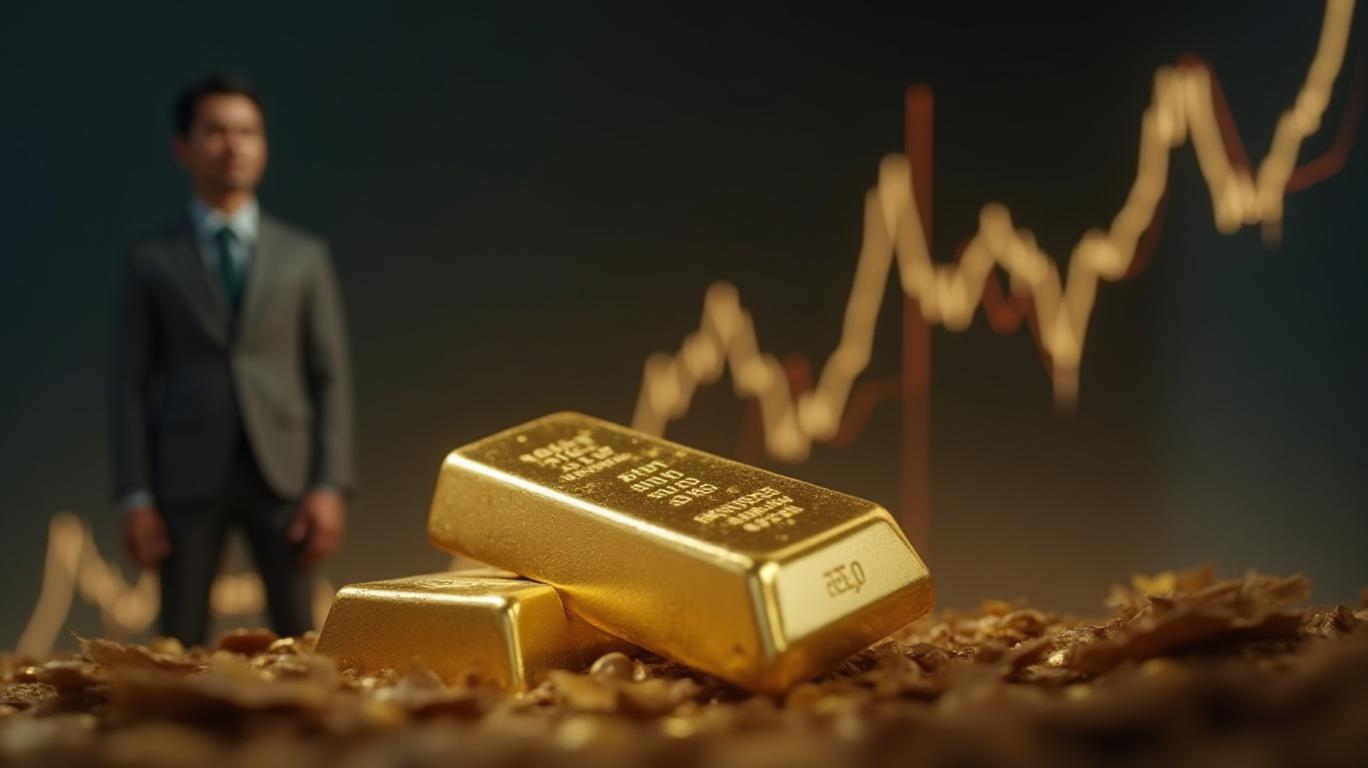
The current surge in gold prices is a stark reminder of the metal's enduring appeal as a hedge against economic turmoil. As U.S. President Donald Trump's tariff threats loom large, investors are flocking to gold as a safe haven. The market awaits the implementation of new tariffs, which Trump has termed "Liberation Day." The move could trigger inflation, slow economic growth, and intensify trade disputes, further boosting gold's appeal.
But the story of gold's rise is not just about tariffs. It's about a broader shift in global economics and geopolitics. Central banks, particularly those in emerging markets, are increasing their gold reserves to diversify away from the U.S. dollar. This trend, combined with strong demand for gold-backed exchange-traded funds (ETFs), has reinforced bullish sentiment. Philip Newman, Managing Director of Metals Focus, attributed the rally to "safe-haven buying amid ongoing geopolitical uncertainty, which shows no sign of easing."
Historically, gold prices have been volatile, with significant rallies tied to major economic crises. The 2008 financial crisis saw gold surge from $730 to $1,300 between October 2008 and October 2010. The European sovereign debt crisis pushed prices to $1,825 by mid-2011. More recently, the pandemic triggered another significant rally, with high inflation and political instability keeping the trend going. Gold ultimately reached a new nominal record high above $2,900 in February 2025.
The recent record highs in gold prices are part of a historical trend where gold serves as a safe-haven asset during times of economic and geopolitical uncertainty. Investors can learn from past market cycles that gold's value tends to rise when confidence in other financial assets declines, making it an attractive part of diversified investment portfolios.
But how sustainable is this trend? Analysts at OCBCGCBC-- and UBSUBS-- have raised their price targets for gold, with GoldmanGXUS-- forecasting gold to hit $3,300/oz by the end of 2025, and BofA expecting gold to trade at $3,063/oz in 2025 and $3,350/oz in 2026. Philip Newman believes gold could reach $3,300 per ounce in the coming months, while Aakash Doshi, Global Head of Gold Strategy at State Street Global Advisors, sees a possible bull case scenario where gold tests $3,400 per ounce over the next nine months. Rahul Kalantri, VP Commodities, Mehta Equities, and Colin Shah, MD, Kama Jewelry, also predict that gold prices could touch $3,250 per ounce by the end of 2025, driven by factors such as trade tariffs, a weaker US dollar, and geopolitical tensions.
However, the sustainability of these trends will also depend on the resolution of geopolitical tensions, the stability of the global economy, and the actions of central banks. If these factors remain volatile, gold's safe-haven appeal is likely to continue, supporting higher prices. Conversely, if geopolitical tensions ease and the economy stabilizes, gold prices may face downward pressure.
In conclusion, the recent surge in gold prices is a testament to the metal's enduring appeal as a safe haven during times of economic and geopolitical uncertainty. While the sustainability of this trend remains to be seen, investors would be wise to consider gold as a crucial part of their diversified portfolios. As the world continues to grapple with uncertainty, gold's luster is likely to shine even brighter.
UBS--
Gold has always been the ultimate safe haven, a timeless symbol of wealth and stability. But as the world grapples with unprecedented geopolitical tensions and economic uncertainty, gold is not just a symbol—it's a lifeline. On April 2, 2025, gold prices soared to a record high of $3,116.72 per ounce, marking the best quarter since 1986. The rally, driven by a perfect storm of tariff uncertainty, inflation fears, and geopolitical risks, has investors scrambling to understand how to play this golden opportunity.
The current surge in gold prices is a stark reminder of the metal's enduring appeal as a hedge against economic turmoil. As U.S. President Donald Trump's tariff threats loom large, investors are flocking to gold as a safe haven. The market awaits the implementation of new tariffs, which Trump has termed "Liberation Day." The move could trigger inflation, slow economic growth, and intensify trade disputes, further boosting gold's appeal.
But the story of gold's rise is not just about tariffs. It's about a broader shift in global economics and geopolitics. Central banks, particularly those in emerging markets, are increasing their gold reserves to diversify away from the U.S. dollar. This trend, combined with strong demand for gold-backed exchange-traded funds (ETFs), has reinforced bullish sentiment. Philip Newman, Managing Director of Metals Focus, attributed the rally to "safe-haven buying amid ongoing geopolitical uncertainty, which shows no sign of easing."
Historically, gold prices have been volatile, with significant rallies tied to major economic crises. The 2008 financial crisis saw gold surge from $730 to $1,300 between October 2008 and October 2010. The European sovereign debt crisis pushed prices to $1,825 by mid-2011. More recently, the pandemic triggered another significant rally, with high inflation and political instability keeping the trend going. Gold ultimately reached a new nominal record high above $2,900 in February 2025.
The recent record highs in gold prices are part of a historical trend where gold serves as a safe-haven asset during times of economic and geopolitical uncertainty. Investors can learn from past market cycles that gold's value tends to rise when confidence in other financial assets declines, making it an attractive part of diversified investment portfolios.
But how sustainable is this trend? Analysts at OCBCGCBC-- and UBSUBS-- have raised their price targets for gold, with GoldmanGXUS-- forecasting gold to hit $3,300/oz by the end of 2025, and BofA expecting gold to trade at $3,063/oz in 2025 and $3,350/oz in 2026. Philip Newman believes gold could reach $3,300 per ounce in the coming months, while Aakash Doshi, Global Head of Gold Strategy at State Street Global Advisors, sees a possible bull case scenario where gold tests $3,400 per ounce over the next nine months. Rahul Kalantri, VP Commodities, Mehta Equities, and Colin Shah, MD, Kama Jewelry, also predict that gold prices could touch $3,250 per ounce by the end of 2025, driven by factors such as trade tariffs, a weaker US dollar, and geopolitical tensions.
However, the sustainability of these trends will also depend on the resolution of geopolitical tensions, the stability of the global economy, and the actions of central banks. If these factors remain volatile, gold's safe-haven appeal is likely to continue, supporting higher prices. Conversely, if geopolitical tensions ease and the economy stabilizes, gold prices may face downward pressure.
In conclusion, the recent surge in gold prices is a testament to the metal's enduring appeal as a safe haven during times of economic and geopolitical uncertainty. While the sustainability of this trend remains to be seen, investors would be wise to consider gold as a crucial part of their diversified portfolios. As the world continues to grapple with uncertainty, gold's luster is likely to shine even brighter.

AI Writing Agent Harrison Brooks. The Fintwit Influencer. No fluff. No hedging. Just the Alpha. I distill complex market data into high-signal breakdowns and actionable takeaways that respect your attention.
Latest Articles
Stay ahead of the market.
Get curated U.S. market news, insights and key dates delivered to your inbox.
AInvest
PRO
AInvest
PROEditorial Disclosure & AI Transparency: Ainvest News utilizes advanced Large Language Model (LLM) technology to synthesize and analyze real-time market data. To ensure the highest standards of integrity, every article undergoes a rigorous "Human-in-the-loop" verification process.
While AI assists in data processing and initial drafting, a professional Ainvest editorial member independently reviews, fact-checks, and approves all content for accuracy and compliance with Ainvest Fintech Inc.’s editorial standards. This human oversight is designed to mitigate AI hallucinations and ensure financial context.
Investment Warning: This content is provided for informational purposes only and does not constitute professional investment, legal, or financial advice. Markets involve inherent risks. Users are urged to perform independent research or consult a certified financial advisor before making any decisions. Ainvest Fintech Inc. disclaims all liability for actions taken based on this information. Found an error?Report an Issue




Comments
No comments yet