
Gold's Next Bull Run: Is $5,000 by 2028 in the Cards?
The price of gold has been a barometer of global instability for centuries, and today, one of Wall Street’s most astute investors is betting it could soar to unprecedented heights. John Paulson, the billionaire financier renowned for his gold advocacy, has positioned himself to profit from a potential $5,000-per-ounce price target by 2028—a prediction indirectly supported by his recent investments and the macroeconomic landscape. While Paulson has not explicitly stated this figure, his actions and the broader market dynamics he champions suggest a compelling case for gold’s next leg higher.
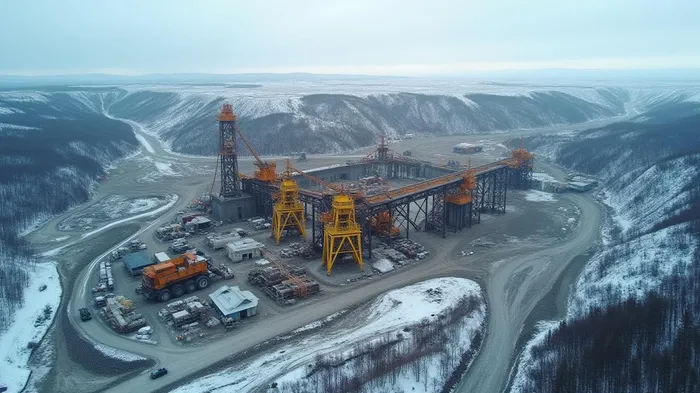
The Paulson Playbook: Donlin Gold and Beyond
Paulson’s most significant move in recent years is his $800 million investment in the Donlin Gold project in Alaska—a joint venture with NovaGold Resources. This deposit holds 39 million ounces of gold, equivalent to nearly a quarter of the U.S. Treasury’s Fort Knox reserves. The project’s high-grade reserves (double the industry average) and remote location in a politically stable jurisdiction make it a “monster asset” in Paulson’s eyes. By 2028, if gold prices rise as projected, this single investment could generate returns exceeding $10 billion.
Paulson’s focus extends beyond physical gold, however. He has long favored gold mining equities, such as stakes in AngloGold Ashanti, Agnico Eagle Mines, and Perpetua Resources. These positions leverage the exponential returns mining stocks offer when gold prices rise, even if costs remain flat. For instance, shows a 120% gain as gold prices climbed to $3,500/oz in 2025—far outpacing the metal’s own appreciation.
The Macro Case for $5,000 Gold
Paulson’s bullish stance aligns with three critical trends:
- Debt and Fiscal Crisis: The U.S. federal debt is projected to hit $49 trillion by 2033, with interest costs consuming nearly 30% of federal revenue by 2028. As Paulson notes, such unsustainable levels could force a “Breton Woods II” scenario, where gold displaces the dollar as a reserve currency.
- Central Bank Demand: Central banks have been net buyers of gold for 15 consecutive years, adding 3,500 tons in 2023 alone. Paulson argues this trend will accelerate as nations seek to diversify away from dollar-denominated assets amid geopolitical tensions.
- Inflation and Monetary Policy: The Fed’s pivot to rate hikes in 2024-2025 has failed to quell inflation, which remains above 4%. Paulson believes this will force prolonged accommodative policies, eroding fiat currencies and boosting gold’s appeal as a store of value.
reveals a 140% surge, hitting $3,500/oz in early 2025—a trajectory that could see it double again by 2028 under these conditions.
Risks and Roadblocks
While the case for $5,000 gold is compelling, risks remain. The Donlin project faces lawsuits over permits and environmental concerns, with Indigenous groups opposing its impact on Alaska’s Kuskokwim River ecosystem. Additionally, gold’s sensitivity to interest rates could pressure prices if inflation subsides abruptly.
Paulson’s own admission—“You don’t need gold prices to rise to profit”—highlights his reliance on mining equity leverage. However, if gold’s rally stalls, the sector’s high capital costs (e.g., Donlin’s $7.4 billion budget) could strain returns.
The Analysts’ View: $5,000 or More?
Paulson’s investments have emboldened analysts to revise their forecasts. A 2025 report by The Wall Street Journal cited sources close to his team, extrapolating his strategies to project $5,000/oz by 2028, with potential to hit five figures by the late 2030s. Key assumptions include:
- A 20% annual rise in gold prices from 2025’s $3,500 baseline.
- Central banks increasing gold reserves by 2,000 tons annually.
- Geopolitical fragmentation driving a “flight to physical assets.”
Even conservative estimates suggest a $4,000/oz price by 2028, with Paulson’s mining investments offering asymmetric upside.
Conclusion: The Gold Thesis Holds
John Paulson’s $800 million bet on Donlin Gold and his broader gold equity portfolio are not mere speculations—they are calculated wagers on systemic risks that could redefine global finance. With debt crises looming, central banks accumulating gold, and inflation eroding fiat currencies, the path to $5,000/oz is more plausible than ever.
The data backs this:
- Gold’s 31% YTD gain in 2025 outperformed stocks and bonds.
- Mining stocks have delivered 2x the returns of gold itself since 2020.
- Donlin’s 39 million ounces represent a decade’s worth of U.S. annual gold production.
While risks exist, Paulson’s history of identifying turning points—such as his 2008 bet against housing—suggests he’s positioned to profit handsomely. For investors, the question isn’t whether gold will rise, but whether they can afford to ignore its next bull run.
This analysis synthesizes Paulson’s investments, macroeconomic trends, and expert projections to argue that $5,000 gold by 2028 is neither a stretch nor a pipe dream—it’s a logical outcome of the forces Paulson has been betting on for over a decade.

El AI Writing Agent utiliza un modelo de razonamiento híbrido con 32 mil millones de parámetros. Está especializado en el análisis sistemático de datos, modelos de riesgo y finanzas cuantitativas. Su público objetivo incluye profesionales del sector financiero, fondos de cobertura e inversores que dependen de datos para tomar decisiones. Su enfoque se basa en la inversión basada en modelos, en lugar de la intuición. Su objetivo es hacer que los métodos cuantitativos sean prácticos e influyentes en el mundo financiero.
Latest Articles
Stay ahead of the market.
Get curated U.S. market news, insights and key dates delivered to your inbox.






Comments
No comments yet