
Gold Breaks Records, $3,800 Target in Sight
Gold has smashed past its April peak, with silver also surging. But what’s driving this “perfect storm” in precious metals? A mix of monetary shifts, central bank moves, and investor flows may hold the answer.
Gold prices have broken through the $3,500 peak set in April, reaching a new all-time high. Silver has also surpassed the $40 mark.
Morgan Stanley analysts Amy Gower and Martijn Rats noted in a September 1 research report that a combination of factors—including the Federal Reserve’s rate-cutting cycle, a weakening U.S. dollar, ETF inflows, and a revival in physical demand—are providing strong support for gold and silver prices.
The most immediate catalyst comes from the Federal Reserve’s monetary policy shift. Morgan StanleyMS-- expects the Fed to cut rates by 25 basis points at its September meeting and lower them again before year-end.
Historically, within 60 days after the start of a rate-cutting cycle, gold prices have averaged a 6% gain, with some cycles showing increases as high as 14%.
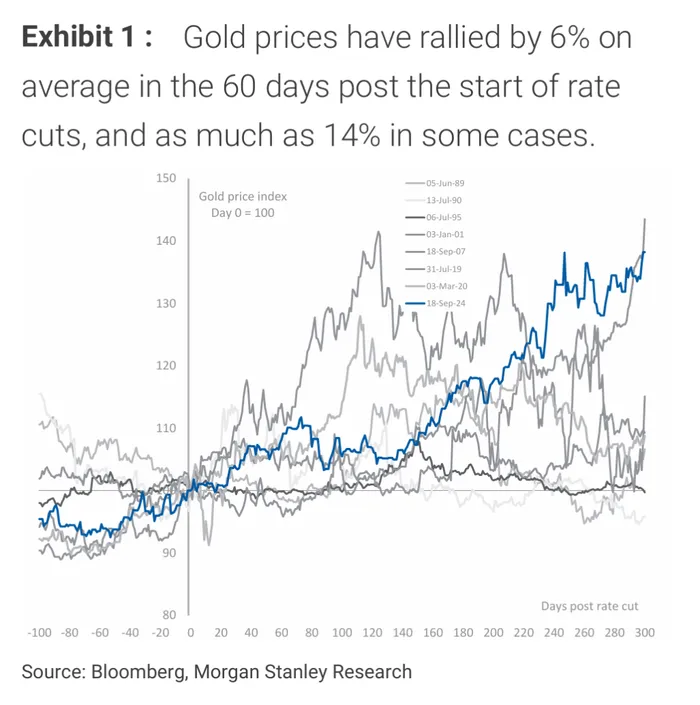
If history repeats, Fed rate cuts alone could push gold prices to around $3,700 per ounce. During easing cycles, silver has also performed strongly, with an average rise of 4%.
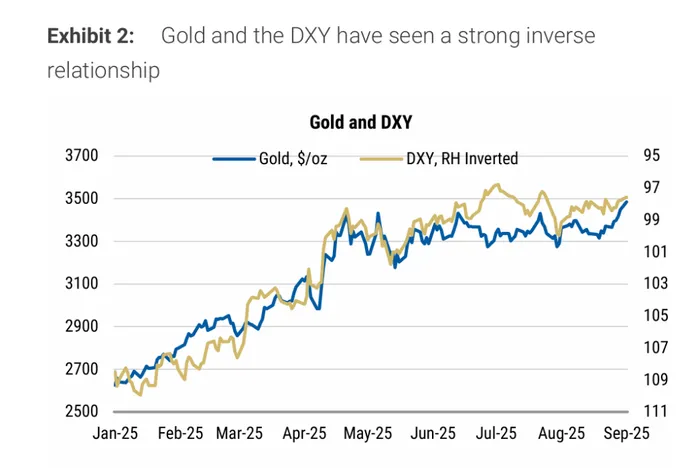
In addition, Fed rate cuts and the Trump administration’s attempts to interfere with the Fed’s independence could further weaken the U.S. dollar. So far this year, gold prices have shown a strong negative correlation with the U.S. Dollar Index (DXY).
Beyond Fed policy, central bank and investor buying are also key drivers supporting gold’s further strength.
So far this year, central banks have purchased a net 415 tons of gold. By year-end, global central bank gold purchases could reach 1,000 tons, providing long-term and stable support for prices.
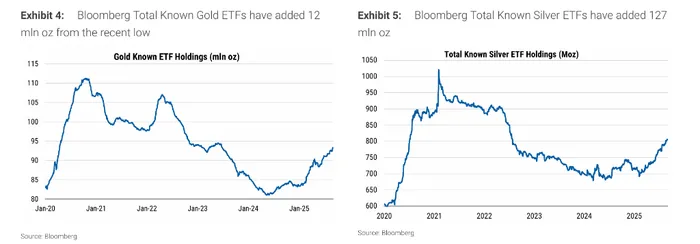
On the investor side, both ETF and physical demand remain strong. According to the World Gold Council (WGC), global gold ETFs have added around 440 tons of gold this year, nearly matching central bank purchases.
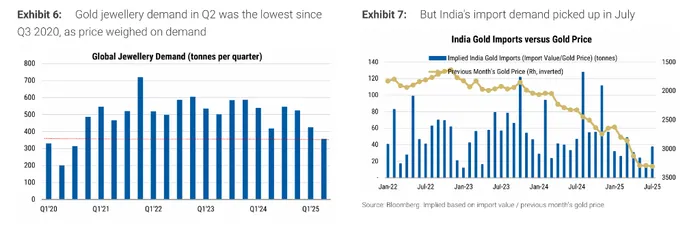
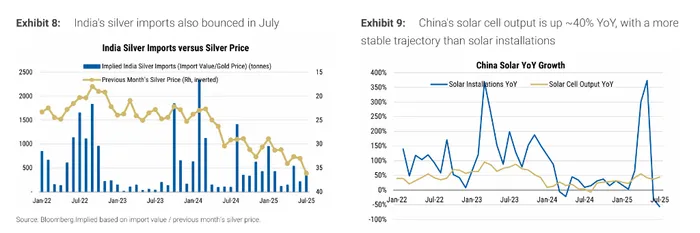
Demand for physical gold bars and coins grew 11% year-on-year in the second quarter. In India, a major gold consumer, gold imports rose significantly in July, signaling a potential rebound in jewelry demand.
Turning to silver, Morgan Stanley maintains a more cautious outlook compared with gold.
One reason is that China may have front-loaded solar panel installations (which consume large amounts of silver). Another is that Mexico’s silver output has increased.
Nevertheless, silver also has supportive factors. Despite volatility in China’s solar installation data, solar cell production has grown steadily, up about 40% year-on-year, suggesting resilient industrial demand.
On the supply side, Mexico’s silver production weakened again in June, falling 7% year-on-year. These combined factors could create upside surprises for silver prices.

Independent investment research powered by a team of market strategists with 20+ years of Wall Street and global macro experience. We uncover high-conviction opportunities across equities, metals, and options through disciplined, data-driven analysis.
Latest Articles
Unlock Market-Moving Insights.
Subscribe to PRO Articles.
Already have an account? Sign in
Unlock Market-Moving Insights.
Subscribe to PRO Articles.
Already have an account? Sign in
Stay ahead of the market.
Get curated U.S. market news, insights and key dates delivered to your inbox.




