
Gold as a Behavioral Hedge: The Reflection Effect and the Psychology of Risk in Uncertain Times


 Aime Summary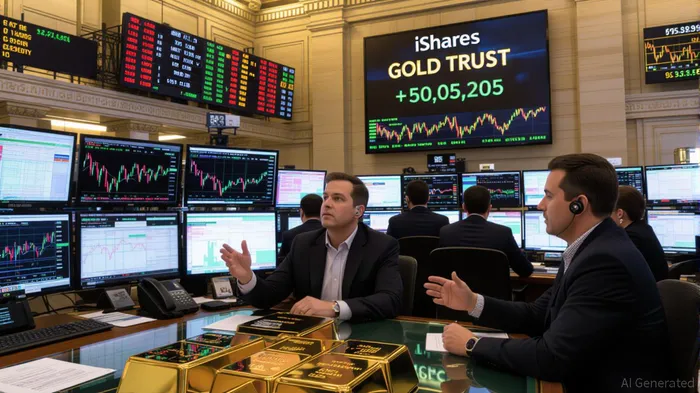
In the ever-shifting landscape of global finance, gold has long been a symbol of stability. Yet its allure in recent years has transcended mere economic fundamentals. From 2020 to 2025, gold's meteoric rise—from $1,800 to $3,500 per ounce—has been driven not just by inflation or geopolitical tensions, but by a deeper psychological force: the reflection effect, a behavioral economics principle that explains how investors invert their risk preferences when faced with perceived losses.
The Reflection Effect: A Behavioral Catalyst
The reflection effect, first articulated by Daniel Kahneman and Amos Tversky, posits that individuals become risk-seeking in domains of loss and risk-averse in domains of gain. This dynamic has played out vividly in gold markets. During the 2020 pandemic and the 2025 geopolitical crisis, investors—fearing capital erosion—flocked to gold as a “gamble” to mitigate losses. For example, when equities cratered in 2020, gold surged 24% in a single year. Similarly, in 2025, as U.S.-China trade disputes and Russia-Ukraine tensions escalated, gold prices hit $3,500/oz, with the iShares Gold Trust (GLD) attracting 397 tonnes of inflows in the first half of the year alone.
This behavior is not irrational. When investors perceive themselves in a “loss domain”—say, after a market crash—they often double down on high-risk, high-reward assets to offset their losses. Gold, with its historical role as a store of value, becomes a psychological refuge. Conversely, during periods of perceived gains (e.g., rising gold prices in 2024), investors tend to lock in profits, creating volatility. This duality is evident in GLD's performance: its holdings ballooned to 3,616 tonnes by mid-2025, the highest since 2022, as both retail and institutional investors sought to hedge against stagflation and currency devaluation.
Gold's Strategic Appeal: A Psychological Buffer
Gold's appeal lies in its dual role as both a tangible asset and a psychological anchor. Unlike equities or bonds, gold does not yield income, yet its demand surges when investors fear the erosion of purchasing power. This is particularly true during inflationary periods, when the U.S. dollar's real value declines. By 2025, the dollar's global reserve share had fallen to 57.8%, spurring central banks in China, Türkiye, and India to purchase an average of 710 tonnes of gold per quarter. These purchases were not merely economic but behavioral: a hedge against the perceived fragility of fiat currencies.
Technical indicators further validate this trend. The Heterogeneous Autoregressive (HAR) model, adjusted for investor sentiment, showed a negative correlation between declining global sentiment and gold's volatility. As geopolitical tensions spiked in 2025, gold's volatility stabilized, reinforcing its safe-haven status. Meanwhile, COMEX non-commercial long positions hit record highs, signaling speculative support for GLDGLD--.
The Behavioral Case for Gold in Portfolios
For investors, positioning gold as a tactical asset requires understanding its behavioral underpinnings. During periods of perceived financial erosion—such as the 2025 stagflationary environment—gold's inverse correlation with equities and U.S. Treasuries makes it an effective diversifier. UBSUBS-- analysts projected a 25.7% price rebound in gold to $3,500/oz by late 2025, driven by both structural factors (e.g., central bank diversification) and psychological ones (e.g., fear of currency collapse).
However, gold is not a panacea. Its performance is conditional: when real interest rates rise, gold often underperforms. For instance, in 2023, as the Federal Reserve aggressively hiked rates, gold prices dipped despite high inflation. This underscores the need for a balanced approach. Gold should complement, not replace, a diversified portfolio.
Investment Implications and the Road Ahead
The reflection effect warns of behavioral pitfalls—panic selling during dips or irrational exuberance during rallies. For example, while GLD's 2025 surge was partly driven by behavioral flows, its volatility increasingly mirrored equities, eroding its traditional safe-haven status. Investors must avoid treating gold as a speculative bet and instead use it as a strategic allocation.
Looking ahead, the interplay between inflation, interest rates, and geopolitical risks will continue to shape gold's role. With central banks expected to maintain gold purchases and global sentiment remaining fragile, gold ETFs like GLD will remain critical vehicles for managing risk.
Conclusion: Gold as a Barometer of Global Anxiety
Gold's journey from a cyclical inflation hedge to a structural portfolio allocation reflects the human condition. Behavioral economics, once a theoretical framework, has become a real-time driver of market behavior. The most successful investors in 2020–2025 were those who recognized and leveraged these psychological forces. As geopolitical tensions persist and central banks continue to diversify reserves, gold ETFs will remain pivotal in navigating an unpredictable world.
For investors, the lesson is clear: in times of uncertainty, gold is not just a metal—it is a mirror of collective fear and hope. And in that reflection lies both risk and opportunity.

Blending traditional trading wisdom with cutting-edge cryptocurrency insights.
Latest Articles
Stay ahead of the market.
Get curated U.S. market news, insights and key dates delivered to your inbox.




Comments
No comments yet