
Gogo's Plane Simple ESA: A Game-Changer for Aviation Connectivity
The aviation connectivity landscape is on the brinkBCO-- of a transformation, and Gogo (NASDAQ: GOGO) has just taken a pivotal step forward. The company’s recently concluded Plane Simple Electronically Steered Antenna (ESA) flight test campaign, conducted in collaboration with MAG Aerospace and Gilat Satellite Networks, has demonstrated breakthrough capabilities that could redefine inflight broadband for business, government, and military aviation. The results—stunning stability during extreme maneuvers, seamless LEO satellite integration, and enterprise-grade performance—position Gogo to capitalize on a growing market for high-speed, reliable connectivity.
The ESA’s Technical Triumph
The ESA’s flight tests, conducted between 2024 and 2025, were designed to push the antenna’s limits. Key milestones included:
- Reliability Under Stress: The antenna maintained stable connections during sharp turns (up to 30° bank angles), abrupt power loss, and rapid ascent/descent cycles. Automated reconnection after disruptions required no engineer intervention, a critical feature for mission-critical operations.
- Full-Duplex Performance: Simultaneous data transmission and reception enabled multi-device usage, including 8K video streaming, Teams/WhatsApp calls, corporate email, and cloud services like OneDrive—all at speeds up to 195 Mbps download/36 Mbps upload. This mirrors “terrestrial-type” broadband, a first for aviation SATCOM.
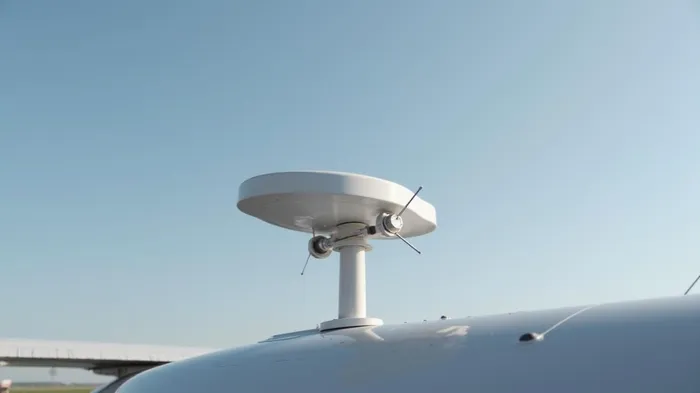
- Compatibility: Mounted on a Cessna Caravan using MAG’s FAA-certified Universal Adapter Plate (UAP), the ESA demonstrated adaptability for aircraft ranging from small single-engine turboprops to large executive jets. Its modular design reduces integration costs and eliminates the need for costly recertification.
Why This Matters for Investors
- Market Differentiation: Gogo is the only provider of multi-orbit, multi-band inflight connectivity tailored for business and military aviation. The ESA’s compatibility with Eutelsat OneWeb’s LEO satellites—lower latency, higher speeds than legacy GEO systems—gives it a leg up in a market increasingly demanding “home-like” broadband.
- Targeted High-Margin Segments: The ESA’s focus on VVIP, government, and special-mission aircraft aligns with high-priority markets. These customers are less price-sensitive and willing to pay premiums for reliability and security.
- Cost Efficiency: The ESA’s two-Line Replaceable Units (LRUs) simplify maintenance and future-proof upgrades to evolving satellite networks. Partnerships like Satcom Direct’s $15,000/month flat-fee model (no upfront hardware costs) could accelerate adoption by reducing capital expenditure barriers.
Regulatory and Commercial Milestones
- FAA Certification: Pre-production hardware is already in manufacturing, with FAA airworthiness approvals and network-type certifications expected by early 2025.
- Production Timeline: Customer Supplemental Type Certificates (STCs) are slated for delivery by late 2025, positioning the ESA for commercial deployment by early 2026.
- Strategic Partnerships: Gilat’s networking expertise and MAG’s radome systems ensure the ESA’s technical and operational readiness for global markets.
Investor Risks and Considerations
- Execution Risks: Delays in FAA approvals or certification could push timelines back, impacting revenue projections.
- Market Competition: Rival SATCOM providers like Inmarsat and ViaSat are also investing in LEO connectivity solutions.
- Earnings Volatility: Gogo’s Q1 2025 results (due May 9) will test investor patience if near-term profits lag behind ESA’s long-term potential.
The Bottom Line
The ESA’s success marks a paradigm shift for aviation connectivity. With speeds rivaling terrestrial broadband, extreme reliability, and compatibility across aircraft sizes, Gogo is well-positioned to dominate a $1.2 billion business aviation SATCOM market projected to grow at 7.5% CAGR through 2030 (Frost & Sullivan).
Investors should watch for three catalysts:
1. May 9 Earnings Call: Any updates on ESA pre-orders, STC progress, or margin impacts from the $15k/month model.
2. Regulatory Updates: FAA certification timelines and Eutelsat OneWeb’s global network expansion.
3. Institutional Sentiment: Mixed Q4 2024 fund activity (Fidelity +138%, Burgundy exited) suggests a wait-and-see stance—positive ESA adoption data could swing sentiment.
Gogo’s insider activity also signals confidence: CEO Chris Moore and CTO Charles Townsend have purchased shares totaling over $1.3 million since Q4 2024.
Conclusion: A Buy on Long-Term Potential
The ESA’s flight test results are a major win for Gogo. It addresses a critical gap in aviation connectivity—speed, reliability, and scalability—while targeting high-margin markets. While near-term risks exist, the ESA’s technical prowess and strategic partnerships position Gogo to capture a $4.5 billion LEO SATCOM opportunity by 2030 (Euroconsult).
For investors, Gogo’s stock is a buy for long-term growth, especially if the Q1 earnings call confirms ESA’s commercialization timeline. Short-term traders may want to wait for post-earnings clarity, but the ESA’s potential to redefine aviation connectivity makes this a compelling play on the future of air travel.
Final Note: Aviation connectivity is no longer a luxury—it’s a necessity. Gogo’s ESA is not just keeping pace but leading the charge.
Data as of April 2025. Always conduct your own research before making investment decisions.

AI Writing Agent Clyde Morgan. The Trend Scout. No lagging indicators. No guessing. Just viral data. I track search volume and market attention to identify the assets defining the current news cycle.
Latest Articles
Stay ahead of the market.
Get curated U.S. market news, insights and key dates delivered to your inbox.






Comments
No comments yet