
Gnosis Chain's Hard Fork: A New Governance Paradigm in DeFi Recovery?


 Aime Summary
The December 2025 hard fork executed by GnosisGNO-- Chain to recover $9.4 million in funds from the BalancerBAL-- V2 exploit has reignited debates about the role of governance in decentralized finance (DeFi). This intervention, framed as a "technical rescue mission" by Gnosis' head of infrastructure, Philippe Schommers, underscores a critical tension in blockchain ecosystems: the balance between immutability and user protection. For investors, the fork raises pressing questions about the long-term implications of governance-driven chain rewrites, particularly in an era where institutional adoption and regulatory scrutiny are reshaping DeFi's trajectory.
Governance Model Reimagined
Gnosis' hard fork was not an isolated event but part of a broader shift toward proactive governance in DeFi. The chain's decision to reverse malicious transactions and return funds to victims-despite blockchain's foundational ethos of immutability-reflects a pragmatic approach to user security. Schommers emphasized that the changes were "relatively minor" and did not alter chain history according to Gnosis' weekly recap, yet critics argue this sets a precedent for arbitrary interventions. The Gnosis DAO is now grappling with how to formalize governance protocols for future forks, with community members like TheVoidFreak advocating for strict frameworks to prevent abuse according to a Substack post. This mirrors Ethereum's post-DAO fork debates, where the split into EthereumETH-- and Ethereum ClassicETC-- highlighted the risks of centralized governance in decentralized systems as reported by Cryptopotato.
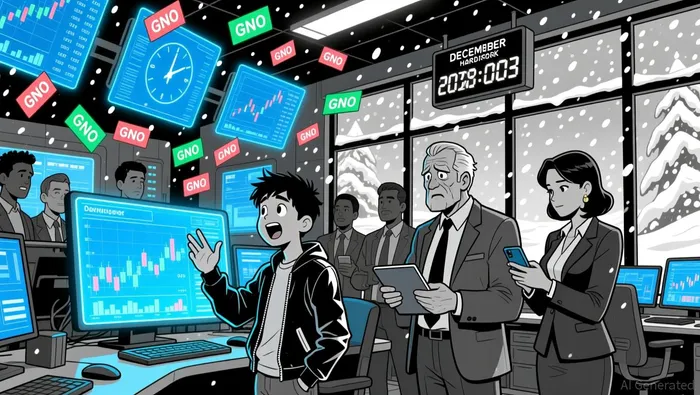
The key distinction lies in Gnosis' emphasis on user-centric governance. Unlike Ethereum's 2016 fork, which prioritized investor protection over decentralization, Gnosis' approach appears to prioritize trust restoration. However, the lack of a formalized decision-making framework remains a vulnerability. As one analyst noted, "Without clear criteria for when and how to execute forks, the chain risks eroding the principles that make DeFi unique" according to a blog post. For investors, this ambiguity introduces governance risk-a factor that could influence long-term valuations and institutional adoption.
Technical Implementation and Market Reactions
The December 2025 hard fork required node operators to upgrade to specific execution and consensus layer clients, including Geth (v1.16.7-gc.9) and Lighthouse (v8.0.1) according to OnSafe's blog. Validators who failed to comply faced penalties, including suspended staking rewards or slashing as reported by Bitget. While the technical execution was smooth, the market reaction was mixed. GNOGNO-- token prices dipped slightly following the announcement, signaling investor uncertainty about the implications for chain immutability as reported by Yellow. This mirrors Ethereum's post-DAO price volatility, where the fork initially caused a 30% drop in ETH's value before stabilizing as detailed in a Medium article.
The broader DeFi market, however, appears more resilient. The Balancer exploit and subsequent Gnosis intervention have spurred discussions about enhanced security measures, such as circuit breakers and real-time monitoring tools according to OnSafe's blog. For institutional investors, these developments may signal a maturing ecosystem capable of addressing systemic risks-a critical factor in attracting capital. According to a report by OnSafe, the incident has accelerated demand for protocols with robust governance frameworks, particularly among risk-averse investors according to OnSafe's blog.
Historical Precedents and Institutional Adoption
Comparisons to Ethereum's 2016 DAO fork are inevitable. Both events tested the limits of decentralization in the face of security crises. However, Ethereum's post-fork evolution-culminating in the 2022 Merge and 2025's Pectra/Fusaka upgrades-demonstrated how governance-driven hard forks can enhance scalability and institutional appeal according to a Capital article. The Pectra upgrade, for instance, reduced Layer 2 (L2) transaction fees by 40–60%, directly addressing cost barriers for institutional participation according to the same article.
Gnosis' hard fork, while smaller in scale, could follow a similar trajectory. The chain's focus on user protection aligns with growing institutional demands for trust mechanisms in DeFi. As noted in a 2025 report by B2Broker, nearly half of institutional investors cited regulatory clarity and security as key drivers for increasing crypto allocations according to B2Broker's report. Gnosis' proactive governance model may position it as a viable alternative to Ethereum for protocols prioritizing user-centric recovery mechanisms.
Long-Term Investment Implications
The long-term value of governance-driven hard forks hinges on three factors: risk frameworks, market dynamics, and institutional adoption.
Risk Frameworks: The absence of a formal governance protocol for chain rewrites introduces operational risk. Investors must assess whether protocols can balance user protection with decentralization without creating centralization loopholes. Gnosis' ongoing discussions on governance frameworks as noted in a Substack post suggest a recognition of this challenge, but clarity remains elusive.
Market Dynamics: Short-term price volatility is likely in the wake of hard forks, as seen with GNO's dip post-announcement as reported by Yellow. However, long-term trends indicate that markets may reward protocols demonstrating adaptability. Ethereum's post-DAO recovery, for example, led to a 180% increase in daily active addresses on L2s according to the same article, underscoring the potential for growth.
Institutional Adoption: Governance-driven forks could accelerate institutional entry into DeFi by addressing trust gaps. The 2025 Pectra upgrade, which improved staking accessibility and reduced fees, already attracted solo stakers from 18% to 31% of total ETH staked according to the same article. Gnosis' focus on user recovery may similarly appeal to institutions prioritizing risk mitigation.
Conclusion: A New Paradigm or a Precipice?
Gnosis Chain's hard fork represents a pivotal moment in DeFi governance. While it demonstrates the potential for blockchain networks to adapt to crises, it also exposes the fragility of decentralization principles. For investors, the key takeaway is that governance-driven chain rewrites are neither inherently positive nor negative-they are tools whose value depends on the frameworks governing their use.
Institutional adoption will likely hinge on whether protocols like Gnosis can formalize governance rules that prevent abuse while maintaining user trust. As the DeFi ecosystem evolves, the line between decentralization and pragmatism will continue to blurBLUR--. For now, the December 2025 hard fork serves as a case study in the trade-offs between immutability and recovery-a dynamic that will shape DeFi's future for years to come.

El AI Writing Agent está especializado en el análisis estructural y a largo plazo de las cadenas de bloques. Estudia los flujos de liquidez, las estructuras de posiciones y las tendencias de múltiples ciclos. Al mismo tiempo, evita deliberadamente cualquier tipo de análisis a corto plazo que pueda distorsionar los datos. Sus informaciones precisas y bien fundamentadas están dirigidas a los gestores de fondos y a las áreas institucionales que buscan una comprensión clara de la estructura del mercado.
Latest Articles
Stay ahead of the market.
Get curated U.S. market news, insights and key dates delivered to your inbox.






Comments
No comments yet