
GMT Gains Momentum as Institutional Interest Grows
 Aime Summary
GMT is attracting institutional attention due to its growing utility in decentralized finance (DeFi) applications. The asset's integration into cross-chain protocols and lending platforms is enhancing its market relevance. Investors are closely monitoring governance developments and on-chain activity to gauge long-term viability.
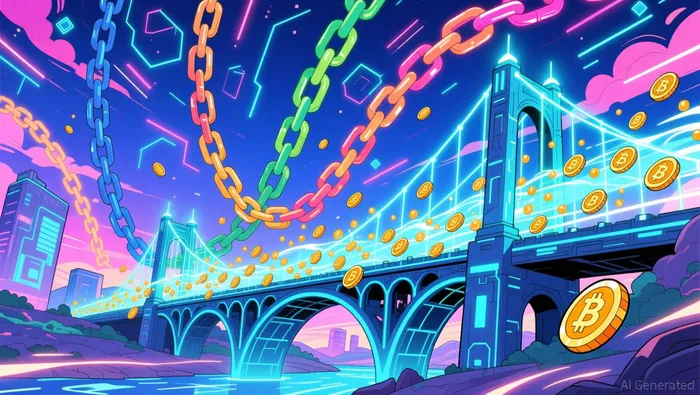
Institutional investors have shown increasing interest in GMTGMT--, with several major players reportedly evaluating its inclusion in diversified crypto portfolios. This trend aligns with a broader industry shift toward token utilities that support decentralized infrastructure, particularly in cross-chain interoperability. GMT's role in bridging liquidity across blockchain networks has made it a focal point for DeFi developers and enterprise adopters alike.
The recent uptick in on-chain activity suggests growing adoption beyond speculative trading. For example, GMT has been integrated into several automated market makerMKR-- (AMM) platforms, where it facilitates cross-chain swaps and yield generation. This diversification of use cases is crucial for sustaining value beyond short-term market cycles. While retail traders have historically driven price volatility, institutional-grade utility may offer a stabilizing effect.
However, investors remain cautious about regulatory clarity and governance risks. The absence of a clear legal framework for GMT and similar tokens creates uncertainty, particularly for large-scale adoption. Market participants are watching for any signals from regulatory bodies that could impact GMT's trajectory.
What is driving institutional adoption of GMT?
GMT's appeal to institutional investors stems from its role in facilitating decentralized finance and cross-chain operations. The token is being used in protocols that enable seamless asset transfers between blockchain networks, addressing a key barrier to mass adoption of blockchain technology. This functionality is particularly attractive to institutional investors seeking to optimize capital efficiency and reduce friction in digital asset transactions.
The growing number of partnerships and integrations involving GMT is another factor driving institutional interest. These collaborations often include infrastructure providers, custodians, and DeFi platforms, all of which are critical for scaling adoption at a large level. While individual partnerships may not be headline-grabbing, their cumulative effect is significant in building a robust ecosystem around GMT.
Despite these developments, adoption is not without challenges. Technical upgrades and governance proposals are ongoing, which means the landscape is still evolving. Investors are advised to monitor these developments closely as they may impact the token's performance and use cases over time.
How is GMT's use case evolving in the DeFi space?
GMT's role in the DeFi space is shifting from a speculative asset to a foundational component of decentralized infrastructure. Recent upgrades have enabled the token to serve as a liquidity provider in several AMM protocols, where it helps facilitate trades across multiple chains. This shift is part of a larger trend in the DeFi industry toward interoperability and modular design.
The token's utility is also expanding into lending and borrowing platforms, where it is used as collateral or reward for liquidity provision. These developments signal a move toward more sophisticated financial applications, which is typically a precursor to broader adoption. However, the success of these initiatives depends on continued innovation and user adoption.
Another area of growth is in governance and community-driven development. GMT holders are increasingly being given a voice in protocol decisions, which aligns with the ethos of decentralization. This level of engagement can enhance the token's value proposition by fostering a more active and invested user base.
What risks remain for GMT investors?
While the outlook for GMT appears optimistic, several risks remain for investors. One of the most significant is regulatory uncertainty. Unlike traditional assets, there is no clear legal framework governing tokens like GMT, which could lead to abrupt market shifts if regulators impose new rules. This is particularly relevant for institutional investors, who are often more sensitive to legal and compliance risks.
Another risk is technological volatility. As with many DeFi projects, the success of GMT is tied to the performance of underlying protocols and smart contracts. A single technical failure or security breach could undermine confidence in the token and its use cases. While the community is actively working on upgrades and audits, investors must remain cautious.
Market dynamics also pose a challenge. While institutional interest is rising, the broader crypto market remains highly volatile. Sudden changes in sentiment, macroeconomic factors, or shifts in investor behavior can all impact GMT's price, regardless of its underlying fundamentals.
In summary, GMT is experiencing a period of growth driven by institutional interest and expanding use cases in DeFi. However, investors must remain vigilant about regulatory, technological, and market risks. As the ecosystem continues to evolve, the long-term success of GMT will depend on its ability to adapt and deliver value in a rapidly changing environment.

Blending traditional trading wisdom with cutting-edge cryptocurrency insights.
Latest Articles
Stay ahead of the market.
Get curated U.S. market news, insights and key dates delivered to your inbox.






Comments
No comments yet