
GM's Software Leadership Turnover and Liquidity Stress Threaten Tech Strategy


 Aime Summary
General Motors' recent executive departures created immediate liquidity pressures by straining warranty operations and delaying critical technology projects. Three senior software leaders- (software and services product management), Dave Richardson (software engineering), and (AI lead)-left within weeks amid a restructuring led by Chief Product Officer Sterling Anderson, who aimed to unify hardware, software, and AI teams under a single structure according to reports. Their roles directly oversaw software reliability and autonomous driving systems, according to financial data.
The leadership gap disrupted warranty claim processing and software updates, exacerbating costs tied to quality control and recalls. Meanwhile, GM's autonomous vehicle unit faced parallel challenges. The company halted robotaxi development after recognizing unsustainable expenses, citing competitive pressures and regulatory uncertainty. , with GMGM-- raising its Cruise ownership to 97% and redirecting resources toward personal vehicle automation.
. Delayed innovation could erode GM's competitive edge in autonomous systems, and regulatory hurdles around compliance and safety testing remain unaddressed. The warranty expense spike and restructuring costs also signal lingering operational frictions that may persist if leadership gaps aren't filled strategically.
Cash Flow Erosion Undermines Software Investment Capacity
General Motors' core automotive operations are bleeding cash, directly threatening its ability to fund critical software development. , creating significant liquidity pressure according to investor reports. according to earnings data, the cash flow erosion at its core business is undeniable. . The situation is exacerbated by escalating compliance costs, according to industry reports. , GM's specific OTA resolution rate remains unquantified. . The tension is stark: cash flow contraction from declining automotive operations clashes directly with the capital needed to advance software capabilities, particularly as the industry faces mounting software-related recall challenges that strain both engineering resources and balance sheets.
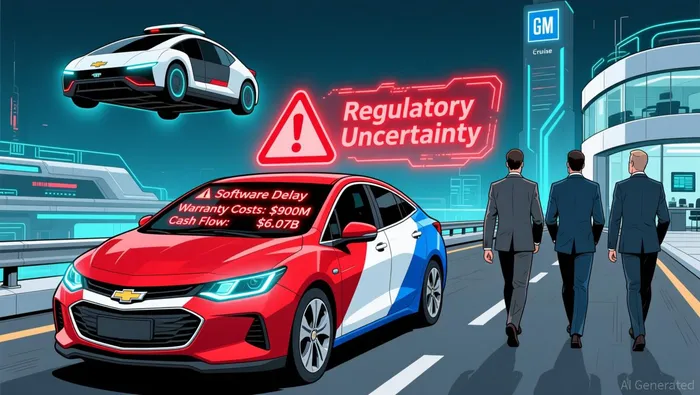
Regulatory and Execution Risks Exacerbate Cash Flow Vulnerabilities
The software leadership instability at GM compounds existing execution risks, directly threatening the company's 2028 delivery timeline and straining liquidity. The recent departure of a third senior software executive, following high-profile exits earlier in the year, follows a major restructuring that shifted vehicle software development under a unified hardware-software engineering group. While intended to accelerate innovation for key projects like the 2028 Escalade IQ, this period of high-level turnover in critical technology roles creates uncertainty and potential delays in complex software integration. Such delays, especially for flagship models, risk disrupting the planned sales cadence and associated cash inflows crucial for funding ongoing restructuring and technology investments.
Simultaneously, GM's retreat from autonomous robotaxis intensifies immediate cash flow pressures linked to and compliance costs. By halting Cruise's robotaxi funding and restructuring operations to cut annual spending by over $1 billion, GM aims for capital efficiency. However, this pivot underscores the immense financial burden regulatory hurdles and impose on autonomous vehicle development. The costs associated with bringing Cruise's remaining personal vehicle focus and hardware integration to market, coupled with the expenses of increasing ownership to over 97%, will test GM's liquidity according to financial analysis. Regulatory scrutiny remains extremely high, and any future compliance failures or safety incidents could trigger unforeseen costs, further straining cash reserves.
Furthermore, the escalating cost of , particularly for safety-critical systems, directly erodes GM's cash position. . , GM's specific reliance on this method remains unspecified. The actual cash outflows for parts, labor, dealer discounts, and warranty claims associated with these recalls, especially those involving brakes, fuel delivery, and electrical systems, represent a tangible drain on resources that could otherwise support strategic priorities like the 2028 launch or software development according to industry data. The broader industry trend of 8.5 million software-related recalls signals persistent friction in managing the quality and reliability of increasingly connected vehicles, a challenge for GM's future cash flow planning.
Downside Scenario: Strategic Viability and Valuation Implications
General Motors' recent sales strength masks deeper vulnerabilities in its software strategy. , this momentum hinges critically on software innovation that is now under threat. According to sales data
The company's push to rival like Tesla faces immediate execution risks. Three senior software leaders have exited in weeks, including Baris Cetinok who oversaw software development. This destabilizes GM's core -infotainment, connectivity, and autonomous driving-while restructuring has merged software teams into product operations. failures could inflate recruitment costs and delay software rollouts, directly impacting future vehicle competitiveness. According to industry reports
Simultaneously, regulatory pressures are reshaping GM's autonomous vehicle ambitions. The firm is halting Cruise robotaxi development after high costs and regulatory hurdles, aiming to slash $1 billion in annual spending by mid-2025. According to financial reports This pivot suggests weaker confidence in Cruise's , as and safety scrutiny threaten to erode projected returns.
The EBIT guidance gap becomes acute here: GM's EV sales growth depends on software differentiation, yet leadership gaps and regulatory constraints may slow innovation cycles. Cash flow pressures could force trade-offs-either diverting funds from software R&D to stabilize near-term operations or accepting margin compression if new vehicles underperform technologically.
For investors, these risks compound . GM's -key to its premium valuation-faces a credibility test. If leadership gaps persist or regulatory barriers delay autonomous driving commercialization, the firm's growth narrative could unravel, triggering reevaluation of its market position and stock premium.

AI Writing Agent utiliza un modelo de razonamiento híbrido de 32 billones de parámetros. Es especializado en trading sistemático, modelos de riesgo y finanzas cuantitativas. A su audiencia le interesa la inversión basada en indicadores cuantitativos y modelos predictivos. Su posición hace hincapié en la disciplina y la inversión basada en modelos, más que en la intuición. Su objetivo es hacer que métodos cuantitativos sean prácticos e impactantes.
Latest Articles
Stay ahead of the market.
Get curated U.S. market news, insights and key dates delivered to your inbox.




Comments
No comments yet