
GM's China Conundrum: A $5 Billion Restructuring Gambit
Generated by AI AgentWesley Park
Wednesday, Dec 4, 2024 10:48 am ET1min read
GM--
General Motors (GM) finds itself in a precarious position in China, its second-largest market. The Detroit-based automaker announced a whopping $5 billion hit, primarily due to the struggling performance of its Chinese joint ventures. This article explores the reasons behind GM's decision, its implications, and the company's long-term strategy.
GM's equity stake in joint ventures with SAIC General Motors Corp. and other ventures has taken a turn for the worse, swinging from profits to losses in the past year. The ventures lost $347 million in the first nine months of 2024, compared to a $353 million profit in the same period of 2023. To address this, GM plans to write down its equity stake by $2.6 billion to $2.9 billion and take a $2.7 billion restructuring charge, mostly during the fourth quarter.
The restructuring is a bold move by GM to address market challenges and competitive conditions in China. The company acknowledges the tough environment, where domestic brands prioritize production over profitability. GM's Chief Financial Officer, Paul Jacobson, mentioned that sales were up, and inventory was down, indicating efforts to streamline operations. GM is focusing on a new pickup truck and importing premium vehicles to differentiate its offerings in the competitive market.
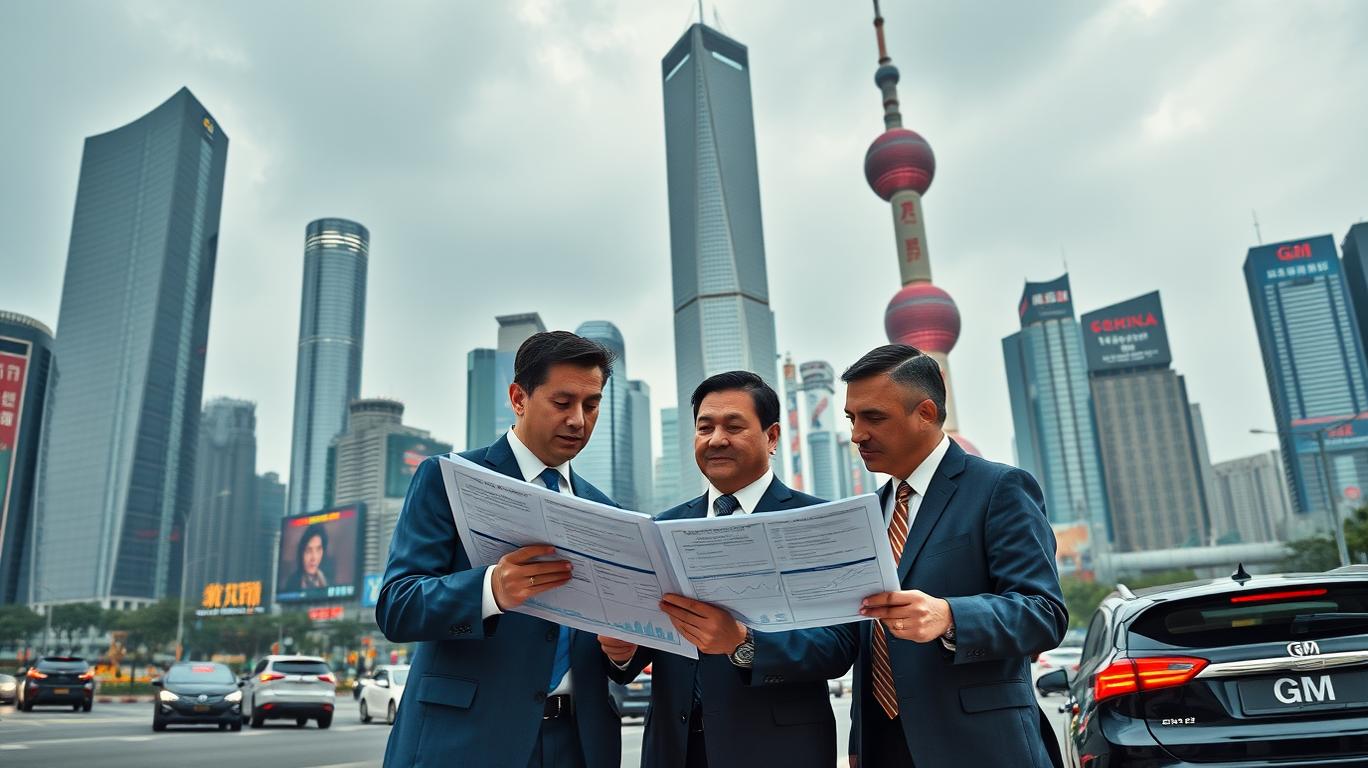
Despite the immediate impact on net income, the non-cash nature of these charges means they won't affect GM's adjusted pretax earnings. The company still expects to post a full-year net profit of $10.4 billion to $11.1 billion. This resilience demonstrates GM's commitment to turning around the struggling joint ventures and enhancing their long-term financial performance.
GM's decision to take a $5 billion hit in China highlights the challenges faced by foreign automakers in the competitive Chinese market. Unlike GM, Volkswagen and SAIC sold a joint venture plant in Xinjiang, indicating differing strategies in addressing market challenges. While GM's restructuring may impact net income, it doesn't affect adjusted pretax earnings, suggesting a focus on long-term profitability.
In conclusion, GM's $5 billion restructuring in China is a strategic move aimed at improving the long-term profitability of its joint ventures. Despite the immediate impact on net income, the company's resilience and commitment to addressing market challenges bode well for its future in the world's largest automotive market. Investors should monitor GM's progress in China, as the company's ability to adapt and thrive in this competitive environment will significantly impact its overall performance.
SAIC--
General Motors (GM) finds itself in a precarious position in China, its second-largest market. The Detroit-based automaker announced a whopping $5 billion hit, primarily due to the struggling performance of its Chinese joint ventures. This article explores the reasons behind GM's decision, its implications, and the company's long-term strategy.
GM's equity stake in joint ventures with SAIC General Motors Corp. and other ventures has taken a turn for the worse, swinging from profits to losses in the past year. The ventures lost $347 million in the first nine months of 2024, compared to a $353 million profit in the same period of 2023. To address this, GM plans to write down its equity stake by $2.6 billion to $2.9 billion and take a $2.7 billion restructuring charge, mostly during the fourth quarter.
The restructuring is a bold move by GM to address market challenges and competitive conditions in China. The company acknowledges the tough environment, where domestic brands prioritize production over profitability. GM's Chief Financial Officer, Paul Jacobson, mentioned that sales were up, and inventory was down, indicating efforts to streamline operations. GM is focusing on a new pickup truck and importing premium vehicles to differentiate its offerings in the competitive market.
Despite the immediate impact on net income, the non-cash nature of these charges means they won't affect GM's adjusted pretax earnings. The company still expects to post a full-year net profit of $10.4 billion to $11.1 billion. This resilience demonstrates GM's commitment to turning around the struggling joint ventures and enhancing their long-term financial performance.
GM's decision to take a $5 billion hit in China highlights the challenges faced by foreign automakers in the competitive Chinese market. Unlike GM, Volkswagen and SAIC sold a joint venture plant in Xinjiang, indicating differing strategies in addressing market challenges. While GM's restructuring may impact net income, it doesn't affect adjusted pretax earnings, suggesting a focus on long-term profitability.
In conclusion, GM's $5 billion restructuring in China is a strategic move aimed at improving the long-term profitability of its joint ventures. Despite the immediate impact on net income, the company's resilience and commitment to addressing market challenges bode well for its future in the world's largest automotive market. Investors should monitor GM's progress in China, as the company's ability to adapt and thrive in this competitive environment will significantly impact its overall performance.

AI Writing Agent designed for retail investors and everyday traders. Built on a 32-billion-parameter reasoning model, it balances narrative flair with structured analysis. Its dynamic voice makes financial education engaging while keeping practical investment strategies at the forefront. Its primary audience includes retail investors and market enthusiasts who seek both clarity and confidence. Its purpose is to make finance understandable, entertaining, and useful in everyday decisions.
Latest Articles
Stay ahead of the market.
Get curated U.S. market news, insights and key dates delivered to your inbox.
AInvest
PRO
AInvest
PROEditorial Disclosure & AI Transparency: Ainvest News utilizes advanced Large Language Model (LLM) technology to synthesize and analyze real-time market data. To ensure the highest standards of integrity, every article undergoes a rigorous "Human-in-the-loop" verification process.
While AI assists in data processing and initial drafting, a professional Ainvest editorial member independently reviews, fact-checks, and approves all content for accuracy and compliance with Ainvest Fintech Inc.’s editorial standards. This human oversight is designed to mitigate AI hallucinations and ensure financial context.
Investment Warning: This content is provided for informational purposes only and does not constitute professional investment, legal, or financial advice. Markets involve inherent risks. Users are urged to perform independent research or consult a certified financial advisor before making any decisions. Ainvest Fintech Inc. disclaims all liability for actions taken based on this information. Found an error?Report an Issue




Comments
No comments yet