
The GLP-1 Patent Cliff in Canada: A Generics Gold Rush or a Biotech Battleground?
The diabetes therapeutics market is on the cusp of a seismic shift in Canada, as key patents for Novo Nordisk's blockbuster GLP-1 agonists—Ozempic (semaglutide) and Victoza (liraglutide)—approach expiration. For investors, this "patent cliff" represents both a high-risk, high-reward opportunity and a critical test of biopharma's ability to defend its crown jewels. With generics poised to flood the market as early as 2026, the question is no longer if the landscape will change, but how quickly and who will profit.
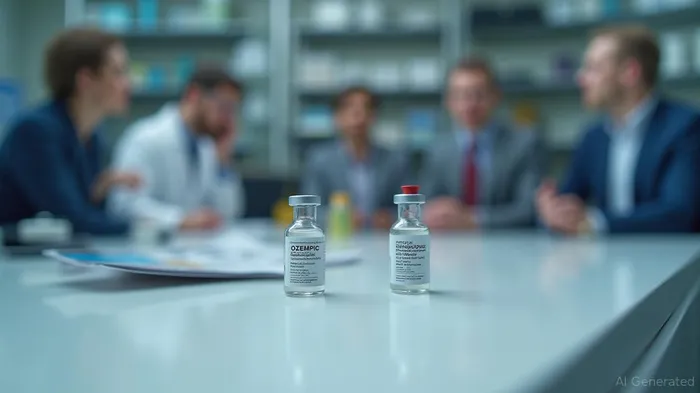
The Clock is Ticking: Ozempic's Expiration Timeline
Ozempic, Novo Nordisk's $20 billion global cash cow, faces its most significant threat yet in Canada. While its Canadian patent (No. 2,601,784) for semaglutide lapsed in 2020 due to an unpaid CAD $1,200 maintenance fee—a decision Novo has not publicly explained—its data exclusivity, which shields it from generic competition, expires in January 2026. This date is pivotal: after that, generics from firms like Sandoz (a Novartis subsidiary) and Apotex can legally enter the market.
Novo's attempt to extend protection via a supplementary protection certificate (CSP) for the same patent is moot, as it cannot revive an expired underlying patent. Legal experts confirm this CSP is “a paper tiger,” leaving Novo's Canadian Ozempic monopoly on life support.
Sandoz's Playbook: Timing is Everything
Sandoz, which has aggressively pursued biosimilar launches in the U.S., is preparing to strike first in Canada. The company has signaled intentions to launch a generic semaglutide shortly after January 2026, leveraging its experience in scaling up production. In Canada's price-controlled healthcare system, Sandoz could undercut Ozempic's price by 50–80%, instantly capturing market share. For investors, Sandoz's agility here mirrors its success with insulin biosimilars, where it eroded Eli Lilly's dominance.
However, Sandoz faces hurdles. Novo's proprietary pen delivery systems—critical for patient compliance—are still under patent protection. If generics cannot replicate these pens cost-effectively, Novo could prolong its reign by forcing patients to use its devices. This adds a layer of uncertainty: will Sandoz's launch be a full biosimilar (with pen) or a cheaper but less user-friendly alternative?
Novo's Defense: A Calculated Retreat or Oversight?
Novo's decision to let its Ozempic patent lapse in Canada has sparked debate. While some argue it was a cost-saving measure—avoiding trivial fees—the move's timing raises eyebrows. With semaglutide generating over CAD $1.2 billion annually in Canada alone, the decision appears more strategic than accidental. Perhaps Novo prioritized global patent management over a single market, or anticipated that its CSP would hold. Either way, the result is clear: Novo's grip on the Canadian GLP-1 market is weakening.
To counterbalance losses, Novo is betting on newer therapies like Amycretin, a weekly GLP-1 agonist in phase 3 trials. If approved, Amycretin could steal thunder from Ozempic's generics by offering superior efficacy or convenience. Investors should monitor Amycretin's trial data closely, as its success could redefine the market post-2026.
The Competitive Landscape: A Zero-Sum Game?
The Canadian market's dynamics are uniquely challenging for Novo. Unlike the U.S., where drug prices are less regulated, Canada's Patented Medicine Prices Review Board (PMPRB) will likely cap Ozempic's post-generic price, squeezing margins. Meanwhile, generics firms will battle to establish dominance early. Sandoz's head start could lock in hospital and pharmacy contracts before competitors like Apotex or Teva catch up.
For biotech investors, the path to profit is two-pronged:
1. Buy generics exposure: Sandoz (NVS) and Apotex (privately held, but trackable via Canadian equities like Patheon/Pfizer) stand to gain.
2. Short Novo Nordisk (NVO): A drop in Ozempic's Canadian sales could ripple into its global pricing strategy, though its dominance elsewhere (e.g., the U.S.) provides a buffer.
Risks to the Thesis
- Delivery device hurdles: If pens remain a barrier, generics' uptake could stall.
- Supply chain bottlenecks: Sandoz's ability to scale production without shortages is critical.
- Regulatory delays: Health Canada's approval timelines for biosimilars could push launches beyond 2026.
Conclusion: Positioning for the Post-Patent Era
The Canadian GLP-1 market is ground zero for a broader industry shift. Generics firms are primed to capitalize on pricing pressures, while Novo NordiskNVO-- must innovate to stay relevant. Investors should prioritize flexibility: allocate to generics now, but keep an eye on Novo's pipeline. The next 18 months will determine whether this patent cliff is a windfall for Sandoz—or a wake-up call for an industry slow to adapt.
As the clock ticks toward January 2026, one thing is clear: Canada's diabetes patients—and investors—are about to see a new chapter in the GLP-1 story.

Stay ahead of the market.
Get curated U.S. market news, insights and key dates delivered to your inbox.
AInvest
PRO
AInvest
PRO



Comments
No comments yet