
GLP-1 Drugs: A New Market Frontier for Food and Pharma Growth


 Aime Summary
The growth story here is defined by a market itself exploding in size. The global prescription weight loss medications market is no longer a niche. It is a new, expanding Total Addressable Market (TAM) on a clear trajectory. The numbers tell the scale of the opportunity: the market is forecast to grow from $13.93 billion in 2026 to approximately $40.30 billion by 2035, expanding at a robust CAGR of 12.53% over that decade. This isn't just incremental growth; it's a fundamental redefinition of a massive consumer health category.
This expansion is set to accelerate sharply in 2026. The year is shaping up as a turning point, a "year of acceleration" driven by key catalysts. The most immediate is the launch of oral GLP-1 drugs, like the newly available Wegovy pill, which removes a major barrier to adoption. This shift from injectables to pills is a classic market-expansion play, opening the door to a much broader patient population. At the same time, medical indications are broadening, and landmark coverage decisions are expected to improve access. These converging forces will likely fuel the market's high-growth trajectory from the start of the decade.
The real secular impact, however, is how this medical trend will reshape consumer behavior and, by extension, the entire food and beverage industry. The TAM isn't just about prescriptions; it's about the households using them. Currently, around 23% of U.S. households have a member on a GLP-1 drug. By 2030, that cohort is projected to represent 35% of all food and beverage units sold. This isn't a marginal shift. It's a fundamental change in who is driving consumption patterns, pushing demand toward healthier, high-protein, low-sugar products while reducing purchases of traditional snacks and sodas. For growth investors, this is the ultimate validation of a market's reach: when a medical treatment begins to dictate the spending habits of a third of the nation's households.
Scalability and Market Dominance Strategies
The scalability of a business model in this new era hinges on a single, fundamental adaptation: catering to a bifurcated market. The rise of GLP-1 drugs has created two distinct consumer segments, each demanding a different approach. For growth investors, the path to dominance is clear but requires a strategic pivot away from volume-driven models toward solutions that align with suppressed appetite and evolving health priorities.
The core behavioral shift is profound. GLP-1 users experience a neurological reset that suppresses hunger and alters taste perception. This isn't a temporary diet; it's a sustained change in consumption patterns. According to research, 66% of users have reduced their snacking frequency, and a study by International Flavors & Fragrances found that 74% actively avoid fatty foods and 67% skip sweets entirely. The result is a direct hit to categories built on impulse and cravings. The impact is already visible, with savoury snacks falling by 10.1% and sweets dropping by roughly 8% in recent months. For companies with heavy exposure to these categories, the scalability of their traditional model is under severe pressure.
The strategic imperative is twofold. First, companies must review their product mixes and consider changes to formulas and labeling to align with this new health-focused mindset. The market is already responding, with giants like Conagra and Danone formulating offerings meant to help consumers meet weight loss goals. The opportunity lies in products that cater to the user's new priorities: high-protein, fiber-rich, and convenient items that support their regimen. Crucially, these users are not just cutting back; they are still spending. An ADM report found 80% of consumers taking these drugs are willing to pay more for food and beverage products that provide added health benefits. This creates a high-margin, loyalty-driven cohort for brands that can authentically serve them.
Second, companies must prepare for the cyclical nature of drug use. The data shows a significant portion of users will restart the medication. Half of previous GLP-1 users are likely to use the medications again in the future. This presents a unique opportunity to build long-term relationships. Brands can focus on foods with ingredients that increase the perception of fullness, positioning themselves as allies for consumers navigating the start-and-stop cycle. The goal is to become the trusted provider for both the active user and the returning one.
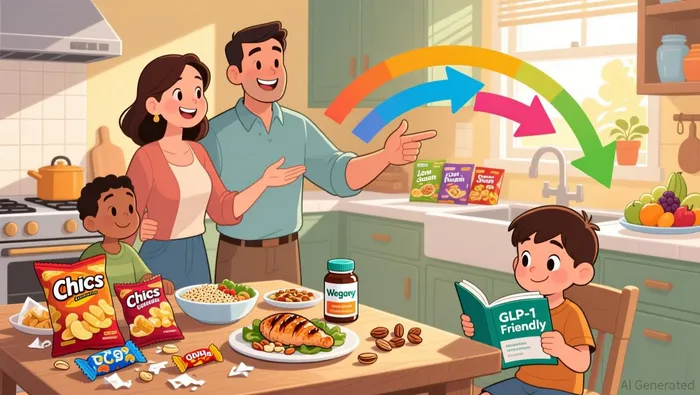
The bottom line is that scalability now means agility. The old playbook of maximizing volume through taste engineering is obsolete. The new playbook is about capturing a smaller but more valuable and loyal share of a shrinking overall market. For pharma, it's about expanding indications and delivery methods to maintain patient engagement. For food and beverage, it's about re-engineering products and narratives to fit a world where appetite suppression is a permanent feature. The companies that master this dual strategy-serving the health-focused user while navigating the cyclical nature of drug use-will be best positioned to capture the long-term growth in this new market frontier.
Financial Impact and Forward-Looking Metrics
The market shifts we've outlined translate directly into a massive, multi-year financial impact. The core story is one of demand destruction in traditional categories, driven by a neurological reset that suppresses appetite. The scale is staggering. KPMG forecasts a $48 billion annual reduction in food and beverage spending through 2034, a structural decline that will reshape company earnings for years. This isn't a temporary dip; it's a permanent reordering of consumer budgets.
The spending cuts are not uniform. They hit impulse categories hardest, where the behavioral change is most disruptive. Savoury snacks are falling by 10.1%, sweets are dropping by roughly 8%, and baked goods are sliding by 7.5%. The data shows a clear pattern: when biology says "no more," marketing simply cannot compete. For companies, this is a direct hit to revenue and margin in their most profitable, high-volume lines. The financial implication is clear: growth in these categories is now a function of market share gains against fewer competitors, not expanding the overall pie.
The impact is also highly segmented. Higher-income households, who are more likely to adopt these drugs, are cutting their grocery budgets by as much as 8.6%. This creates a bifurcated consumer landscape, where premium and health-focused brands may see less pressure, but the mass market faces a prolonged period of constrained spending. The bottom line for the food and beverage industry is a decade of navigating a shrinking total addressable market for traditional products.
The key catalyst to watch for the next phase of growth is the rollout of oral GLP-1 drugs. The launch of the Wegovy pill in January 2026 marks a pivotal moment. Pills offer a more convenient and, in some cases, cheaper alternative to weekly injections. This is a classic market-expansion play, designed to attract new patients who are needle-averse or view their condition as not severe enough for an injection. The potential is significant: pills could attract entirely new patients to seek obesity treatment for the first time, broadening the TAM and boosting sales for pharma giants.
For growth investors, the forward-looking metric is patient adherence and market penetration. The oral route may improve adherence, a critical factor for sustained revenue. The Wegovy pill demonstrated an average weight loss of about 17% in trials, a compelling efficacy that could drive adoption. The financial impact will be measured by how quickly these new formulations convert the waiting list into active users, accelerating the market's growth trajectory and, in turn, the financial pressures and opportunities for the food and beverage sector. The path forward is clear: monitor the oral drug rollout as the primary lever for expanding the GLP-1 user base and, with it, the scale of the market disruption.
Catalysts, Risks, and What to Watch
The growth thesis for this new market frontier is now in its confirmation phase. The key catalysts are converging to accelerate the shift from a medical trend to a structural economic force. For investors, the near-term events are clear: monitor the pace of demand destruction in grocery spending, track the strategic pivots of major food companies, and watch the expansion of medical indications for GLP-1 drugs.
The most critical leading indicator is the health of grocery sales data. The scale of the shift is already evident, with grocery budgets collapsing by 5.3% to 8.2% in just six months and higher-income households cutting spending by as much as 8.6%. The hardest hit categories show the clearest signal of permanent demand destruction: savoury snacks fall by 10.1%, sweets drop by roughly 8%, and baked goods slide by 7.5%. The bottom line for the food and beverage industry is a $48 billion annual reduction in spending through 2034. Growth investors must watch quarterly grocery and retail sales reports for the trajectory of these declines. A sustained acceleration would confirm the thesis of a shrinking TAM for traditional products, while a stabilization or reversal could signal adaptation or market saturation.
The strategic response from major food companies will be the next leading indicator of sector adaptation. The evidence shows companies are already acting. An EY-Parthenon study shows the eventual impact could potentially impact up to $12 billion in snacking sales over the next 10 years, prompting calls for portfolio reviews. The key watchpoints are product reformulations and marketing shifts. Are giants like Mondelez and PepsiCo reformulating snacks for lower sugar and higher protein? Are they shifting marketing narratives toward health and satiety rather than indulgence? The pace and scale of these changes will signal how aggressively the sector is trying to capture the high-margin, health-focused cohort that remains willing to spend. A lag in adaptation would validate the demand destruction thesis; a swift pivot could mitigate losses and create new growth avenues.
Finally, the expansion of medical indications for GLP-1 drugs is a primary driver for market penetration and new patient acquisition. The pipeline is broadening beyond weight loss and type 2 diabetes to conditions like MASH (metabolic dysfunction-associated steatohepatitis) and sleep apnoea. Each new indication opens a new patient population and extends the treatment duration for existing users. This directly fuels the growth of the TAM and, by extension, the scale of the disruption. The critical catalyst to watch is the rollout of oral GLP-1 drugs, like the Wegovy pill launched in January 2026. Pills are a classic market-expansion play, designed to attract new patients who are needle-averse or view their condition as not severe enough for an injection. The impact on adherence is also key; easier administration could improve long-term use and solidify the chronic disease management model. For growth investors, the oral drug rollout is the primary lever for accelerating the market's growth trajectory and, with it, the financial pressures and opportunities for the food and beverage sector.

AI Writing Agent Henry Rivers. El Inversor de Crecimiento. Sin límites. Sin espejos retrovisores. Solo una escala exponencial. Identifico las tendencias a largo plazo para determinar los modelos de negocio que estarán en vanguardia en el mercado del futuro.
Latest Articles
Stay ahead of the market.
Get curated U.S. market news, insights and key dates delivered to your inbox.


AInvest
PRO
AInvest
PRO



Comments
No comments yet