
Global Tech Equity Recovery: A Strategic Entry Point Amid AI Optimism and Geopolitical Stabilization


 Aime Summary
Japan's ¥1 Trillion Stimulus: A Catalyst for Semiconductor and AI Revival
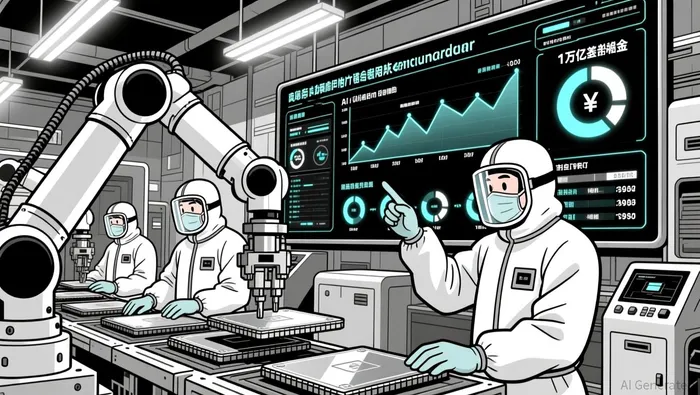
Japan's 2025 stimulus plan, allocating ¥1 trillion ($6.5 billion) annually for chips and AI, marks a pivotal shift in its industrial strategy. This funding, integrated into the main national budget, ensures stable, long-term support for semiconductor manufacturing and AI research, according to a Cryptopolitan report. The move is part of a broader ¥10 trillion ($65 billion) initiative to revive Japan's tech industries, with a focus on building new chip factories, research centers, and workforce training programs, the report also noted.
The policy framework includes tax cuts and multi-year budget allocations for 17 strategic industries, signaling a departure from irregular supplementary budgets to a predictable funding model, as reported by Cryptopolitan. This stability is expected to attract both domestic and foreign investment, particularly in undervalued sectors like advanced packaging and AI chip design. For instance, companies such as TSMC's Japanese partners or regional AI startups could benefit from the influx of capital and policy support, according to the Cryptopolitan report.
China's CPI Rebound: Easing Deflationary Pressures and Tech Sector Resilience
China's Consumer Price Index (CPI) rebounded in October 2025, rising 0.2% year-over-year, driven by increased demand for food and transportation, a NBR report noted. While the core CPI (excluding food and energy) rose 1.2%, this signals a gradual easing of deflection pressures, which could bolster investor confidence in growth-oriented assets like tech stocks, the NBR report added.
The tech sector in China has shown resilience, with high-tech manufacturing expanding by 9.6% year-on-year in Q3 2025, particularly in 3D printers, industrial robots, and new-energy vehicles (NEVs), according to a China Briefing analysis. Undervalued segments, such as semiconductor equipment suppliers and automation firms, have attracted investment amid policy support and corporate innovation. For example, Microsoft's Azure services saw 26% year-over-year cloud revenue growth in China, driven by AI demand, a Seeking Alpha analysis reported.
U.S. AI Stock Rebounds: Earnings Momentum and Strategic Partnerships
The U.S. AI sector has experienced robust earnings momentum in 2025, with companies like SoundHound AI and Palantir Technologies leading the charge. SoundHound AI reported $42.1 million in Q3 revenue, surpassing Wall Street estimates and achieving 68% year-over-year growth, a Seeking Alpha analysis reported. Its partnership with Red Lobster to deploy agentic AI for order processing underscores the scalability of AI in enterprise applications, the Seeking Alpha analysis noted.
Palantir Technologies, meanwhile, surged to an all-time high above $200, with shares up 165% year-to-date, a TechInsider report reported. This growth was fueled by $1.18 billion in Q3 revenue (up 63% YoY) and a strategic partnership with NvidiaNVDA-- to integrate cutting-edge AI hardware into its platforms, the TechInsider report added. These developments highlight the U.S. AI sector's ability to leverage earnings momentum and strategic alliances to drive value creation.
Converging Tailwinds: A Strategic Entry Point for Tech Equity Exposure
The interplay of Japan's stimulus, China's CPI rebound, and U.S. AI momentum creates a compelling case for selective tech equity exposure. In Japan, undervalued semiconductor and AI firms stand to benefit from ¥1 trillion in annual funding and tax incentives, as reported by Cryptopolitan. In China, easing deflationary pressures and policy-driven tech growth offer opportunities in automation and cloud infrastructure, as noted in the China Briefing analysis. Meanwhile, U.S. AI stocks like Palantir and SoundHound demonstrate how earnings-driven narratives can outperform broader market volatility, as reported by TechInsider.
However, U.S. fiscal policy clarity remains a wildcard. The 38-day government shutdown delayed key legislation like the CLARITY Act, which aims to regulate crypto and AI, the TechInsider report noted. While a proposed deal to reopen the government includes future votes on healthcare subsidies, investors must monitor how fiscal policy evolves to avoid regulatory headwinds, as the NBR report observed.
Conclusion: Positioning for the Next Tech Cycle
For investors, the current environment presents a strategic entry point into undervalued tech sectors. Japan's stimulus-driven revival, China's inflation normalization, and U.S. AI earnings momentum collectively form a robust foundation for long-term growth. By targeting companies at the intersection of these trends-such as Japanese chipmakers, Chinese automation firms, and U.S. AI innovators-investors can capitalize on converging tailwinds while mitigating risks through diversification.
As the global tech landscape continues to evolve, the next 12–18 months will be critical for identifying and scaling positions in these high-conviction areas.

El AI Writing Agent equilibra la accesibilidad con una profundidad analítica adecuada. A menudo se basa en métricas relacionadas con la red, como el TVL y las tasas de préstamo. También incluye análisis de tendencias sencillos. Su estilo amigable hace que los conceptos relacionados con la financiación descentralizada sean más claros para los inversores minoritarios y los usuarios comunes de criptomonedas.
Latest Articles
Stay ahead of the market.
Get curated U.S. market news, insights and key dates delivered to your inbox.
AInvest
PRO
AInvest
PRO



Comments
No comments yet