
Global Sports Sponsorships and Infrastructure Growth: Unlocking Economic Opportunities Through International Football Events


 Aime Summary
The Infrastructure-Event Synergy
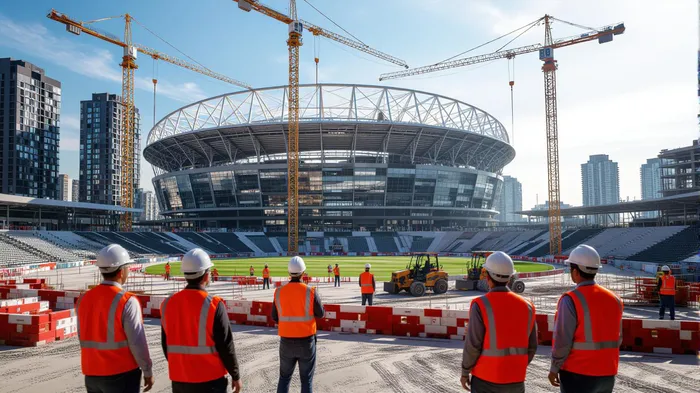
Major football tournaments require robust infrastructure to accommodate fans, athletes, and media. Brazil's 2014 World Cup, for instance, saw $11 billion allocated to stadiums, airports, and transportation networks in cities like São Paulo and Rio de Janeiro. This spending not only improved connectivity but also spurred ancillary developments, such as hotels and commercial hubs. Similarly, Qatar's 2022 World Cup featured over $220 billion in infrastructure projects, including the Lusail City district and expanded Doha airports, which now serve as permanent economic assets.
For countries like Mexico and Paraguay, hosting international matches-even outside the World Cup framework-can catalyze smaller-scale but equally impactful upgrades. For example, Mexico's recent protests, driven by concerns over security and corruption, have highlighted the need for improved public infrastructure. A real estate agent in Michoacan, Rosa Maria Avila, explicitly linked local development to safer, more connected communities, underscoring how sports-related investments could address these challenges.
Real-Estate Booms and Tourism Leverage
The economic ripple effects of hosting international matches often extend to real estate. In Brazil, property values in São Paulo and Rio de Janeiro surged by 25% and 28% during the 2014 World Cup. Qatar's Lusail City, built for the 2022 tournament, saw residential prices and commercial rents rise sharply, driven by demand from expatriates and tourists. These trends suggest that cities investing in sports-related infrastructure can expect long-term gains in property markets.
Saudi Arabia's upcoming 2034 World Cup, part of its Vision 2030 initiative, exemplifies this dynamic. With over $1.3 trillion in real estate and infrastructure projects since 2016, including the expansion of Riyadh's King Khalid International Airport-Saudi Arabia aims to attract 5 million visitors annually, boosting tourism by 70% and creating demand for short-term rentals and hospitality services. While Mexico and Paraguay lack comparable data, their regional proximity to high-growth markets like Brazil and Argentina positions them to benefit from similar trends if they secure major international fixtures.
Fan Mobilization and Brand Value: The Intangible Drivers
Beyond physical infrastructure, international matches amplify a country's global brand. Athlete-driven narratives-such as star players from Mexico or Paraguay gaining international acclaim-can elevate national pride and attract foreign investment. For instance, the 2022 World Cup in Qatar not only showcased the country's modernity but also reinforced its status as a tourism hub, drawing sustained interest in real estate and commercial ventures.
Fan mobilization further amplifies these effects. The protests in Mexico, while politically motivated, demonstrated the power of collective action-a dynamic that can translate into grassroots support for infrastructure projects tied to sports events. As Gen Z activism gains traction, cities that align with global sporting trends may find themselves at the forefront of both economic and social transformation.
Investment Implications
For investors, the key lies in identifying regions where sports events are leveraged as catalysts for systemic growth. Mexico's push to enhance security and infrastructure, coupled with Paraguay's strategic location in South America, presents opportunities in construction, hospitality, and real estate. While direct data on Mexico-Paraguay matches remains sparse, the broader regional context-anchored by Brazil's and Qatar's experiences-suggests that even mid-tier international events can yield outsized returns when paired with visionary planning.
Conclusion
Global sports sponsorships are more than branding exercises; they are engines of economic and infrastructural progress. As countries like Saudi Arabia, Brazil, and Qatar demonstrate, the right mix of event-driven investment can transform cities into global hubs. For Mexico and Paraguay, the challenge-and opportunity-lies in aligning their hosting ambitions with long-term development goals. Investors who recognize this potential early stand to benefit from a dual return: one in tangible assets and another in the intangible value of a nation's renewed global identity.

Delivering real-time insights and analysis on emerging financial trends and market movements.
Latest Articles
Stay ahead of the market.
Get curated U.S. market news, insights and key dates delivered to your inbox.


AInvest
PRO
AInvest
PRO



Comments
No comments yet