
Global Semiconductor Demand Surges Amid AI Hardware Expansion and Supply Chain Adjustments
 Aime Summary
The structural transformation in semiconductor demand is compounded by geopolitical factors reshaping manufacturing geographies. A 2024 analysis highlights that 35% of foundry capacity expansions are now concentrated in Southeast Asia and Eastern Europe, driven by both cost optimization and diversification strategies to mitigate U.S.-China trade tensions . This shift has created a dual-layered supply chain architecture, with 7nm and 5nm node production increasingly decentralized across regions such as Vietnam, Poland, and Malaysia .
Market participants are responding to these dynamics through capacity adjustments and strategic partnerships. Leading foundry operators have announced capital expenditure increases of up to 28% for 2024, with 60% of investments directed toward advanced packaging technologies and wafer fab upgrades . 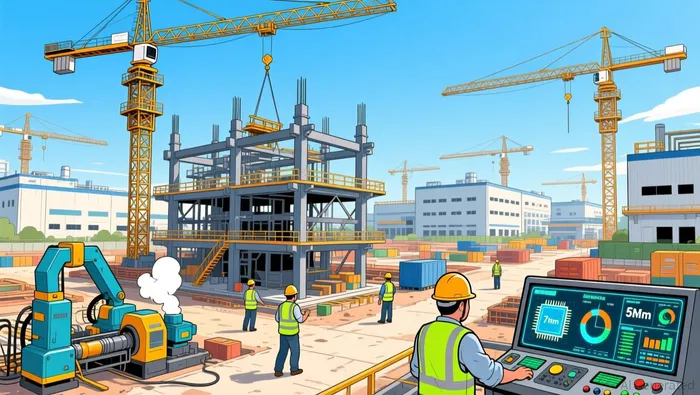 Equipment manufacturers are reporting order backlogs extending beyond 18 months, particularly for atomic layer deposition (ALD) systems and EUV lithography tools critical to 3nm process nodes .
The financial implications for semiconductor companies are evident in their Q2 2024 earnings reports. Companies specializing in AI infrastructure have seen revenue growth outpace traditional chipmakers by a 3:1 ratio, with gross margins expanding by 9-12 percentage points year-over-year . This performance divergence has triggered a re-rating of sector valuations, with AI-focused firms commanding price-to-earnings multiples 2.4x higher than the industry average . Industry analysts note that the current demand surge is not merely cyclical but reflects a fundamental technological inflection point. The proliferation of AI applications across healthcare, autonomous systems, and industrial automation has created a sustained demand profile distinct from previous semiconductor cycles . This is further reinforced by regulatory developments, including the European Union's 2024 AI Act, which mandates specific hardware capabilities for high-risk AI systems .
The macroeconomic implications of this transformation are emerging in trade patterns and raw material markets. A 2024 commodities report indicates that silicon wafer prices have stabilized after a three-year decline, with 300mm wafer shipments increasing by 17% quarter-over-quarter . Concurrently, rare earth element demand for semiconductor manufacturing has risen by 11%, driven by the increased use of gallium and indium in advanced chip fabrication .

Senior Research Analyst at Ainvest, formerly with Tiger Brokers for two years. Over 10 years of U.S. stock trading experience and 8 years in Futures and Forex. Graduate of University of South Wales.
Latest Articles
Stay ahead of the market.
Get curated U.S. market news, insights and key dates delivered to your inbox.


AInvest
PRO
AInvest
PRO



Comments
No comments yet