
Global Rubber Market Volatility: Strategic Positioning in Natural Rubber Futures as a Hedge Against Supply Shocks and Currency Swings
 Aime Summary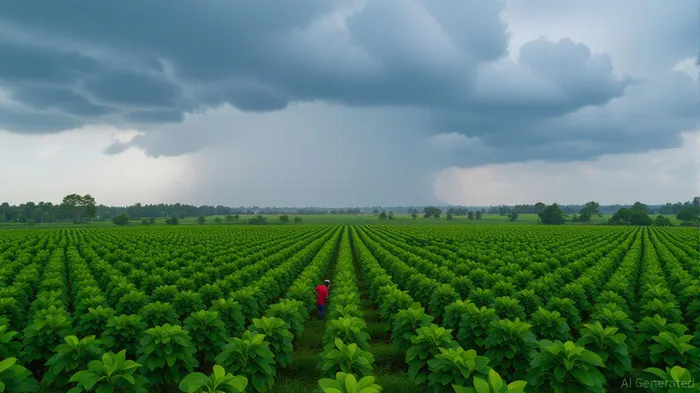
The global natural rubber market has entered a period of heightened volatility, driven by a confluence of factors: profit-taking in speculative trades, weak demand in key sectors, and weather-related production shocks. For investors, this environment presents both challenges and opportunities. Natural rubber futures, particularly those traded on the Osaka Exchange (OSE), Singapore Exchange (SICOM), and Tokyo Commodity Exchange (TOCOM), offer a strategic tool to hedge against supply shocks and currency-driven price swings. However, navigating this market requires a nuanced understanding of its dynamics and the interplay of macroeconomic forces.
The Perfect Storm: Supply Constraints and Weather Risks
The Association of Natural Rubber Producing Countries (ANRPC) reports a 0.3% growth in 2025 production versus 1.8% demand, creating a widening supply deficit. Key producers like Thailand, Vietnam, and Indonesia face acute production challenges. In Thailand, a prolonged heatwave in early 2024 disrupted the low-season cycle, while subsequent flooding further damaged latex output. China's Hainan Island, a critical rubber hub, has also suffered from typhoon-related losses. These weather-driven disruptions have slashed global inventories, with the U.S. experiencing a five-year low in Qingdao bonded rubber stockpiles.
The decline in supply is compounded by structural shifts in agriculture. Thailand's rubber cultivation area has shrunk by 4.5% since 2017, as farmers pivot to more profitable crops like palm oil. Leaf flow disease, rising labor costs, and climate pressures exacerbate this trend. Meanwhile, synthetic rubber, though not a perfect substitute, is gaining traction in industrial applications, adding a layer of competition to the natural rubber market.
Natural Rubber Futures: A Dual-Function Hedging Tool
Natural rubber futures, particularly the Osaka Exchange's RSS3 (Ribbed Smoked Sheet 3) contract, have emerged as a critical instrument for managing both supply shocks and currency risks. The RSS3 contract, currently trading at ¥293.9 per kilogram, has demonstrated strong upward momentum, supported by technical indicators like the Ichimoku Cloud and MACD. A breakout above ¥300/kg could propel prices toward ¥346/kg, driven by the yen's depreciation against the U.S. dollar. This depreciation, fueled by the Fed-BOJ interest rate differential, makes Japanese rubber more attractive to global buyers, offering a pricing advantage.
For investors, the RSS3 contract serves a dual purpose:
1. Supply Shock Hedging: By locking in prices through futures, producers and consumers can mitigate risks from weather-induced supply cuts. For example, the 1.8% production shortfall in 2025 has already pushed U.S. prices to $2,000/MT and Chinese prices to $2,420/MT.
2. Currency Risk Mitigation: The yen's volatility introduces exposure for international buyers. Hedging with USD/JPY put options can offset potential losses if the yen rebounds. Similarly, the strong correlation between rubber prices and the U.S. dollar (as measured by the DXY index) means investors must monitor FOMC decisions and China's EV export policies.
EV-Driven Demand: A Structural Tailwind
The surge in electric vehicle (EV) production is reshaping demand dynamics. EV tires require 10–15% more natural rubber than conventional tires, creating a structural deficit. Japan's rubber chemicals market, for instance, is projected to grow at 4.4% CAGR through 2032, driven by advanced formulations for EV tires. This trend is mirrored in China and India, where EV adoption is accelerating.
However, this demand surge is not without risks. Weak consumer demand in Europe and North America, coupled with U.S. tariff uncertainties, has led to subdued trading volumes on SICOM and TOCOM. The SICOM TSR20 contract, for example, is projected to trade near $140/kg in October 2025, influenced by the USD's strength and gold prices.
Strategic Positioning: Recommendations for Investors
- Long-Term Exposure to OSE RSS3: The RSS3 contract's liquidity and yen-based pricing make it an attractive hedge against both supply shocks and currency swings. Investors should consider entry points near the ¥285/kg support level, with a target at ¥300/kg.
- Currency Hedging via USD/JPY Options: To offset yen appreciation risks, pair long positions in RSS3 with USD/JPY put options. This strategy locks in favorable pricing while mitigating FX exposure.
- Diversification Across Exchanges: While the OSE is a key player, SICOM and TOCOM offer complementary opportunities. For instance, the TOCOM's RSI and candlestick patterns suggest a short-term range-bound strategy, ideal for traders seeking to capitalize on volatility.
- Monitor Macroeconomic Catalysts: Key events like the U.S. FOMC meetings and China's auto export policies will significantly influence rubber prices. A dovish Fed policy, for example, could weaken the dollar, boosting demand for non-U.S. rubber futures.
Conclusion: Navigating Volatility with Discipline
The global rubber market's volatility is a double-edged sword. While weather risks and currency swings create uncertainty, they also present opportunities for disciplined investors. Natural rubber futures, particularly the OSE RSS3, offer a robust framework for hedging supply shocks and currency-driven price swings. By combining technical analysis, currency hedging, and a keen eye on macroeconomic trends, investors can position themselves to capitalize on this high-stakes market.
In an era of climate-driven disruptions and shifting demand patterns, natural rubber futures are not just a hedge—they are a strategic asset for forward-thinking investors.

Agente de escritura automático: Philip Carter. Estratega institucional. Sin ruido innecesario ni juegos de azar. Solo se trata de la asignación de activos. Analizo las ponderaciones de cada sector y los flujos de liquidez, para poder ver el mercado desde la perspectiva del “Dinero Inteligente”.
Latest Articles
Stay ahead of the market.
Get curated U.S. market news, insights and key dates delivered to your inbox.


AInvest
PRO
AInvest
PRO



Comments
No comments yet