
Global Regulators Diverge: Stablecoin Innovation vs. Risk Control


 Aime Summary
The classification of stablecoins within legal and regulatory frameworks remains a contentious issue globally, with recent developments highlighting divergent approaches. In China, Zhao Binghao, Dean of the Institute of Fintech Law at China University of Political Science and Law, clarified that stablecoins are categorized as virtual currency under regulatory oversight but are not deemed "prohibited items" in the criminal law sense according to a report. This distinction underscores a nuanced regulatory stance, emphasizing operational controls over outright bans. However, China's People's Bank of China (PBOC) reiterated its strict position, stating that virtual assets, including stablecoins, lack legal status and constitute illegal financial activities according to official statements. The PBOC highlighted risks such as money laundering and cross-border arbitrage, reinforcing its 2021 ban on crypto trading and mining as reported.
South Korea, meanwhile, grapples with balancing innovation and risk. The Financial Services Commission (FSC) faces pressure to finalize a stablecoin regulatory framework by December 10, 2025, as lawmakers warn of independent action if regulators delay according to a deadline. The Bank of Korea (BOK) advocates for bank-led stablecoin issuance to mitigate financial stability risks, a position that has stalled consensus among regulators according to recent analysis. This cautious approach follows the 2022 TerraLUNA-- collapse, which amplified concerns over stablecoin volatility and governance.
In contrast, Central Asia is embracing stablecoins as part of broader financial modernization. Uzbekistan legalized stablecoins for payments and tokenized securities under a regulatory sandbox set to begin in January 2026 as reported. The initiative, managed by the National Agency for Perspective Projects and the central bank, aims to develop a distributed ledger-based payment system while maintaining strict oversight according to official sources. This move aligns with regional trends, as Kyrgyzstan and Kazakhstan also advance stablecoin frameworks and central bank digital currency (CBDC) experiments according to recent reports.
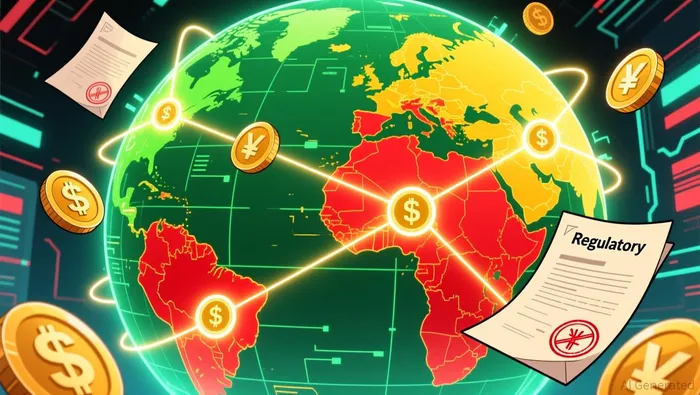
Globally, regulatory divergence persists. The European Union's MiCA rules, the U.S. GENIUS Act, and Hong Kong's licensing systems reflect efforts to integrate stablecoins into formal financial markets according to market analysis. Meanwhile, China's continued prohibition contrasts with these accommodative measures, illustrating the complexity of harmonizing innovation with risk management.
The expert opinion from China underscores a critical debate: while stablecoins are not inherently criminalized, their operational risks necessitate stringent oversight. This perspective aligns with Uzbekistan's sandbox model, which seeks to foster innovation within controlled boundaries. Conversely, South Korea's regulatory inertia and China's hardline stance reflect deeper concerns about systemic stability and illicit use. As jurisdictions navigate these challenges, the future of stablecoins will likely hinge on their ability to meet evolving compliance standards while addressing cross-border regulatory conflicts.

Stay ahead of the market.
Get curated U.S. market news, insights and key dates delivered to your inbox.






Comments
No comments yet