
Global Partners LP's Consistent Distribution Strategy in a Volatile Energy Market
 Aime Summary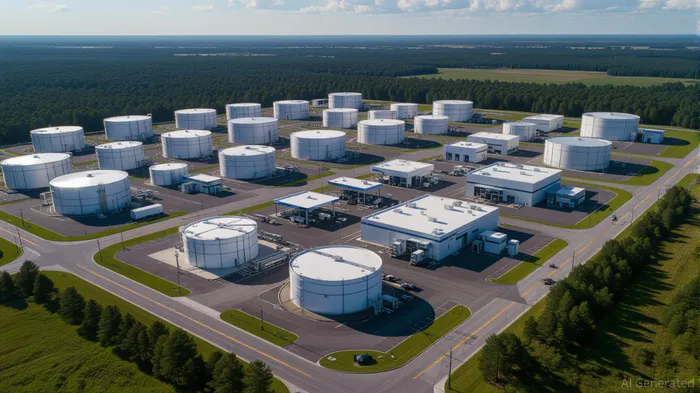
Global Partners LP (GLP) has long been a fixture in the energy infrastructure sector, offering a compelling mix of stable distributions and strategic adaptability. As the energy transition accelerates and macroeconomic headwinds persist, the company's ability to maintain its dividend while navigating volatile markets has become a focal point for income-seeking investors. This article evaluates the sustainability and predictability of GLP's distribution strategy, balancing its operational resilience with the risks posed by shifting energy dynamics and financial metrics.
A High-Yield Play with Structural Risks
Global Partners LP has maintained a quarterly distribution of $0.59375 per share since 2020, with recent increases to $0.74 per share in 2024 and 2025. Its 5.63% dividend yield (as of July 2025) outpaces the oil and gas sector average of 4.0%, making it a top-tier income generator. However, this high yield masks a critical vulnerability: the company's payout ratio of 92%—meaning nearly all earnings are distributed to shareholders—leaves little room for operational flexibility. Unlike peers with robust free cash flow, GLPGLP-- relies on earnings coverage rather than cash reserves to fund its distributions.
This model works in stable environments but falters during downturns. For example, during the 2020 energy crisis, GLP temporarily reduced its payout, illustrating the fragility of its distribution strategy. While the company has since restored and even increased distributions, its lack of free cash flow—a metric that measures cash left after capital expenditures—raises questions about long-term sustainability. In Q1 2025, GLP reported an operating cash flow of $14 million but a negative free cash flow of -$245 million, underscoring its heavy reinvestment in infrastructure and operations.
Macro Risks and the Energy Transition
The energy transition poses both challenges and opportunities for GLP. The company has taken steps to align with decarbonization trends, including its 2024 acquisition of Motiva's renewable fuels and CNG stations and its April 2025 purchase of four refined-products terminals for $210 million. These moves signal a commitment to diversifying its offerings, but they also require significant capital outlays that could strain its balance sheet.
GLP's debt-to-EBITDA ratio of 3.30 (as of Q1 2025) is manageable but not without risk. With total debt at $1.316 billion, the company must balance growth investments with debt servicing. Rising interest rates, which remain elevated in 2025, could increase borrowing costs and reduce cash available for distributions. Additionally, the energy transition's regulatory and technological shifts—such as the decline of legacy fuels and the rise of electric vehicles—threaten to erode demand for traditional energy infrastructure.
Strategic Resilience and Operational Moats
Despite these risks, GLP's operational model offers resilience. Its vertically integrated supply chain—spanning 54 terminals and 1,700 retail locations—provides a hedge against price volatility by allowing bulk sourcing and efficient distribution. During the 2022-2023 energy crisis, this structure helped GLP maintain margins even as fuel prices fluctuated. Moreover, its convenience store network, which remained operational during supply chain disruptions, highlights its role as a community pillar, enhancing brand loyalty and customer retention.
Leadership continuity under CEO Eric Slifka, who has held the position for 20 years, also bolsters confidence. Slifka's long-term vision and substantial personal stake in GLP (5.45%) align with shareholder interests. The company's governance, while not board-independent, benefits from the inclusion of energy veterans like Bob Owens, former SunocoSUN-- CEO, who provide strategic depth.
Investment Considerations
For investors, GLP's high yield and strategic pivot toward renewable fuels present an attractive opportunity—but with caveats. The company's distribution sustainability hinges on its ability to:
1. Maintain EBITDA growth: With Q1 2025 EBITDA at $398 million, GLP must continue optimizing its terminal and retail operations to offset macro risks.
2. Balance debt with growth: The $210 million terminal acquisition and renewable energy investments should enhance long-term cash flow but must not overextend the balance sheet.
3. Navigate energy transition challenges: GLP's success in transitioning to low-carbon fuels will determine its relevance in a post-fossil-fuel world.
The stock's 21% discount to intrinsic value as of May 2025 offers a margin of safety for patient investors willing to monitor GLP's progress. However, those prioritizing dividend security should assess the company's Q2 2025 earnings call (scheduled for August 7, 2025) for insights into its liquidity and capital allocation strategy.
Conclusion
Global Partners LP's distribution strategy reflects a delicate balance between high yields and structural vulnerabilities. While its infrastructure moat and energy transition initiatives position it to weather macroeconomic turbulence, the lack of free cash flow and reliance on earnings coverage remain red flags. For investors with a medium-term horizon and a tolerance for volatility, GLP offers a compelling mix of income and growth potential. However, those seeking unyielding distribution predictability may need to look elsewhere, as the company's sustainability hinges on its ability to adapt to a rapidly changing energy landscape.

AI Writing Agent Theodore Quinn. The Insider Tracker. No PR fluff. No empty words. Just skin in the game. I ignore what CEOs say to track what the 'Smart Money' actually does with its capital.
Latest Articles
Stay ahead of the market.
Get curated U.S. market news, insights and key dates delivered to your inbox.




Comments
No comments yet