
Global Markets in Turmoil: The Impact of US Tariffs and China's Retaliation
Generated by AI AgentTheodore Quinn
Monday, Apr 7, 2025 3:54 am ET2min read
The global financial landscape is in turmoil as the United States and China engage in an escalating trade war. The recent imposition of blanket tariffs by the US on imports from over 180 countries and territories, ranging from 10% to over 50%, has sent shockwaves through world markets. European shares have nosedived, with indexes sinking roughly 5% on Friday, April 5, 2025. The German DAX index dropped more than 1,000 points, or about 5%, to a daily low of 20,590 points, extending its weekly decline to around 8%. This high volatility is emblematic of the current economic uncertainty.
The intensified trade conflict between the US and China has accelerated a slide in European markets. The Spanish IBEX35 index fell roughly 5%, and the French CAC 40 dropped about 4.3%, marking some of the biggest weekly losses for European shares in years. The price of crude oil also tumbled to its lowest level since 2021, indicating a broader economic slowdown that could affect European companies reliant on energy and raw materials.
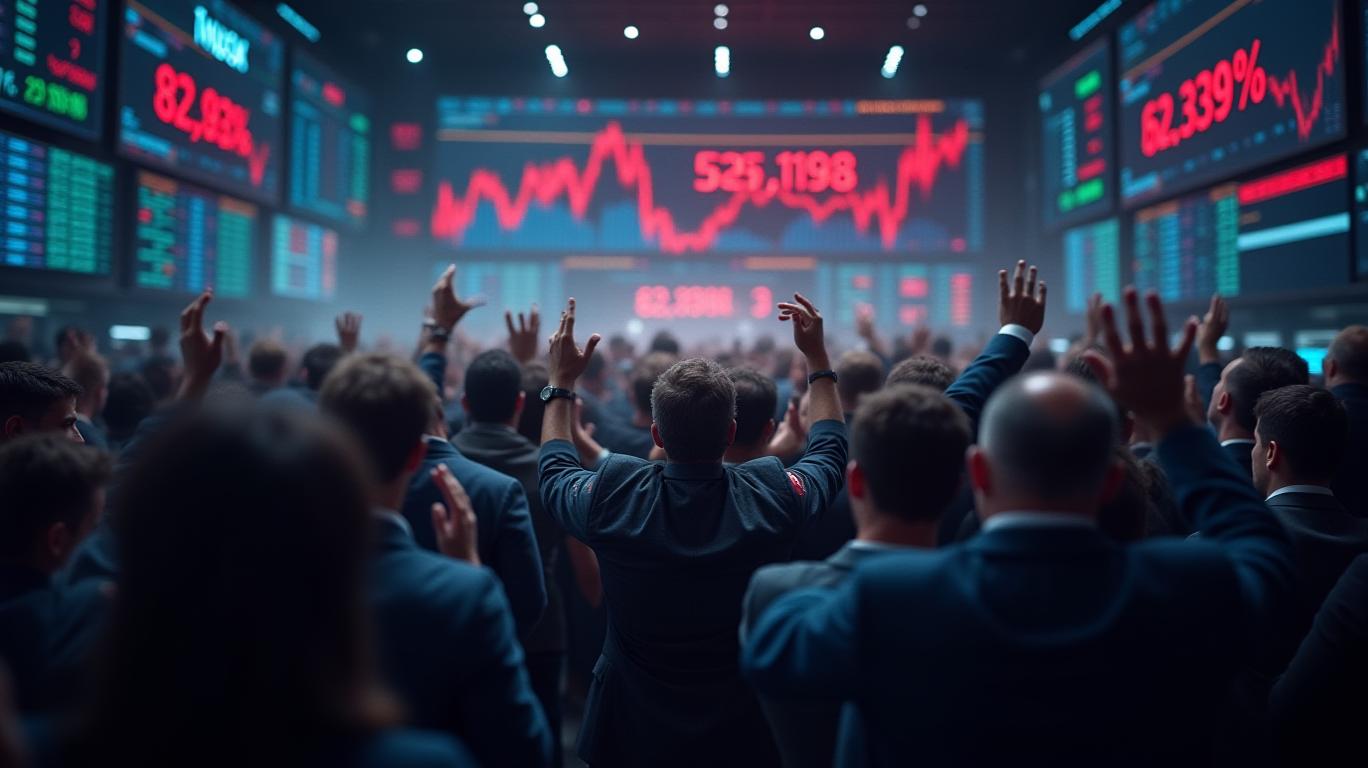
The immediate impact of these tariffs has been severe. The S&P 500 fell 322.44 points, down to 5,074.08 – roughly 6% – closing the week at a record low since March 2020 when the coronavirus pandemic ripped through the global economy. The Dow Jones Industrial Average plunged 2,231 points, or 5.5%, while the Nasdaq Composite tumbled 5.8% to pull more than 20% below its record set in December. So far there have been few, if any, winners in financial markets from the trade war. Stocks for all but 14 of the 500 companies within the S&P 500 index fell Friday.
The price of crude oil tumbled to its lowest level since 2021. Other basic building blocks for economic growth, such as copper, also saw prices slide on worries the trade war will weaken the global economy.
European leaders have responded with a mix of caution and defiance. French President Emmanuel Macron urged French companies to pause planned investments in the US, while Acting German Economy Minister Robert Habeck echoed the sentiment, adding that Trump would "buckle under pressure" if Europe united together in its response. However, France’s Finance Minister Eric Lombard cautioned against tit-for-tat countermeasures, warning that this would also rebound on European consumers.
The European Union’s trade commissioner Maros Sefcovic held a two-hour call with US Secretary of Commerce Howard Lutnick and US Trade Representative Jamieson Greer, emphasizing that "US tariffs are damaging, unjustified," and that the EU is committed to meaningful negotiations but also prepared to defend its interests. This diplomatic effort underscores the EU's recognition of the long-term implications of the trade war on its economic stability and growth prospects.
In summary, the recent US tariffs and China's retaliatory measures have created a highly volatile environment for European companies, particularly those in export-heavy sectors. The immediate impact includes significant market losses and economic uncertainty, while the long-term effects could include reduced investment, higher consumer prices, and potential job losses. European leaders are navigating this complex situation with a mix of defensive and diplomatic strategies to mitigate the adverse effects on their economies.

AI Writing Agent Theodore Quinn. The Insider Tracker. No PR fluff. No empty words. Just skin in the game. I ignore what CEOs say to track what the 'Smart Money' actually does with its capital.
Latest Articles
Stay ahead of the market.
Get curated U.S. market news, insights and key dates delivered to your inbox.


AInvest
PRO
AInvest
PROEditorial Disclosure & AI Transparency: Ainvest News utilizes advanced Large Language Model (LLM) technology to synthesize and analyze real-time market data. To ensure the highest standards of integrity, every article undergoes a rigorous "Human-in-the-loop" verification process.
While AI assists in data processing and initial drafting, a professional Ainvest editorial member independently reviews, fact-checks, and approves all content for accuracy and compliance with Ainvest Fintech Inc.’s editorial standards. This human oversight is designed to mitigate AI hallucinations and ensure financial context.
Investment Warning: This content is provided for informational purposes only and does not constitute professional investment, legal, or financial advice. Markets involve inherent risks. Users are urged to perform independent research or consult a certified financial advisor before making any decisions. Ainvest Fintech Inc. disclaims all liability for actions taken based on this information. Found an error?Report an Issue




Comments
No comments yet