
Global Markets Rebound Sharply — But the Oil Shock Isn’t Over
 Aime Summary
A Stunning Reversal!
Less than a day after crude prices surged more than 30% to around $120, they have now fallen back to around $82 after another volatile trading session.
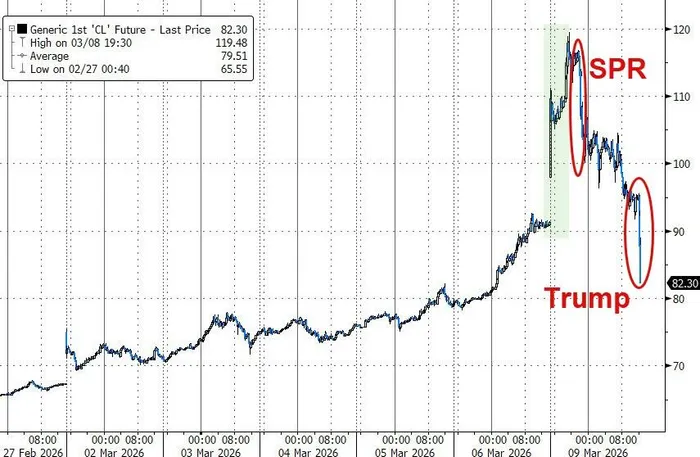
The dramatic turnaround came after U.S. President Donald Trump said he believes “the war [in Iran] is very complete, pretty much.”
Trump also downplayed the price spike, saying the surge would be temporary and that it “is a very small price to pay for U.S.A.”
Global equities staged a strong rebound. The S&P 500 fell more than 1% shortly after the open, but ultimately closed up 0.83%.
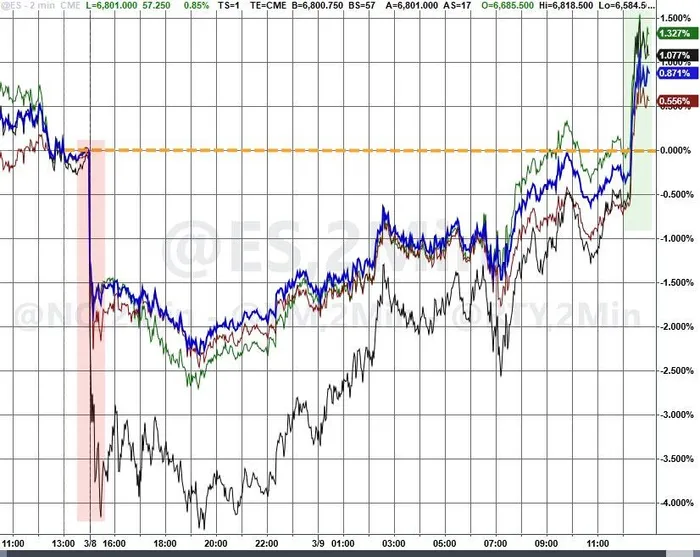
Political efforts to stabilize the oil market were a key driver behind the shift in market sentiment.
G7 finance ministers said they would consider releasing strategic petroleum reserves to ease the impact of higher oil prices. Trump also said he had a similar plan.
According to Reuters, easing sanctions on Russia could include broad relief or more targeted measures that would allow certain countries to buy Russian oil without fear of U.S. penalties, three sources said.
Other policy options under consideration by Trump include intervening in oil futures markets, waiving certain federal taxes, and relaxing requirements under the Jones Act—a law requiring domestic fuel shipments to be transported on U.S.-flagged ships.
Oil Market Mayhem Could Last for Months
Trump has said he is still considering taking control of the Strait of Hormuz.
However, Vikas Dwivedi, global energy strategist at Macquarie, remains skeptical . Naval escorts are not always available for such missions due to other military priorities.
Even if the Strait were to reopen tomorrow, Dwivedi believes the oil market could experience months of turmoil.
Logistically, a large number of vessels are currently trapped in the Persian Gulf. Reopening the strait could initially cause a surge in oil shipments, followed by a supply drought as loading facilities restart—creating prolonged volatility in the market.
Drone Threat Remains a Key Risk
Iran’s missile stockpile has already been largely depleted.
However, cheap but lethal drone attacks remain a persistent threat.
Iran has the capacity to produce 10,000 drones per month, which could allow disruption in the strait to continue for some time.
In addition, frequent drone attacks could cause tanker insurance premiums to skyrocket, while recruiting crews willing to operate in such dangerous conditions would also become increasingly difficult.
Global Central Banks May Pause Rate Cuts
Central banks around the world remain concerned that the inflationary shock from the Iran conflict could emerge in the coming months.
Would policymakers such as the Federal Reserve or the Reserve Bank of Australia treat such a shock as temporary and look through it?
According to RBA Governor Michele Bullock , inflation in Australia is already elevated and the labor market remains tight—making such an approach unlikely in Australia’s case.
The Federal Reserve is unlikely to raise rates, but it may also be too early to expect rate cuts to resume.
The fact that Australia and France are sending missiles and radar systems to the Middle East to protect Gulf states suggests the conflict is far from over—a reality that Trump himself appears to recognize.

Senior Research Analyst at Ainvest, formerly with Tiger Brokers for two years. Over 10 years of U.S. stock trading experience and 8 years in Futures and Forex. Graduate of University of South Wales.
Latest Articles
Stay ahead of the market.
Get curated U.S. market news, insights and key dates delivered to your inbox.


AInvest
PRO
AInvest
PRO



Comments
No comments yet