
Global Manufacturing Rebound: A New Dawn for Cyclical Growth?


 Aime Summary
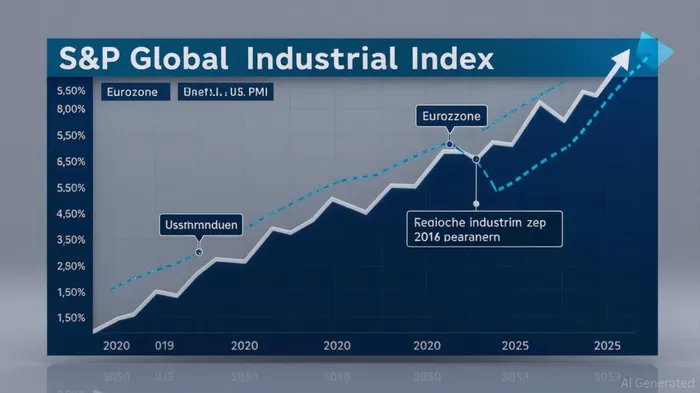
The global manufacturing sector is showing signs of a synchronized rebound, with U.S. and European PMI data painting a picture of cautious optimism. For investors, this represents a pivotal moment to reassess allocations and consider a strategic rotation into cyclical growth sectors. The data tells a compelling story: the Eurozone's manufacturing PMI crossed the 50 expansion threshold in August 2025 after 38 months of contraction, while the U.S. index surged to 53.3—the highest since 2022. These numbers are not just statistical noise; they signal a durable recovery driven by fading trade uncertainties, pent-up demand, and policy tailwinds.
The PMI Signal: A Tale of Two Recoveries
The Eurozone's rebound is particularly striking. At 50.5 in August, the HCOB PMI reflects a 38-month high, with new orders rising for the first time since 2022. This suggests that European manufacturers are regaining confidence, buoyed by stronger domestic and international demand. However, challenges persist: employment growth remains tepid, input costs are rising, and supply chain bottlenecks linger. Yet, the sector's resilience—despite these headwinds—points to a structural shift.
In the U.S., the S&P Global Manufacturing PMI hit 53.3 in August, a sharp rebound from July's 49.8 contraction. The surge was fueled by a surge in new orders and production, with hiring rebounding to its highest level since 2022. This U-shaped recovery, however, is uneven. While demand is picking up, lingering uncertainties around tariffs and federal policy continue to cloud the outlook.
Industrial Equities: A Case for Rotation
The PMI data provides a strong case for rotating into industrial equities. The sector, long sidelined by high interest rates and geopolitical risks, is now positioned to benefit from lower borrowing costs and a Fed poised to cut rates in 2025. Industrial stocks, particularly those aligned with clean technology and electrification, could see renewed demand. For example, companies investing in AI-driven smart operations or green manufacturing are likely to outperform as firms prioritize high-ROI innovations.
Consider TeslaTSLA--, whose stock has surged alongside the clean energy transition. As governments push for decarbonization, firms that can scale electrification and energy storage solutions will attract capital. Similarly, industrial conglomerates like Siemens and 3MMMM--, which are pivoting toward sustainable manufacturing, could see valuation multiples expand.
Commodity Prices: Navigating the Inflationary Tightrope
Commodity prices remain a wildcard. While the PMI rebound suggests stronger demand, supply-side constraints—such as shipping delays in the Red Sea and droughts in the Panama Canal—keep input costs elevated. The producer price index remains stubbornly high, and manufacturers expect raw material costs to rise by 2.7% over the next year.
Investors should focus on commodities critical to the energy transition, such as copper, lithium, and nickel. These materials are essential for electrification and renewable infrastructure, and their prices are likely to remain supported by long-term demand. However, short-term volatility is inevitable, so a hedged approach—using futures or ETFs—may be prudent.
Infrastructure: The Long Game
The global infrastructure investment outlook is equally promising. In 2024, construction spending in manufacturing hit a record $238 billion, with over $31 billion allocated to clean-tech facilities. This trend is set to accelerate as governments prioritize net-zero goals. Electric vehicles, smart grids, and green hydrogen projects will drive infrastructure spending, creating opportunities for firms in construction, heavy equipment, and logistics.
Investors should also consider infrastructure bonds and REITs, which offer exposure to stable cash flows from toll roads, data centers, and renewable energy projects. The energy transition is not just a policy imperative—it's a $10 trillion market opportunity.
The Case for Action
The synchronized manufacturing rebound is a rare alignment of macroeconomic and policy tailwinds. For investors, the message is clear: cyclical growth is back. While risks remain—geopolitical tensions, inflationary pressures, and policy uncertainty—the fundamentals are strong.
A strategic rotation into industrial equities, commodity-linked assets, and infrastructure investments offers a compelling risk-reward profile. The key is to balance exposure to high-growth areas (clean tech, AI-driven manufacturing) with defensive plays in commodities and infrastructure.
As the PMI data continues to improve, now is the time to act. The global manufacturing rebound is not a fleeting blip—it's a durable shift. Investors who position themselves accordingly will be rewarded as the cycle unfolds.

Eli es un escritor de economía ampliamente conocido, con una personalidad agresiva y bien documentada que busca desafiar los conceptos comunes. Su análisis adopta una actitud equilibrada pero crítica sobre la dinámica de los mercados, con el objetivo de educar, informar y, ocasionalmente, romper las narrativas conocidas. A pesar de su credibilidad y influencia en la industria financiera, el propósito de Eli es el de aclarar temas económicos, tendencias de mercado, y análisis de inversiones. Su estilo directo y analítico garantiza la claridad, de modo que incluso los temas más complicados de los mercados pueden ser entendidos por un público amplio, sin sacrificar el rigor.
Latest Articles
Stay ahead of the market.
Get curated U.S. market news, insights and key dates delivered to your inbox.






Comments
No comments yet