
Global Investors Shift to Gold Amid US Dollar Decline
Economist and author Nassim Taleb has highlighted a significant shift in global financial preferences, noting that the US dollar has diminished in its role as the world’s reserve currency. This perspective emerged following the substantial sanctions imposed by the United States on Russia for its invasion of Ukraine, which, according to Taleb, have eroded the credibility of the US dollar and threatened its status as a reserve currency.
Taleb argues that the dollar’s weakening is evident in financial markets, where its diminishing appeal as a reserve currency poses significant risks alongside the US debt. The inability of the dollar to maintain its value has driven investors towards other assets, such as stocks. Recent trends indicate that central banks have been increasingly shifting their reserves into gold over the past twelve months, suggesting a decrease in confidence among investors and financial actors in both the dollar and the euro.
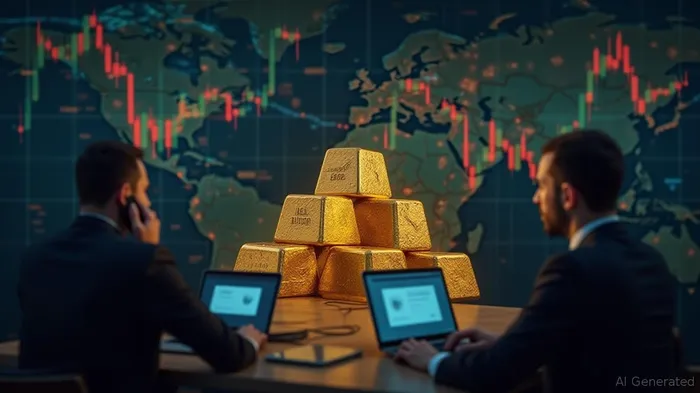
Following the sanctions by America and its allies, even individuals not connected to Putin have begun distancing themselves from the dollar and euro. Consequently, many investors and countries have been strengthening their reserves with gold, marking a decisive factor in reserve currency preferences. Taleb emphasized that while global transactions predominantly occur in dollars, countries are largely converting their foreign exchange reserves into gold. This transformation did not begin during Trump’s tenure but gained momentum under Biden, especially following the freezing of accounts connected to Putin. This event has prompted financial circles to seek alternative reserve assets apart from the dollar and euro.
Analysts interpret Taleb’s evaluation as indicative of evolving power dynamics in the international financial system. Some economic experts suggest that the risks facing the traditionally viewed reserve currency, the dollar, could have diverse economic and political implications for the future. Experts indicate that, in the evolving economic environment, driven by US financial sanctions, countries are compelled to diversify their reserve policies. In the global financial system, heightened geopolitical tensions and sanction policies alter perceptions of safe havens. The shift of central banks and investors towards gold might fuel new trends in portfolio diversification. To sustain its position as a reserve currency, it is increasingly crucial for the dollar to inspire confidence through strategic financial and political measures. Investors and economic managers are advised to closely monitor these changing preferences in international markets for safe havens.
In recent times, global investors have been increasingly shifting their preferences towards safe haven assets, a trend that has been emphasized by financial experts. This shift is largely driven by geopolitical tensions and economic uncertainties, which have prompted investors to seek out assets that are perceived as more stable and less volatile. The recent announcement of U.S. military strikes against Iran has heightened investor anxiety, underscoring the sensitivity of digital assets to international conflicts. This event highlights the fragile relationship between global political events and cryptocurrency market stability. The announcement triggered a broad sell-off in the cryptocurrency market, with Bitcoin experiencing a sharp decline. This price movement reflects the broader market’s reaction to geopolitical uncertainty, which often prompts risk-off behavior among investors. While cryptocurrencies have been considered by some as a hedge against inflation and economic instability, this episode demonstrates their vulnerability to sudden geopolitical shocks. The incident underscores the importance of monitoring global political events as integral factors influencing crypto asset valuations.
The immediate market response was characterized by a broad sell-off, not only in Bitcoin but also in Ethereum and various altcoins. This synchronized downturn highlights the interconnected nature of digital assets and their collective sensitivity to external shocks. Investor sentiment shifted rapidly towards caution, reflecting concerns about the potential economic fallout from escalating geopolitical tensions. The swift market reaction also points to the challenges faced by cryptocurrencies in achieving price stability, especially during periods of heightened uncertainty. As a result, conservative investors may perceive increased risk in crypto holdings, while speculative traders might capitalize on the volatility.
Financial analysts are closely observing the evolving geopolitical landscape and its implications for cryptocurrencies. Some experts suggest that digital assets could eventually serve as alternative safe havens during prolonged geopolitical crises, given their decentralized nature and independence from traditional financial systems. However, the current episode reveals that in the short term, cryptocurrencies remain highly susceptible to market sentiment shifts triggered by political developments. This duality presents both opportunities and risks for investors, emphasizing the need for strategic portfolio management and real-time information tracking.
In light of recent events, investors are advised to adopt a cautious approach, balancing potential gains with the inherent risks posed by geopolitical instability. Diversification across asset classes and maintaining liquidity can help mitigate exposure to sudden market downturns. Staying informed through credible sources and understanding the broader geopolitical context are essential for making sound investment decisions in the crypto space. Furthermore, employing risk management tools such as stop-loss orders and position sizing can protect portfolios from abrupt price swings.
This episode serves as a critical reminder of the intricate linkages between international politics and cryptocurrency market dynamics. The recent U.S. political developments have exposed the crypto market’s sensitivity to geopolitical events, resulting in increased volatility and investor caution. Moving forward, both seasoned investors and newcomers should carefully consider geopolitical risks when engaging with digital assets. Maintaining vigilance and adopting prudent investment strategies will be key to navigating the evolving landscape of cryptocurrency markets amid global uncertainties.
The shift in global preferences towards safe haven assets is not limited to cryptocurrencies. Jewelry preferences are also changing, with a growing obsession with gold. More young buyers are opting for 18-carat pieces, reflecting a broader trend towards assets that are perceived as stable and valuable. This shift in consumer behavior underscores the increasing demand for safe haven assets across various sectors, driven by economic uncertainties and geopolitical tensions.

Stay ahead of the market.
Get curated U.S. market news, insights and key dates delivered to your inbox.






Comments
No comments yet