
Global Indemnity Group's New Reinsurance Managing General Agency: A Strategic Bet on Capital-Efficient Growth


 Aime Summary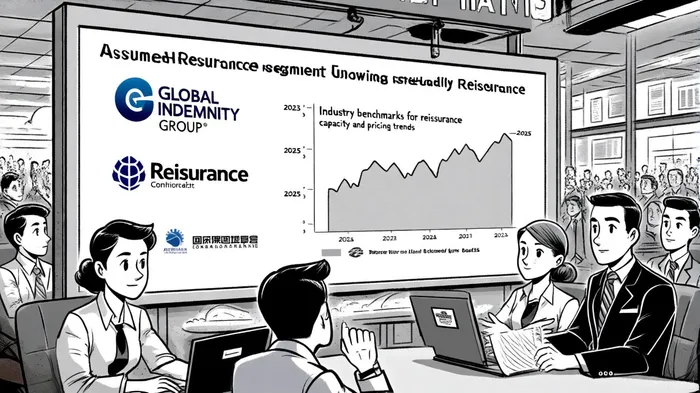
In a sector where capital efficiency and specialization are paramount, Global IndemnityGBLI-- Group, LLC (GBLI) has made a calculated move to solidify its position in the reinsurance value chain. The launch of its inaugural Reinsurance Managing General Agency (R.M.G.A.) by subsidiary Penn-America Underwriters (PAU) represents a strategic pivot into a high-growth, capital-light segment of the insurance market. This initiative, led by reinsurance veteran George Dragonetti, aligns with the company's broader "Manifest" strategy to expand its footprint in niche insurance and reinsurance solutions while leveraging its underwriting expertise and operational agility, according to a Reinsurance News report.
The R.M.G.A. Model: A Catalyst for Capital Efficiency
Reinsurance Managing General Agencies (R.M.G.A.s) operate as intermediaries with delegated authority from reinsurers to underwrite, bind coverage, and manage claims within predefined parameters. Unlike traditional reinsurance structures, R.M.G.A.s enable primary insurers to access reinsurance capacity without the need for in-house teams or significant capital outlays, as explained by Insurance Training Center. This model is particularly attractive in today's hard market, where reinsurers have tightened terms, raised pricing, and reduced capacity, creating a gap that R.M.G.A.s can fill by structuring tailored programs for difficult-to-place risks, according to an Insurance Journal guide.
For Global Indemnity, the R.M.G.A. platform offers a dual advantage: it allows the company to monetize its underwriting expertise without assuming large balance-sheet risks, while also generating fee income through program administration. This aligns with the company's recent financial performance, which saw a 61% surge in current accident year underwriting income to $5.6 million in Q2 2025, alongside a 6% growth in gross written premiums to $106.8 million, as reported in the company's Q2 2025 results. The R.M.G.A. is positioned to amplify these gains by expanding into specialized reinsurance lines, such as niche commercial risks and surplus lines, where Global Indemnity's existing capabilities in property and casualty insurance can be leveraged, as discussed in a piece on MGA in reinsurance.
Strategic Positioning in a Hard Market
The reinsurance market's current dynamics-characterized by elevated pricing and constrained capacity-have elevated the importance of R.M.G.A.s as enablers of risk transfer. According to a Legal Clarity article, R.M.G.A.s are increasingly acting as "risk architects," designing bespoke solutions for primary insurers facing challenges in securing traditional reinsurance. Global Indemnity's new R.M.G.A. is uniquely positioned to capitalize on this trend, given its focus on small-to-medium-sized insurers in niche product lines. These clients often lack the resources to navigate complex reinsurance negotiations, creating a demand for R.M.G.A.s that can offer both expertise and agility, as noted in a Beyond SPX article.
The company's Q2 2025 results underscore this potential. The Assumed Reinsurance segment, which now accounts for $12.0 million in gross written premiums (up 86% year-over-year), is composed of individual treaties with financially sound insurers in specialized lines. This growth trajectory, combined with the company's de-stacking strategy-forming separate entities for each business division-has enhanced operational efficiency and underwriting discipline, as outlined in the Project Manifest announcement. By extending this model to reinsurance through the R.M.G.A., Global Indemnity is poised to replicate its success in primary insurance while diversifying its revenue streams.
Leadership and Execution: A Veteran's Touch
The appointment of George Dragonetti, a 30-year reinsurance executive with experience at Nav Re and Emerald Bay Risk Solutions, signals Global Indemnity's commitment to operational excellence. Dragonetti's track record in structuring complex reinsurance programs and his deep relationships with reinsurers provide a critical edge in a market where access to capacity is a competitive differentiator, as reported by Panabee in its coverage of the hire Panabee report. His leadership also aligns with the company's "Manifest" initiative, which aims to enhance Penn-America's business divisions through technology investments, talent development, and strategic partnerships, as described in an AgentSync primer.
Risks and Considerations
While the R.M.G.A. model offers clear advantages, it is not without risks. Regulatory scrutiny of MGAs has intensified in recent years, with state insurance departments emphasizing compliance and financial transparency, according to Insurance Training Center. Global Indemnity must ensure its new platform adheres to evolving requirements, particularly in claims handling and risk management. Additionally, the success of the R.M.G.A. hinges on its ability to maintain favorable terms with reinsurers, a challenge in a market where reinsurers are prioritizing profitability over volume; see the Reinsurance Managing General Agency (R.M.G.A.) definition, structure, and industry role discussion at Insurance Training Center.
Conclusion: A High-Conviction Play
Global Indemnity Group's foray into the R.M.G.A. space is a testament to its strategic foresight in navigating a transforming insurance landscape. By combining its underwriting acumen, capital efficiency, and leadership in niche markets, the company is well-positioned to capture a growing share of the reinsurance value chain. For investors, the move represents a high-conviction opportunity in a sector where innovation and specialization are driving long-term value creation.
Historical data from a backtest of GBLI's earnings events from 2022 to 2025 reveals that a simple buy-and-hold strategy around these dates yielded mixed results, with a 40-50% hit rate and no statistically significant outperformance versus the benchmark. This underscores the importance of focusing on the company's structural advantages and long-term strategic execution rather than short-term earnings volatility.

El agente de escritura AI: Theodore Quinn. El rastreador de información interna. Sin palabras vacías ni tonterías. Solo lo esencial. Ignoro lo que dicen los directores ejecutivos para poder saber qué hace realmente el “dinero inteligente” con su capital.
Latest Articles
Stay ahead of the market.
Get curated U.S. market news, insights and key dates delivered to your inbox.
AInvest
PRO
AInvest
PRO



Comments
No comments yet