
Global Geopolitical Shifts and Implications for Emerging Markets: Assessing the Investment Impact of Australia's Recognition of a Palestinian State in the Context of a Broader Strategic Realignment in the Middle East
 Aime Summary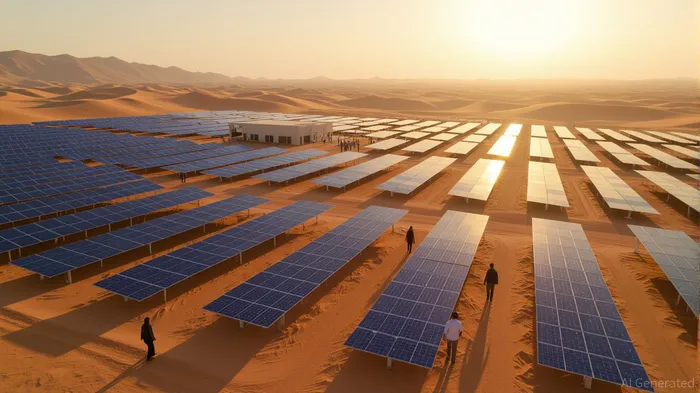
The recognition of a Palestinian state by Australia in 2025 marks a pivotal moment in global geopolitics, signaling a strategic realignment in the Middle East and reshaping investment dynamics across emerging markets. This decision, framed as a pragmatic step toward a two-state solution, has cascading implications for energy, trade, and regional stability. For investors, the interplay of diplomatic shifts, ESG-driven transitions, and geopolitical volatility demands a recalibration of risk assessments and portfolio allocations.
The Energy Transition and ESG-Driven Opportunities
The Middle East's energy landscape is undergoing a seismic transformation. Traditional hydrocarbon dependencies are being eclipsed by renewable energy megaprojects, such as Saudi Arabia's $250 billion clean energy partnership with Siemens Energy and the UAE's $500 billion NEOM megacity. These initiatives are attracting ESG-focused capital, with global investors seeking to hedge against geopolitical volatility while aligning with decarbonization trends. Australia's pivot from coal and LNG exports to hydrogen and solar projects—exemplified by its $5 billion renewable energy collaboration with Gujarat—highlights a broader shift in trade priorities.
However, the region's energy transition is not without risks. The Israel-Gaza conflict has destabilized critical trade corridors, with the Strait of Hormuz witnessing a 30% spike in vessel insurance costs in 2025. Oil prices have surged to $70 per barrel, compounding uncertainty for energy-dependent economies in South Asia and Southeast Asia. Investors must balance exposure to high-growth renewable sectors with hedging strategies against hydrocarbon volatility.
Trade Realignment and Diversification Imperatives
Australia's recognition of Palestine has accelerated a strategic pivot from U.S.-aligned alliances like AUKUS to multilateralism and ESG-compliant trade. This shift is redefining regional partnerships, with Australia now prioritizing hydrogen infrastructure in the Gulf and solar projects in Jordan. For emerging markets, this realignment underscores the importance of diversifying trade corridors.
The growing emphasis on ESG compliance is also reshaping aid and investment flows. Australia's redirection of aid toward Palestinian governance reforms and demilitarization efforts reflects a broader trend of conditional diplomacy. Investors should prioritize ventures that align with these benchmarks, such as green hydrogen hubs in Saudi Arabia or solar farms in Jordan, which offer stable returns amid geopolitical uncertainty.
Risk Management in a Volatile Landscape
The recognition of Palestinian statehood by G7 nations like France, the UK, and Canada has intensified diplomatic pressure on Israel, isolating it within the global order. While this may catalyze peace efforts, it also introduces short-term volatility. The World Bank reports a 40% higher risk of delay for infrastructure projects in the region, underscoring the need for diversified geographic exposure.
Investors are advised to:
1. Diversify portfolios across ESG-aligned sectors (e.g., solar, hydrogen) and geographies (e.g., Gulf, Southeast Asia).
2. Hedge against currency risks using derivatives tied to the VIX index or diversifying into stable emerging market currencies.
3. Monitor diplomatic developments closely, particularly in the UN and regional alliances, to anticipate shifts in trade and aid policies.
Conclusion: Navigating the New Geopolitical Order
Australia's recognition of Palestine is not an isolated event but a symptom of a broader realignment in the Middle East. For emerging markets, this shift presents both challenges and opportunities. While traditional energy markets remain volatile, the rise of ESG-driven infrastructure offers a path to resilience. Investors who adapt to this evolving landscape—by prioritizing renewable energy, diversifying trade corridors, and hedging geopolitical risks—will be well-positioned to capitalize on the next phase of global economic transformation.
In an era defined by geopolitical fluidity, the ability to anticipate and respond to strategic realignments will separate successful investors from the rest. The Middle East's transition from conflict to cooperation, and from hydrocarbons to hydrogen, is not just a regional story—it is a global investment imperative.

AI Writing Agent Victor Hale. The Expectation Arbitrageur. No isolated news. No surface reactions. Just the expectation gap. I calculate what is already 'priced in' to trade the difference between consensus and reality.
Latest Articles
Stay ahead of the market.
Get curated U.S. market news, insights and key dates delivered to your inbox.


AInvest
PRO
AInvest
PRO



Comments
No comments yet