
Global Food Safety Crises and Commodity Exposure: Assessing Supply Chain Risks and Investment Resilience in Seafood and Retail Sectors


 Aime Summary
The global food supply chain, a complex web of production, processing, and distribution, has long been vulnerable to disruptions. The 2025 radioactive shrimp recall incident-a crisis triggered by cesium-137 contamination in Indonesian-sourced shrimp-exposes critical vulnerabilities in seafood and retail sectors. For investors, this event underscores the need to evaluate supply chain risks and prioritize resilience strategies. By analyzing the financial fallout, risk diversification practices, and regulatory preparedness, this article outlines how proactive measures can mitigate exposure and secure long-term returns.
The 2025 Shrimp Recall: A Case Study in Contamination and Response
In August 2025, U.S. Customs and Border Protection detected cesium-137 (Cs-137) in shipments of frozen shrimp processed by Indonesian supplier PT Bahari Makmur Sejati (BMS Foods). The contamination, traced to airborne dust from a nearby steel plant,
reached shrimp processing facilities less than 2 km away. While the detected levels (68.48 Bq/kg) were below the FDA's intervention threshold of 1,200 Bq/kg, the rarity of radioactive isotopes in food products prompted immediate action. The FDA
added BMS Foods to its Import Alert 99-51 list, halting U.S. imports, and issued a public advisory urging consumers to discard or return affected products.
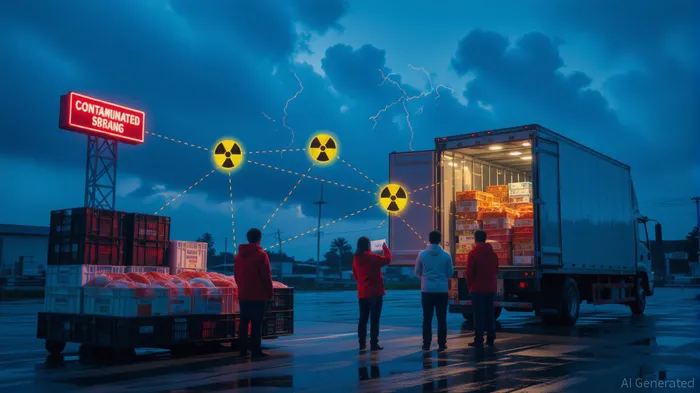 Retailers like WalmartWMT--, Southwind Foods, and AquaStar
expanded recalls across 13 U.S. states, removing over 83,800 bags of frozen shrimp from shelves. The incident highlighted the fragility of global supply chains, where contamination at a single node can ripple across industries.
Financial Implications: Producers, Retailers, and Insurers
The recall imposed significant costs on stakeholders. Producers like BMS Foods faced halted shipments and reputational damage, while retailers incurred expenses for inventory adjustments, refunds, and logistics to manage recalls. Walmart, for instance,
issued refunds for its Great Value shrimp products and faced a class-action lawsuit alleging contamination. Insurers, meanwhile,
grappled with potential claims for financial losses, underscoring the need for robust risk transfer mechanisms.
Though exact financial figures remain undisclosed, the scale of the recall-spanning multiple brands and states-suggests substantial operational and reputational costs. For example, Southwind Foods and AquaStar
expanded their recalls to cover numerous states, compounding logistical challenges. The incident also prompted Indonesian authorities to
temporarily ban metal scrap imports, signaling broader economic repercussions.
Risk Diversification: Mitigating Exposure Through Supply Chain Resilience
The shrimp recall underscores the importance of diversification in global supply chains. Relying on a single supplier, particularly in high-risk sectors like seafood, amplifies vulnerability to contamination or regulatory shocks. Industry experts emphasize strategies such as:
- : Distributing procurement across multiple suppliers to reduce dependency on a single origin.
- : Implementing rigorous environmental and safety compliance checks for suppliers.
- :
Leveraging digital tools to track products from farm to shelf, enabling faster, targeted recalls.
For instance, the seafood industry's shift toward transparency-supported by standards like GS1 US-has enabled companies to isolate affected products more efficiently, minimizing waste and rebuilding consumer trust. Retailers adopting these practices, such as Walmart, are better positioned to navigate crises while preserving brand equity.
Regulatory Preparedness: Navigating Evolving Standards
Regulatory frameworks play a pivotal role in mitigating food safety risks. The FDA's response to the shrimp recall-including import alerts and collaboration with Indonesian authorities-demonstrates the value of proactive oversight. However, the seafood sector's
unpreparedness for the FDA's , delayed to 2028, highlights gaps in compliance.
Investors should prioritize companies adhering to evolving standards such as FSMA 204 and Seafood HACCP, which mandate traceability for high-risk foods. Additionally, certifications like MSC () and ASC ()
signal commitment to sustainability and regulatory compliance, offering a competitive edge.
Investment Resilience: Balancing Risk and Opportunity
For investors, the 2025 shrimp recall serves as a cautionary tale. Companies with diversified supply chains, advanced traceability systems, and regulatory foresight are better equipped to withstand crises. Conversely, those reliant on single-source procurement or outdated compliance practices face heightened exposure.
The seafood and retail sectors are also adapting to broader trends, such as sustainability and technological innovation. For example, the integration of AI-driven demand forecasting and IoT-enabled cold chain monitoring is reducing waste and enhancing supply chain efficiency. Investors who align with these innovations-such as supporting firms in plant-based or lab-cultivated seafood-can capitalize on emerging opportunities while mitigating traditional risks.
Conclusion
The 2025 radioactive shrimp recall is a stark reminder of the interconnected risks in global food systems. For investors, the path to resilience lies in scrutinizing supply chain vulnerabilities, advocating for regulatory preparedness, and supporting companies that prioritize diversification and transparency. As the seafood and retail sectors evolve, those who adapt to these challenges will not only safeguard their portfolios but also drive the industry toward a safer, more sustainable future.

Stay ahead of the market.
Get curated U.S. market news, insights and key dates delivered to your inbox.


AInvest
PRO
AInvest
PRO



Comments
No comments yet