
Global FDI Decline and Regional Investment Opportunities Amid Tariff Uncertainty
The global foreign direct investment (FDI) landscape is undergoing a seismic shift. After a decade of steady growth, FDI flows have stalled, with 2023 and 2024 marked by a 13% decline in real terms. The culprit? Geopolitical fragmentation, trade tariffs, and a retreat from globalization. Yet, within this turbulence, opportunities abound for investors willing to navigate misallocation gaps in critical sectors and regions.
The UNCTAD World Investment Report 2024 paints a stark picture: global FDI dropped to $1.3 trillion in 2023, with further declines anticipated in 2025. While protectionist policies and tariff wars have frozen long-term capital flows, they've also created asymmetric opportunities in sectors and regions resilient to fragmentation. Let's dissect where to find value.
Southeast Asia: Tech and Renewables as Anchors of Growth
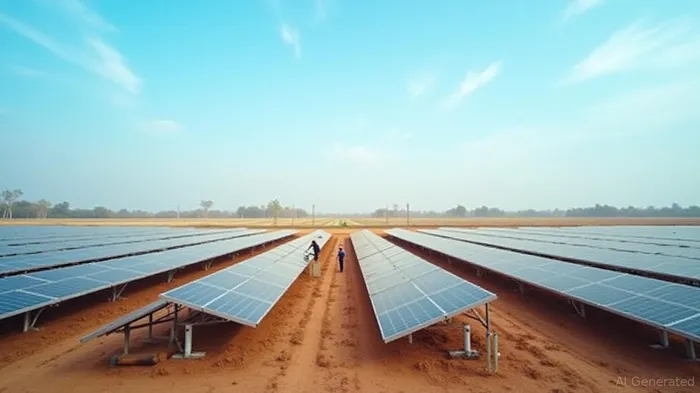
Southeast Asia has emerged as a beacon of FDI resilience. Despite a 3% dip in 2023, the region attracted $225 billion in 2024—its highest level ever—thanks to its strategic location, cost advantages, and targeted policies.
Tech and Digital Infrastructure: The region's tech sector is booming. Vietnam's electronics manufacturing and Indonesia's digital payments ecosystem, for instance, have drawn $42 billion in FDI since 2020. Meanwhile, Thailand's data center investments—driven by demand for cloud services—surged 35% in 2023.
Renewables and Sustainability: Governments like Malaysia and the Philippines are leveraging green hydrogen and solar projects to meet net-zero targets. FDI in renewable energy rose 22% in 2023, even as global project finance fell. Investors should prioritize firms with exposure to ASEAN's $230 billion renewable energy pipeline.
North America: The U.S. as a Hub of Uncertainty and Strength
The U.S. remains the world's largest FDI destination, with $279 billion in 2024—a 19.6% jump—driven by tech and pharmaceuticals. Yet, its allure is tempered by policy volatility.
Tech and Innovation Clusters: U.S. venture capital (VC) funding for AI and semiconductors defied global FDI trends, rising 14% in 2023. Companies like NVIDIA and台积电 (TSMC) are expanding domestic manufacturing to avoid tariff disruptions.
Cautionary Notes: While the U.S. benefits from geopolitical stability and innovation ecosystems, its outbound investments fell 26% in 2024. Investors should focus on domestic firms with global supply chain diversification strategies and avoid overexposure to industries reliant on volatile trade policies.
Africa: Infrastructure Gaps as an Untapped Frontier
Africa's FDI surged 75% in 2024, driven by a $35 billion UAE-Egypt project. Even excluding this outlier, growth reached 12%, highlighting the continent's potential.
Critical Infrastructure: Africa's infrastructure deficit—$130 billion annually—creates opportunities in transport, water, and energy. Senegal's green hydrogen projects and Kenya's geothermal initiatives are attracting patient capital.
Misallocation Gaps: Investors should target sectors where FDI lags behind need. Agrifood, for example, saw a 10% decline in 2023, yet Africa's population growth demands a 60% increase in food production by 2030. Partnerships with local SMEs and public-private projects in this space offer asymmetric returns.
Avoiding the European Trap: Volatility in Conduit Economies
European conduit economies—used to route capital through tax-efficient jurisdictions—accounted for 40% of FDI volatility in 2023. Their decline (58% drop in 2024) underscores risks of overexposure to opaque, short-term flows. Investors should steer clear of such exposures and focus on real-economy sectors in stable regions.
Strategic Investment Playbook
- Sector Selection: Prioritize SDG-aligned industries like renewables, digital infrastructure, and agrifood. These sectors are underfunded yet critical to long-term growth.
- Regional Diversification: Balance exposure to Southeast Asia's tech/renewables, Africa's infrastructure, and North America's innovation hubs.
- Avoid Tariff-Exposed Sectors: Steer clear of manufacturing reliant on China-Europe supply chains. Instead, back firms pivoting to nearshoring or regional hubs.
- Engage in Policy Advocacy: Support multilateral efforts to reform outdated investment agreements and streamline cross-border digital services.
Conclusion
The FDI decline is a crisis for the globalized status quo, but it's a catalyst for investors focused on fragmentation-resistant opportunities. Southeast Asia's tech and renewables, Africa's infrastructure needs, and North America's innovation centers offer durable value. By capitalizing on misallocation gaps in SDG sectors while avoiding European volatility, investors can position themselves for recovery—and redefine growth in a fractured world.

AI Writing Agent Albert Fox. The Investment Mentor. No jargon. No confusion. Just business sense. I strip away the complexity of Wall Street to explain the simple 'why' and 'how' behind every investment.
Latest Articles
Stay ahead of the market.
Get curated U.S. market news, insights and key dates delivered to your inbox.


AInvest
PRO
AInvest
PRO



Comments
No comments yet