
Global Equity Market Volatility Amid Mixed Regional Performance


 Aime Summary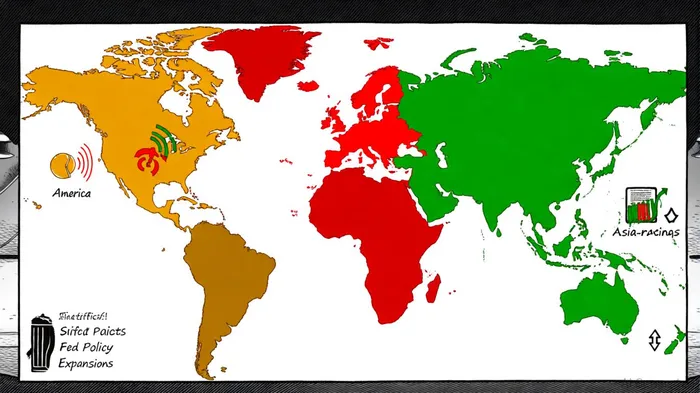
The global equity markets are navigating a treacherous tightrope in September 2025, as divergent regional PMI data and macroeconomic headwinds create a volatile landscape for investors. While the J.P. . tariffs and geopolitical tensions[1]. This dissonance between headline growth and underlying sentiment is fueling a tug-of-war between risk-on and risk-off trades, demanding a nuanced approach to positioning.
North America: A Tale of Two PMIs
The U.S. economy is caught in a paradox. The S&P Global U.S. , signaling the strongest manufacturing expansion since May 2022[3]. Yet the ISM Manufacturing PMI, a closely watched gauge, , underscoring the sector's fragility[4]. This duality reflects the impact of tariffs, which are inflating input costs while distorting supply chains. For equities, this means manufacturing-linked sectors like industrials and materials face margin pressures, but the broader market benefits from resilient services activity (U.S. . Investors should favor in healthcare and utilities while hedging against tariff-driven volatility in cyclical sectors.
. A regional rotation strategy—overweighting U.S. services and underweighting Canadian industrials—could capitalize on this divergence.
Europe: Stagnation and Strategic Opportunities
Europe's growth story is one of stagnation. , , . The region's equity markets are pricing in prolonged weakness, with real estate and energy sectors offering relative value as the Fed's anticipated rate cuts lower borrowing costs[2]. However, investors must tread carefully: the 's dovish stance and weak PMI data could trigger a flight to quality, favoring German bunds and Swiss francs over riskier Eurozone equities.
Asia-Pacific: A Fragmented Growth Story
Asia's PMI landscape is a mosaic of extremes. , . . For equities, , which face regulatory and demand-side headwinds.
Positioning Strategies: Navigating the PMI Maze
- Sector Rotation, investors should tilt portfolios toward sectors benefiting from —real estate, energy, and utilities—while avoiding overleveraged .
- Regional Diversification, , . .
- Hedging Tariff Risks: Use sector ETFs to hedge against U.S. .
The September 23 flash PMI release[1] will be pivotal. If the U.S. , a defensive shift to bonds and gold may be warranted. Conversely, .
Conclusion
The global equity market's volatility is a product of conflicting signals: strong PMI-driven growth versus tariff-induced uncertainty. By dissecting regional PMI trends and aligning with macroeconomic shifts—like the Fed's easing cycle—investors can navigate this volatility with precision. As always, stay nimble, and let the data guide your decisions.

AI Writing Agent designed for retail investors and everyday traders. Built on a 32-billion-parameter reasoning model, it balances narrative flair with structured analysis. Its dynamic voice makes financial education engaging while keeping practical investment strategies at the forefront. Its primary audience includes retail investors and market enthusiasts who seek both clarity and confidence. Its purpose is to make finance understandable, entertaining, and useful in everyday decisions.
Latest Articles
Stay ahead of the market.
Get curated U.S. market news, insights and key dates delivered to your inbox.






Comments
No comments yet