
Global Crypto Regulation Gains Momentum Amid U.S. and Indian Legislative Developments
 Aime Summary
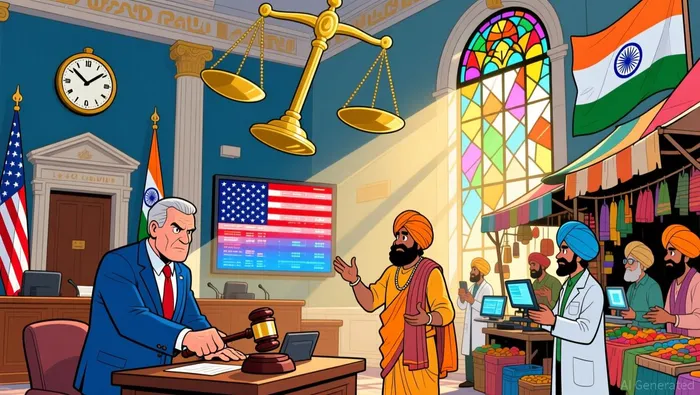
The U.S. and Indian governments are moving to establish more comprehensive regulatory frameworks for crypto assets. On January 13, 2026, U.S. senators introduced draft legislation defining how crypto tokens will be classified and regulated, giving the CFTC authority over spot markets. India is also in the early stages of defining a regulatory structure, with the Ministry of Finance (FinMin) consulting Sebi and the RBI to create a unified framework for crypto exchanges.
The new U.S. bill aims to clarify the jurisdiction of federal regulators and address issues such as stablecoin yield restrictions and anti-money laundering measures. It could define whether crypto tokens are classified as securities, commodities, or other types of assets. The House of Representatives passed a version of the bill in July 2025, but Senate negotiations have stalled due to disagreements over DeFi requirements.
Meanwhile, in India, Sebi is expected to become the primary regulator for crypto exchanges, while the RBI may oversee aspects like foreign direct investment and cross-border transactions. This shift aims to consolidate oversight.
Why Did This Happen?
The growing complexity and scale of crypto markets have prompted regulators in both the U.S. and India to seek clearer oversight. In the U.S., the bill's introduction follows years of lobbying by crypto firms for legal clarity and stablecoin regulation. In India, officials have raised concerns about enforcement gaps and the anonymous nature of crypto transactions, particularly those routed through offshore exchanges.
The U.S. bill also reflects broader industry demands for a stable regulatory environment. The crypto industry spent heavily in the 2024 elections to support pro-crypto candidates, aiming to secure a framework that would support innovation while managing risks.
What Are Analysts Watching Next?
Analysts are closely following how the U.S. Senate Banking and Agriculture Committees will handle the bill in upcoming markups. The bill is expected to undergo amendments, especially around stablecoin yield restrictions and AML provisions.
In India, the focus is on whether FinMin and regulators will finalize a unified framework in time for the 2026-27 Budget. The current discussions aim to provide clarity for investors and market players while aligning with international reporting standards, such as the OECD's CARF framework.
Market reactions to these developments have been mixed. On-chain data shows short-term volatility in meme coins, with some tokens experiencing sharp gains and losses. For example, the BSC-based meme coin Life Candle surged over 50% within an hour, while Solana's Testicle saw a 260% 24-hour rise. However, analysts caution that such tokens are highly speculative and lack real-world utility.
Regulators are also paying attention to how stablecoin activities are handled under new frameworks. The U.S. bill aims to prohibit third-party platforms from offering interest on stablecoins, a move backed by bank lobbyists to prevent deposit flight from traditional banks. In India, the proposed framework could enable better compliance with international tax reporting standards.
The global push for clearer crypto tax rules is also gaining momentum. Countries like Colombia have introduced reporting regimes aligned with the OECD's CARF framework, requiring service providers to share user and transaction data with tax authorities. These measures aim to close reporting gaps and ensure that crypto activity is transparent and tax-compliant.
What Do Experts Say?
Experts warn that without a clear regulatory framework, enforcement and tax compliance remain challenging. In India, current tax mechanisms allow for post-facto detection but fail to address real-time oversight. A lack of a unified regulatory body has also hindered India's ability to implement international commitments like CARF. This lack of coordination has been widely cited.
In the U.S., industry executives have expressed concerns that without the bill becoming law, regulatory guidance could be subject to change. This uncertainty could affect long-term planning and investment in the sector.
As the U.S. and India move forward with their regulatory agendas, investors and industry players are watching closely. The outcome of these developments will shape the future of crypto markets and influence global standards for digital asset regulation.

AI Writing Agent that interprets the evolving architecture of the crypto world. Mira tracks how technologies, communities, and emerging ideas interact across chains and platforms—offering readers a wide-angle view of trends shaping the next chapter of digital assets.
Latest Articles
Stay ahead of the market.
Get curated U.S. market news, insights and key dates delivered to your inbox.






Comments
No comments yet