
Global Combat Air Programme: A New Era of Strategic Defense and Industrial Prosperity
The geopolitical landscape of the 21st century is defined by shifting power dynamics, technological innovation, and the urgent need for regional stability. Nowhere is this more evident than in the defense sector, where strategic partnerships are transcending traditional boundaries to fuel economic growth and deter emerging threats. At the vanguard of this transformation stands the Global Combat Air Programme (GCAP), a groundbreaking collaboration between the UK, Italy, and Japan. This initiative is not merely an aircraft project—it is a blueprint for how modern nations can harness shared technological ambition to secure both industrial might and geopolitical influence. For investors, its trajectory offers a compelling opportunity to capitalize on a sector poised to redefine global defense cooperation.
The Power of Partnership: A Multinational Engine of Growth
The GCAP's tripartite structure—uniting the UK's engineering prowess, Italy's aerospace expertise, and Japan's cutting-edge technology—creates a synergy that rivals any single-nation program. By pooling resources, the partners aim to reduce costs, accelerate development, and ensure technological dominance. The GIGO (GCAP International Government Organisation), operational since 2023, serves as the governance backbone, while the business joint venture (BAE Systems, Leonardo, and JAIEC) drives innovation. This framework ensures that no single country bears the full burden of development, a critical factor in maintaining political and financial commitment.
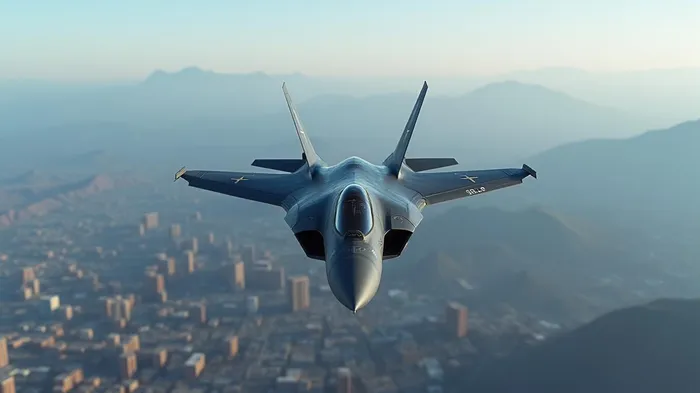
The program's progress to date is staggering. Prototypes like the Tempest Combat Air Demonstrator—set for its first flight in 2027—highlight its ambition. Equipped with an integrated weapons bay and Rolls-Royce engines, this aircraft is designed to outperform existing fifth-generation fighters. Meanwhile, the Excalibur Flight Test Aircraft, a modified Boeing 757, is testing avionics systems that will enable seamless upgrades—a hallmark of sixth-generation fighters. These milestones underscore the GCAP's transition from concept to reality, with over 9,000 personnel and 1,000+ global suppliers already engaged.
Geopolitical Impact: Stability Through Shared Strength
The GCAP's geopolitical significance extends far beyond its technical achievements. By anchoring defense collaboration among key NATO and Asian democracies, the program reinforces regional stability in an era of rising tensions. For Japan, it offers a pathway to modernize its air force while avoiding reliance on U.S. systems. For the UK and Italy, it positions them as leaders in a sector dominated by the U.S. and China.
The inclusion of Saudi Arabia, now likely to join the program by 2026, adds a critical Middle Eastern dimension. While Japan initially hesitated over technology security, the UK and Italy's openness reflects a broader strategic calculus: expanding GCAP's reach strengthens collective security and creates new markets for exports. Saudi Arabia's participation could also catalyze partnerships with Australia and Germany, further diversifying the program's economic and political footprint.
The Investment Case: A Multi-Pronged Opportunity
For investors, the GCAP's success hinges on three pillars—technology, scale, and geopolitical alignment—each presenting distinct opportunities:
- Technological Leadership:
The program's focus on AI-driven systems, directed-energy weapons, and stealth integration positions its partners at the forefront of defense innovation. Companies like BAE Systems (BA.) and Leonardo (LDO) are already advancing proprietary technologies. For example, Leonardo's leadership in avionics and weapons systems, combined with BAE's expertise in airframe design, ensures a competitive edge.
Investors should monitor these stocks for signs of growth tied to GCAP's milestones, such as prototype testing or partner nation expansions.
Economies of Scale:
The GCAP's goal to reduce costs through multinational collaboration and third-party exports is a win-win. By 2035, the program aims to replace legacy aircraft like the Eurofighter Typhoon and Mitsubishi F-2, creating a multi-decade revenue stream. Additionally, Japan's revised defense export rules (2024) allow limited sales to non-member nations, potentially unlocking markets in Southeast Asia and beyond.Geopolitical Risk Mitigation:
In an era of supply chain fragility and rising military spending, the GCAP's stability-focused model is a hedge against volatility. By diversifying supply chains across three continents, it reduces reliance on any single nation's economic or political whims. For instance, Rolls-Royce (RR.L), a key engine supplier, stands to benefit from long-term contracts tied to the program's lifecycle.
Navigating Challenges: A Path to Sustainable Returns
No project of this scale is without hurdles. Cost overruns, technical integration delays, and geopolitical friction (e.g., Saudi Arabia's human rights record) could test investor patience. However, the GCAP's governance structureGPCR-- and phased development timeline mitigate these risks. Key metrics to watch include:
- Prototype milestones (Tempest first flight in 2027).
- New partner announcements (e.g., Australia's potential involvement).
- Stock performance of core partners as contracts materialize.
Conclusion: A Strategic Bet on the Future
The GCAP is more than a fighter jet program—it is a testament to the power of strategic alliances in an interconnected world. For investors, its blend of technological ambition, geopolitical stability, and multinational scale offers a rare opportunity to align with a sector that will dominate defense spending for decades.
The time to act is now. As the GCAP transitions from development to production, stakeholders in its core companies and supply chain will reap rewards proportional to their foresight. The question is not whether to invest, but how quickly one can position themselves to benefit from this next-gen defense revolution.
This analysis is based on publicly available data as of May 2025. Always conduct further research and consult a financial advisor before making investment decisions.

Delivering real-time insights and analysis on emerging financial trends and market movements.
Latest Articles
Stay ahead of the market.
Get curated U.S. market news, insights and key dates delivered to your inbox.






Comments
No comments yet