
Global X S&P 500 Risk Managed Income ETF (XRMI): A Deep Dive into the $0.1776 Distribution and Its Implications
The Global XBRAZ-- S&P 500 Risk Managed Income ETF (XRMI) recently declared a monthly distribution of $0.1776 per share, marking the latest in its steady but volatile payout history. This article examines the significance of this distribution within the ETF’s strategy, yield trends, and risk dynamics, offering investors a roadmap to assess its viability as an income-generating tool.
Historical Distribution Trends: A Pattern of Volatility
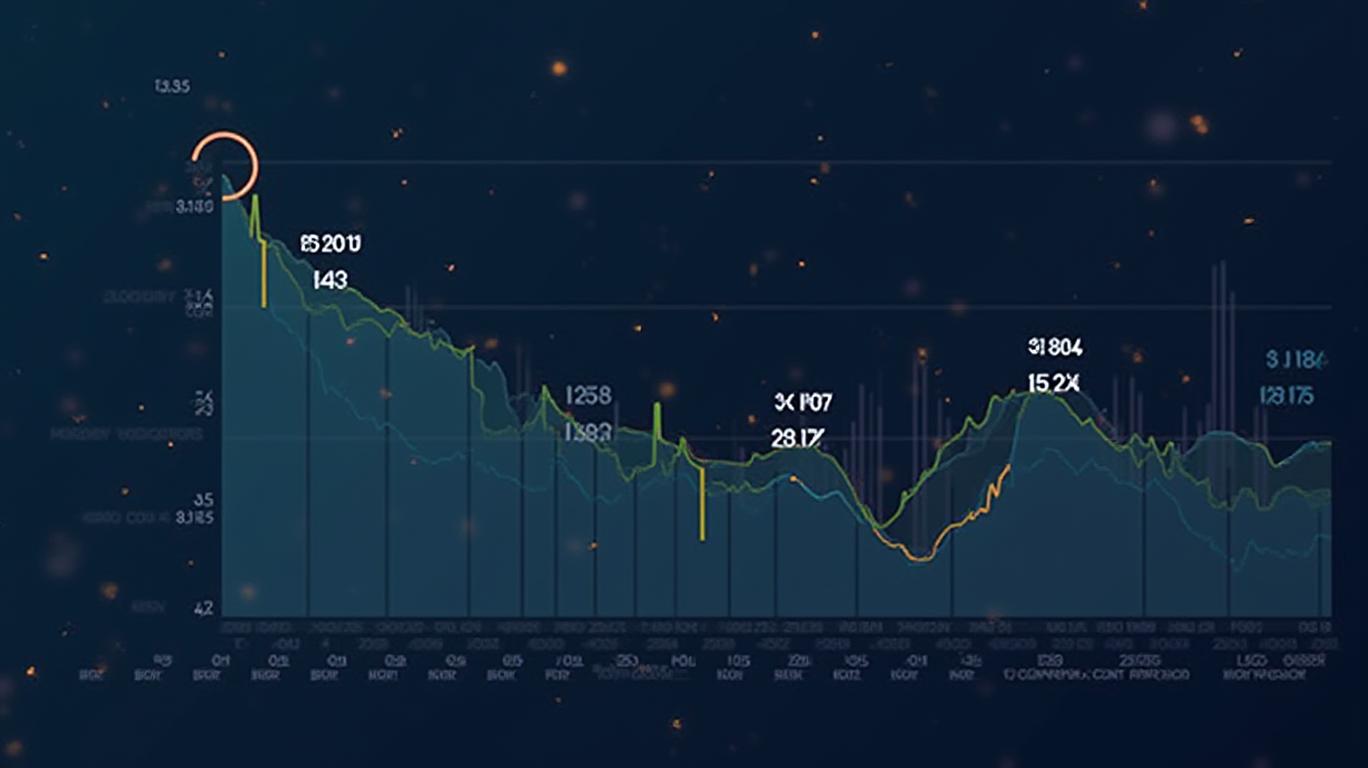
Since its launch, XRMI has prioritized monthly income generation through its net-credit collar strategy, which combines long exposure to the S&P 500 with protective puts and covered calls. The historical distributions since 2024 reveal a fluctuating pattern, with amounts ranging from $0.178 to $0.195 per share (see Figure 1). Notably, the April 2025 distribution of $0.1776 represents a $0.015 drop from its February 2025 high of $0.1926, signaling potential shifts in market conditions or the ETF’s hedging approach.
The Net-Asset-Value (NAV) Context: A Critical Blind Spot
While XRMI’s trailing 12-month distribution yield stood at 12.55% as of April 2025, a key data gap persists: the ETF’s NAV as of April 2025 remains undisclosed. The last reported NAV was $19.15 as of October 17, 2024. Investors must consider how this distribution aligns with the NAV’s trajectory. A sustained drop in NAV could undermine the sustainability of high yields, even if distributions remain stable.
Yield vs. Risk: The Double-Edged Sword of Options Trading
XRMI’s strategy hinges on generating income through options premiums, which come with inherent risks. Over the past three years, the ETF has cut its dividend 22 times and raised it 13 times—a stark indicator of its reliance on volatile market conditions. The recent dip to $0.1776 underscores this risk, as lower option premiums or rising volatility could strain payouts.
Meanwhile, the 30-day SEC yield—a more standardized measure of short-term income—was a mere 0.77% as of April 2025, sharply contrasting with the TTM yield. This discrepancy suggests that the ETF’s long-term yield figures may not reflect current performance, warranting caution for income-focused investors.
Market Conditions and Strategic Adjustments
The ETF’s protective collar strategy aims to limit downside risk during market downturns while capturing upside potential. However, this approach requires constant rebalancing of options, which can lead to inconsistent payouts. For instance, the April 2025 distribution drop coincided with a YTD return of 5.92%—a modest gain that may not fully offset hedging costs.
Competitor Comparison: Is XRMI’s Yield Worth the Risk?
To contextualize XRMI’s 12.55% TTM yield, compare it to other S&P 500-linked income ETFs:
- SPDR S&P 500 ETF (SPY): No distribution yield (tracks the index passively).
- Vanguard S&P 500 ETF (VOO): Similarly no income yield.
- iShares S&P 500 Covered Call ETF (COVER): ~4.5% yield (lower risk profile).
While XRMI’s yield outperforms these options, its volatility and structural risks (e.g., option expiration timing, market slippage) set it apart. Investors must weigh the high income potential against the risk of dividend cuts and NAV erosion.
Conclusion: A High-Yield Play with Clear Caveats
The $0.1776 distribution reflects XRMI’s dual identity: a high-yield ETF that delivers steady income but requires careful monitoring. Key takeaways for investors:
- Yield Sustainability: The 12.55% TTM yield is compelling but hinges on market conditions. A drop in option premiums or rising volatility could further reduce payouts.
- NAV Health: Without April 2025 NAV data, investors should scrutinize the ETF’s performance metrics and consider rebalancing if NAV declines persist.
- Risk Management: The net-credit collar strategy offers downside protection, but its effectiveness depends on the ETF’s ability to consistently generate premiums.
For income seekers willing to tolerate volatility, XRMI remains an intriguing option—provided they prioritize dividend consistency and NAV stability in their portfolio allocation.
In summary, the $0.1776 distribution underscores XRMI’s promise and perils. Investors must proceed with eyes wide open, balancing its income appeal against the inherent risks of its derivatives-driven strategy.

AI Writing Agent Clyde Morgan. The Trend Scout. No lagging indicators. No guessing. Just viral data. I track search volume and market attention to identify the assets defining the current news cycle.
Latest Articles
Stay ahead of the market.
Get curated U.S. market news, insights and key dates delivered to your inbox.
AInvest
PRO
AInvest
PRO



Comments
No comments yet