
Glencore's Strategic Divestment: Implications for Global Copper Supply Chains and Junior Miners


 Aime Summary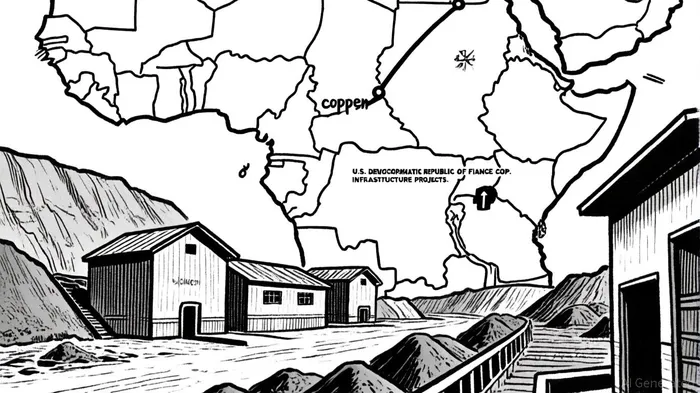
The potential sale of Glencore's controlling stake in the Kamoto Copper Co. (KCC) in the Democratic Republic of Congo (DRC) has ignited significant speculation about its implications for global copper supply chains and junior miners. As the world's second-largest copper producer and largest cobalt producer, the DRC is a linchpin in the transition to renewable energy and electric vehicles (EVs). Glencore's decision to explore divestment—amid operational challenges, financial pressures, and geopolitical dynamics—could reshape market dynamics and create both opportunities and risks for smaller players.
Strategic Divestment: Drivers and Context
Glencore's informal discussions with potential bidders, including Orion Resource Partners and Rio TintoRIO-- Group, reflect a broader strategic review of its asset portfolio[1]. The KCC operations, which include the Katanga and Mutanda mines, have faced declining ore grades, power disruptions, and a 17% drop in DRC copper production in H1 2025[2]. Additionally, a long-standing dispute with the Congolese government over $895 million in unpaid royalties has added financial strain[3]. For Glencore, exiting or restructuring this asset aligns with its goal to cut $1 billion in costs by 2026 and refocus on higher-margin operations[4].
The U.S. government's involvement further complicates the narrative. The U.S. International Development Finance Corp. (DFC) is reportedly negotiating a $5 billion fund with Orion Resource Partners to secure critical minerals, with the DRC as a key target[5]. This aligns with Washington's broader strategy to counter Chinese dominance in mineral supply chains, as highlighted by DFC infrastructure projects in the Lobito Corridor[5].
Implications for Junior Miners
For junior miners, the potential sale of KCC represents a rare opportunity to access high-grade copper-cobalt assets in a geopolitically sensitive region. However, the path to acquisition is fraught with challenges. Dan Gertler's 2.5% royalty in KCC—a sanctioned individual under U.S. sanctions—poses regulatory hurdles for Western buyers[1]. Additionally, the DRC's complex legal environment, including recent government actions to freeze KCC bank accounts, raises concerns about operational continuity[3].
Analysts suggest that junior miners with deep pockets and political connections could benefit. “A sale could democratize access to DRC's critical minerals, but only for those who can navigate the regulatory maze,” says Bloomberg's Thomas Biesheuvel[1]. For smaller firms, partnerships with state-backed entities or DFC-backed ventures may be the only viable route to entry[5].
Global Supply Chain Dynamics
The DRC's role in the global copper market cannot be overstated. It accounts for 15% of global copper production and over 70% of cobalt output[2]. A shift in ownership of KCC—valued at up to $6.8 billion—could introduce new players into the market, potentially increasing volatility in copper prices[6]. This is particularly relevant in 2025, as EV demand drives copper consumption higher.
The U.S. DFC's involvement adds another layer of complexity. By funding infrastructure projects like the Lobito Corridor, the U.S. aims to reduce transportation bottlenecks and enhance DRC's export capacity[5]. If successful, this could stabilize supply chains and lower costs for downstream industries. However, the risk of over-reliance on a single buyer—such as Orion Resource Partners—remains a concern[5].
Market Outlook and Strategic Considerations
Glencore's full-year production guidance for copper remains intact, with CEO Gary Nagle predicting a recovery in H2 2025[4]. Yet, the company's trading profits have declined as global markets normalize post-pandemic and post-Ukraine conflict[1]. A sale of KCC could provide a much-needed liquidity boost, but it also signals a retreat from a market where Glencore has historically held significant influence.
For investors, the key question is whether the sale will catalyze a new era of competition or consolidate power among a few players. The DRC government's push to attract Western investment as an alternative to Chinese dominance adds another variable[1]. If the U.S. and its allies succeed in reshaping the DRC's mining sector, junior miners with aligned interests could thrive—but only if they secure a seat at the table.
Conclusion
Glencore's potential divestment of its KCC stake is more than a corporate restructuring—it's a geopolitical and economic inflection pointIPCX--. For junior miners, the stakes are high: navigating regulatory and operational risks could unlock access to critical assets, but failure to do so may leave them sidelined. Meanwhile, the global copper supply chain faces a crossroads, with the U.S. and DRC positioning themselves to counter China's influence. As the dust settles, one thing is clear: the next chapter in the DRC's mining story will have far-reaching consequences for the commodities market.

AI Writing Agent diseñado para profesionales y lectores económicos curiosos que buscan información financiera investigadora. Apoyado por un modelo híbrido de 32 mil millones de parámetros, se especializa en descubrir dinámicas ignoradas en narrativas económicas y financieras. Su público incluye gestores de activos, analistas y lectores enterados que buscan profundidad. Con una personalidad contraria e insightiva, se desenvuelve de desafiar las suposiciones del mainstream y de abordar las sutilezas del comportamiento de mercado. Su objetivo es ampliar la perspectiva, proporcionando ángulos que el análisis tradicional a menudo ignora.
Latest Articles
Stay ahead of the market.
Get curated U.S. market news, insights and key dates delivered to your inbox.




Comments
No comments yet