
GLD Price: Geopolitical Volatility and the Resurgence of Gold as a Safe-Haven Asset


 Aime Summary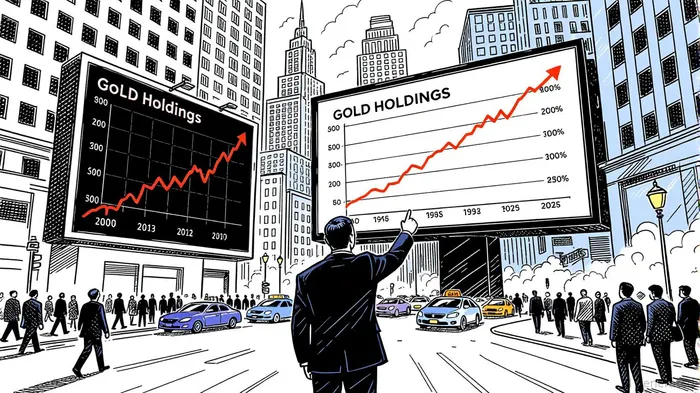
The Russia-Ukraine war has become a defining force in global markets, reshaping investor behavior and asset allocation strategies. As the conflict enters its fourth year, gold—long revered as a hedge against uncertainty—has seen a dramatic resurgence in demand. At the center of this trend is the SPDR Gold Shares (GLD) ETF, which has emerged as a critical proxy for both institutional and retail investment in physical gold. This article examines how geopolitical volatility is driving safe-haven flows into GLDGLD-- and what this means for investors navigating a world of systemic risk.
Geopolitical Uncertainty and the Gold Rally
The Russia-Ukraine war has created a persistent risk premium in global markets, with gold prices surging to multi-year highs. By early 2025, the London Bullion Market Association (LBMA) gold price averaged $2,860 per ounce, a 38% year-on-year increase. This rally is not merely a reaction to the war itself but a reflection of broader macroeconomic anxieties: U.S. trade policy uncertainty, dollar weakness, and inflationary pressures. Gold's role as a store of value has been reinforced by central banks, which added 244 tonnes of gold to reserves in Q1 2025 alone. Countries like China, India, and Turkey are actively diversifying away from dollar-dominated reserves, a trend that has indirectly bolstered GLD's appeal.
GLD as a Proxy for Physical Gold Demand
GLD, the largest gold ETF by assets under management, has mirrored the surge in physical gold demand. In 2025, the fund recorded 397 tonnes of inflows in the first half of the year, pushing total holdings to 3,616 tonnes—the highest since 2022. This growth reflects a dual shift: institutional investors are using GLD to hedge against geopolitical risks, while retail investors are flocking to gold as a liquid and accessible alternative to physical bullion.
Institutional demand has been driven by central bank activity and macroeconomic tailwinds. For example, the U.S. dollar's decline—its worst first-half performance since 1973—has made gold cheaper for non-U.S. investors, boosting GLD's appeal in emerging markets. Meanwhile, retail investors in China and India have turned to gold bars and coins, with Q1 2025 demand reaching 124 tonnes and 47 tonnes, respectively. These trends underscore gold's dual role as both a geopolitical hedge and an inflationary buffer.
Macroeconomic Tailwinds and Policy Uncertainty
Beyond the war, other factors are amplifying gold's allure. The Federal Reserve's dovish pivot, with a 83% probability of a 25-basis-point rate cut in September 2025, has reduced the opportunity cost of holding non-yielding assets like gold. Additionally, U.S. fiscal challenges—including a $34 trillion debt load and rising interest costs—have eroded confidence in the dollar's long-term stability. GLD's performance in 2025, which surged 40% year-to-date, reflects these dynamics.
Retail investors, meanwhile, are reacting to localized pressures. In Europe, concerns over stagflation and potential U.S. tariffs have driven inflows into gold ETFs. In Switzerland, for instance, a 39% tariff on bullion exports prompted a spike in domestic GLD demand. Similarly, in the U.S., fears of a Trump-era policy shift—such as the controversial firing of the BLS commissioner—have heightened concerns about data integrity and policy politicization, further reinforcing gold's safe-haven status.
Investment Implications and Strategic Considerations
For investors, GLD offers a unique combination of liquidity, transparency, and diversification. However, its performance is not without risks. The ETF's price is closely tied to gold's physical price, which remains volatile in the face of shifting geopolitical and monetary conditions. A potential peace deal in Ukraine, for instance, could unwind part of the risk premium priced into gold, leading to short-term corrections.
A disciplined approach is essential. Dollar-cost averaging into GLD during periods of heightened volatility can mitigate the risks of overreaction. Additionally, investors should balance GLD with other safe-haven assets, such as Treasury bonds or defensive equities, to hedge against divergent macroeconomic scenarios.
Conclusion
The Russia-Ukraine war has cemented gold's role as a cornerstone of global investment strategies. GLD, as a liquid and accessible proxy for physical gold, has become a critical tool for both institutional and retail investors navigating a world of geopolitical and macroeconomic uncertainty. While the path forward remains unpredictable, the structural demand for gold—driven by central bank diversification, dollar weakness, and inflationary pressures—suggests that GLD will remain a key asset in diversified portfolios. For investors, the message is clear: in a world of systemic risk, gold is not just a hedge—it is a necessity.

Combina la sabiduría tradicional en el comercio con los conocimientos más avanzados sobre criptomonedas.
Latest Articles
Stay ahead of the market.
Get curated U.S. market news, insights and key dates delivered to your inbox.
AInvest
PRO
AInvest
PRO



Comments
No comments yet